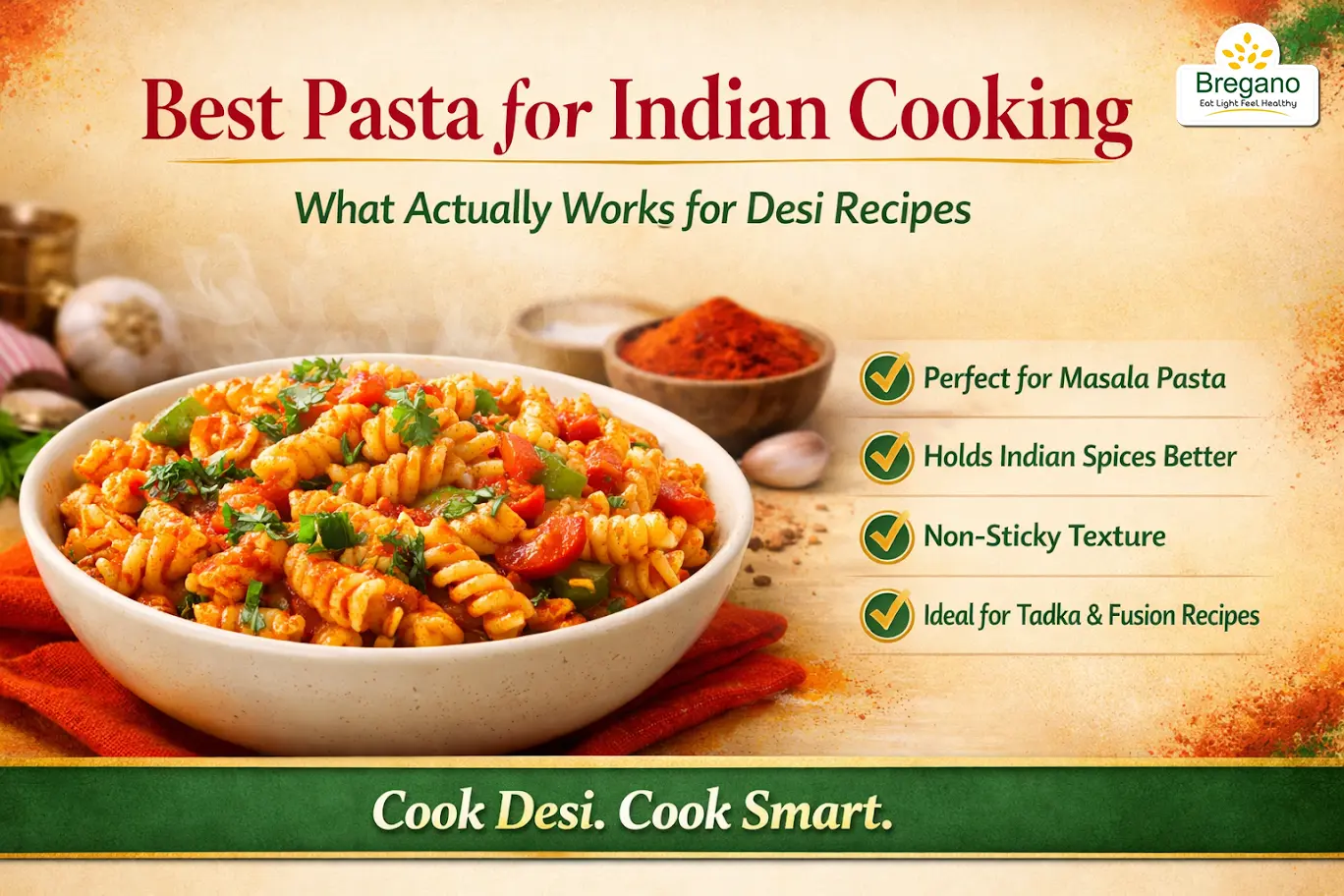
Why your pasta gets mushy in masala and what to buy instead
A guide for Indian home cooks | Updated 2025
You made pasta last night. Indian-style, with all the masalas, just like that recipe you saw on Instagram. The result? Mushy, sticky clumps that looked nothing like the video. Your kids pushed it around their plates. Your spouse gave you that look and asked, “What happened to the pasta?”
And you wondered: “Is pasta just not meant for Indian cooking?”
Here’s the truth nobody tells you: the problem isn’t Indian cooking. The problem isn’t your recipe. The problem is you bought the wrong pasta.
Most pasta sold in India is designed for light Italian sauces olive oil, fresh tomato, cream. Not for heavy masala gravies, long cooking times, high-heat tadka, oil-heavy preparations, or reheating (because let’s be honest, we always make extra).
Indian cooking is aggressive. We fry. We temper. We add thick gravies. We store leftovers and reheat them the next day. You need pasta that can actually handle all of that.
After testing dozens of pasta brands with Indian recipes and speaking with home cooks across the country, we’re going to show you exactly which pasta works for Indian cooking and why most brands fail spectacularly.
Think about how Italians cook pasta. They boil it al dente for 8–10 minutes, toss it immediately with sauce, and serve within minutes. The sauces are light oil-based, fresh tomato, light cream. You eat it fresh. No storage, no reheating.
Now think about how we cook pasta in India. We boil it, then fry or sauté it in tadka, add heavy masala gravy, cook it for another 5+ minutes, store the leftovers for the next day, and reheat it often multiple times.
See the problem? By the time you’re done with Indian-style preparation, that pasta has been cooked three separate times: boiling, frying with masala, and cooking in the gravy. And if you reheat leftovers? Make that four times. Result: mushy, overcooked mess.
The tadka stage hits pasta with high heat (150–180°C), oil or ghee frying, and vigorous stirring. Weak pasta starts breaking here.
The gravy stage throws thick, liquid-heavy sauces at it with extended simmering. The pasta absorbs liquid continuously. Weak pasta starts disintegrating.
The storage stage is where things get worse. Overnight, that pasta keeps absorbing gravy, becoming softer and softer. The reheating stage whether microwave or stovetop adds yet another round of cooking with more moisture changes and further texture breakdown.
If your pasta consistently turns to mush in Indian cooking, flip the package over and check the ingredients. Maida-based pasta has weak protein structure (5–7g per 100g at best), soft gluten network, can’t handle extended cooking, becomes sticky and clumpy, and falls apart in thick gravies. This describes 60–70% of budget pasta brands in India.
Durum wheat semolina pasta has strong protein structure (10–13g per 100g), firm gluten network, withstands extended cooking, maintains shape and texture, and works perfectly in Indian gravies. The difference when you actually cook with them? Dramatic.
Protein creates the strong gluten network that holds pasta shape during extended cooking, prevents mushiness, withstands thick gravies, and survives reheating. Check the nutrition label. If protein is below 9g per 100g, that pasta will fail in Indian cooking. Best performance comes from 11–13g protein per 100g. Learn more: Indian Pasta Market – Durum Wheat Protein & Texture
Durum wheat is the hardest wheat variety, naturally high in protein, with firm dense texture that doesn’t absorb excess moisture. The ingredient list should say “Durum wheat semolina (100%)” with no ambiguity. Avoid anything that says “wheat flour” (usually maida), “refined wheat flour” (definitely maida), or “made with durum wheat” (vague language that often means it’s mixed with cheaper flour).
How pasta is dried during manufacturing matters enormously. Pasta dried properly using advanced systems like PAVAN Thermo-Active technology has strong, uniform internal structure, firm texture, maintains shape under stress, and performs perfectly in Indian preparations. Check for reputable brands, look for mentions of Italian technology, and verify certifications like FSSAI, GMP, and HACCP.
Not all shapes work equally well for desi recipes. Here’s what actually performs.
Penne is tube pasta with diagonal cuts, and there’s a reason it dominates Indian pasta cooking. Those hollow tubes hold masala inside, so gravy actually enters the center and every bite has flavor. The structure is strong thick walls that don’t break during vigorous stirring and survive the tadka stage.
Penne works brilliantly for: thick masala pasta (tomato-based), white sauce pasta (Indian-style bechamel), penne arrabbiata (spicy tomato), baked pasta with cheese, pink sauce (tomato plus cream), and veggie pasta with Indian spices.
Cooking tip: Penne’s ridged surface holds sauce better than smooth pasta, which is exactly what you want for heavy masala gravies.
Fusilli is that spiral or twisted pasta, and it has specific advantages for Indian cooking. The sauce clings to those spirals, giving you maximum flavor in every bite while looking beautiful on the plate. Kids genuinely love the shape.
Fusilli excels in: Indian-style pesto (made with coriander instead of basil), veggie pasta with mixed vegetables, cold pasta salad, creamy gravy preparations, spicy schezwan pasta, and light oil-based pasta with tadka.
Cooking tip: Fusilli is slightly more delicate than penne, so watch your timing and don’t overcook.
Macaroni those small curved elbows has earned its place in Indian kitchens, especially for families with children. Kids approve of the shape because it’s small and easy to eat, familiar from childhood, and just fun. It cooks quickly (8–9 minutes), which is perfect for busy weeknight meals.
Macaroni is perfect for: Indian-style mac and cheese, macaroni soup, macaroni salad with Indian flavors, spicy macaroni snack, macaroni pulao, and cheesy baked macaroni.
Cooking tip: Since macaroni is smaller, it cooks faster than penne or fusilli. Watch your timing carefully or you’ll overcook it.
Spaghetti and linguine too long and thin, break easily in thick gravies, hard to eat with a spoon, don’t hold chunky Indian sauces well.
Angel hair and vermicelli-style pasta way too delicate, overcook in seconds, can’t handle tadka or gravy at all.
Stick to penne, fusilli, or macaroni for Indian cooking. These three shapes cover 95% of Indian pasta needs.
Masala pasta requires thick gravy, high-heat tadka, extended simmering, and frequent stirring. The pasta needs to absorb masala flavor without becoming mushy while maintaining that slight bite.
Penne dominates masala pasta for good reasons. Hollow tubes trap gravy so every piece is full of flavor. Thick walls withstand extended cooking. Perfect size for Indian portions. Survives reheating essential for leftovers.
Choose Penne when: making traditional thick masala, cooking large batches, planning to reheat leftovers, or when you want maximum flavor per bite.
Choose Fusilli when: making lighter masala, when presentation matters (guests or special occasions), or your kids prefer the fun spiral shape.
Indian parents know the struggle of getting kids to eat pasta. Kids reject most pasta because the texture is wrong (too soft and mushy), the taste is wrong (adult spices when kids want mild flavors), or the appearance is “weird” or unappetizing.
Ages 2–8: Macaroni is your best bet. Small size makes it easy to eat, the curved shape is fun, and it’s perfect for mac and cheese.
Ages 6–15: Penne works better. They like the hollow tubes, it’s easy to spear with a fork, cheese sauce gets trapped inside.
Ages 5–12: Fusilli has appeal. The spiral shape is genuinely fun, it has bright appearance, and it works well with colorful vegetables.
The key for kids: use quality pasta made from 100% semolina that stays firm. Mushy pasta ruins the entire dish and kids will refuse to eat it.
Al dente is Italian for “to the tooth” pasta that’s cooked but still has slight firmness. For Indian cooking, al dente is critical because the pasta will cook more in the gravy stage. Cook 1–2 minutes less than the package directions say. Test by biting a piece it should have slight resistance in the center. Drain immediately.
The basic rule is 1 liter of water per 100g of pasta. Add 1 teaspoon of salt per liter. This adds flavor to the pasta itself and ensures consistent cooking.
Adding oil to prevent sticking is actually wrong. The oil coats the pasta, which means sauce won’t stick to it later. Just use enough water and stir occasionally.
Before you drain the pasta, save 1 cup of that starchy pasta cooking water. This water helps sauce cling to pasta and can thin your sauce if it gets too thick.
Rinsing pasta with cold water removes the surface starch that helps sauce stick. Don’t do it. Exception: only if you’re making cold pasta salad.
Drain the pasta, immediately add it to your hot masala or sauce, and toss for 1–2 minutes on heat. Hot pasta absorbs flavor much better than if you let it sit around.
If you’re planning to reheat, undercook the pasta by 2 minutes so it’s very al dente. Store it with less sauce. When reheating, add a little water and use low-medium heat.
Pasta breaks because of poor quality (low protein, weak structure), improper drying during manufacturing, or aggressive use of metal spoons. To prevent breaking: buy quality pasta (100% durum wheat semolina, 10–13g protein per 100g) with quality manufacturing using technology like PAVAN systems. Use wooden or silicone utensils instead of metal ladles. Add pasta only to boiling water, never cold. Stir gently.
Penne made from 100% durum wheat semolina is the ideal choice for regular families. It’s the most versatile shape and works with all Indian pasta recipes. Kids like the tubes, adults like it too. It reheats well critical for Indian cooking.
Good quality penne costs ₹90–140 per 400–500g, and it’s worth every rupee for consistent results that don’t frustrate you. For families with young kids, keep macaroni as a secondary option. If you entertain or like variety, consider keeping fusilli for special occasions.
Bregano pasta uses 100% durum wheat semolina with no maida giving high protein content and firm structure that withstands extended Indian cooking methods, doesn’t turn mushy in thick gravies, survives the tadka and frying stage, and reheats perfectly for next-day meals.
Why Bregano Works for Indian Kitchens:
Certifications:
FSSAI License | GMP (Good Manufacturing Practices) | GHP (Good Hygiene Practices) | FSSC 22000 | HACCP | Halal Certification
Buy online: shop.bregano.in | Available at Patanjali, Vishal Mega Mart, Britannia Stores across 7+ states
Follow us: @breganoproducts
Thick masala pasta: Penne (100% durum wheat semolina, 10–13g protein)
Kids’ meals: Macaroni (100% durum wheat semolina)
Lighter preparations or presentation: Fusilli (100% durum wheat semolina)
Daily family use: Penne (most versatile)
Pasta salad: Fusilli or Penne
Baked dishes: Penne
Soup addition: Macaroni
Before buying, always verify:
Two main reasons: maida-based pasta with low protein and weak structure, or overcooking. Buy 100% durum wheat semolina pasta with 10–13g protein per 100g, and cook it al dente (1–2 minutes less than the package directions).
Penne works best for thick Indian masala. The tubes hold gravy inside, the structure is strong enough for extended cooking, and it survives reheating. Fusilli works well for lighter masala preparations.
Not recommended. Spaghetti is too long and thin for Indian cooking methods. It breaks easily in thick gravies, is difficult to eat with a spoon, and doesn’t hold chunky sauces well. Stick to penne, fusilli, or macaroni.
Use 100% durum wheat semolina pasta (naturally less sticky), cook in plenty of water (1 liter per 100g pasta), don’t rinse after draining, mix with sauce immediately while hot.
Quality matters more than price alone. Good 100% durum wheat semolina pasta (₹90–140 per 400–500g) is absolutely worth it it doesn’t turn mushy, survives reheating, and makes cooking easier. Cheap maida pasta (₹50–70) will frustrate you every single time.
Yes, if you choose 100% durum wheat semolina pasta with high protein (10–13g), good fiber (3–5g), and low glycemic index. Pair it with vegetables and protein, use moderate portions (60–80g dry per person).
Macaroni for young kids aged 2–8 (small, fun shape, quick cooking). Penne for older kids aged 6–15 (versatile, holds cheese sauce). Both must be 100% durum wheat semolina for the firm texture kids prefer.
The simple truth: most pasta fails in Indian cooking because it’s designed for Italian recipes with quick cooking times and light sauces. You need pasta that can handle high-heat tadka, thick gravies, extended cooking, reheating, and intense Indian flavors.
The three must-haves are 100% durum wheat semolina (not maida), high protein content (10–13g per 100g), and quality manufacturing with proper drying from reputable brands.
The best shapes for Indian kitchens are penne for thick masala, main dishes, and versatile everyday use; fusilli for lighter dishes, presentation, and vegetable preparations; and macaroni for kids, quick meals, and mac and cheese.
Your action plan: check your current pasta ingredients and switch if it says “wheat flour” or has low protein. Buy a 400g pack of quality penne and test it with your favorite masala recipe. Cook it al dente (1–2 minutes less than package directions). Notice the difference in firm texture, better flavor, and how it survives reheating.
Stop fighting with mushy pasta. Buy the right pasta for Indian cooking and make your life easier.
Explore Bregano’s pasta range designed to handle Indian cooking:
Made with:
Find us in stores:
Patanjali | Vishal Mega Mart | Britannia Stores | 7+ States Across India
Website: www.bregano.in | Shop: shop.bregano.in | Instagram: @breganoproducts
Choose pasta that survives tadka, handles thick gravies, and reheats perfectly. Made in India. Made for Indian cooking.