
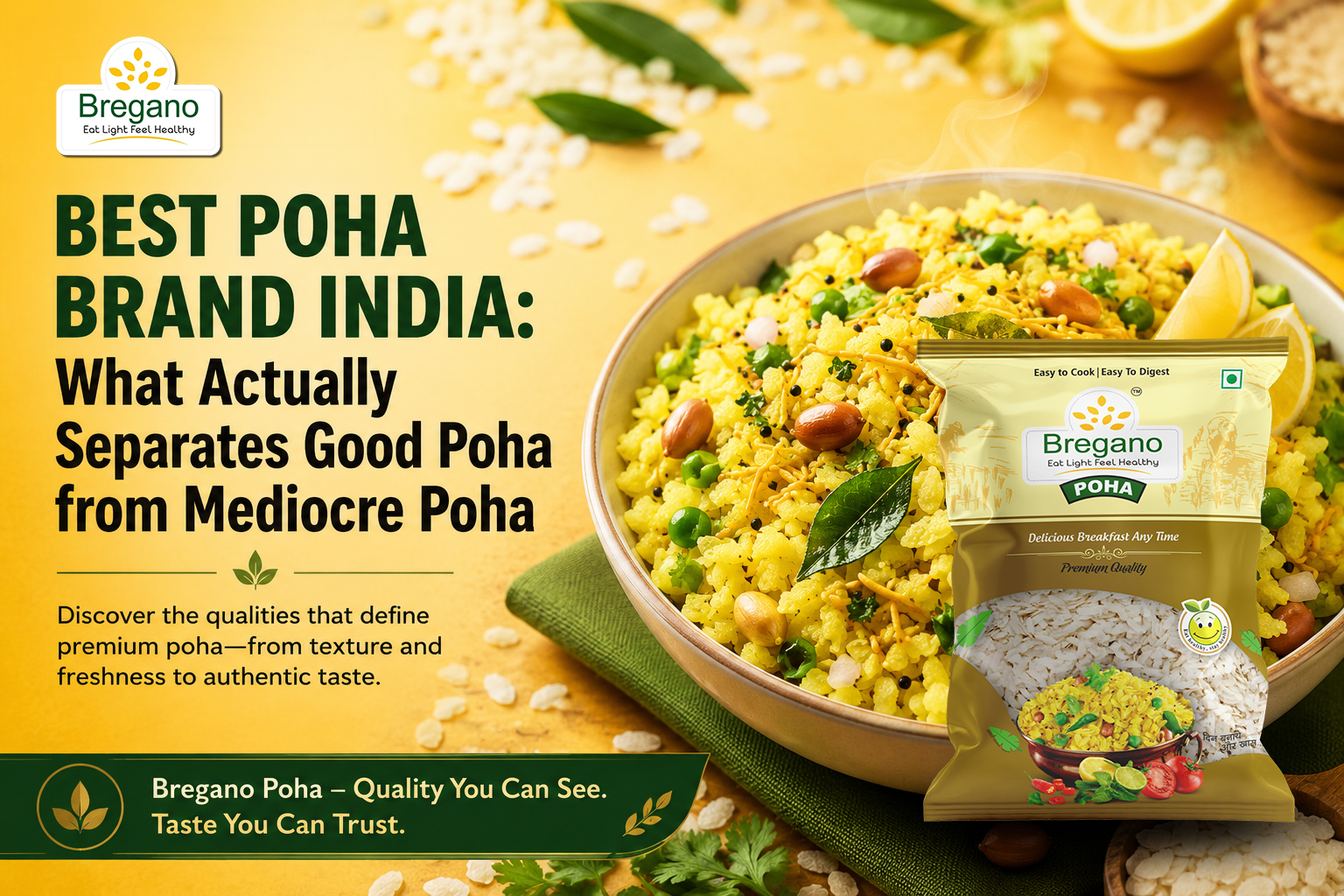
Most people buy poha the same way they buy salt. They pick up whatever is on the shelf, assume it’s all more or less the same, and don’t think much about it.
That assumption costs them in three ways.
First, texture. Cheap poha usually made from low-grade paddy with inconsistent milling turns mushy the moment water touches it. You rinse it to soften it before cooking, and by the time it hits the pan, it has already become a paste. No amount of correct cooking technique rescues bad-quality flattened rice.
Second, nutrition. The nutritional value of poha depends significantly on paddy quality and processing. Low-grade paddy yields lower fiber content, fewer retained micronutrients, and a product that delivers energy without much else. Quality paddy, properly processed, retains more of the natural goodness of the grain.
Third, hygiene. Poha is a loose dry grain product that travels through multiple handling stages before reaching your kitchen. Without proper quality control and hygienic processing, contamination risks are real.
These three factors texture, nutrition, hygiene are what separate a good poha brand from a mediocre one. And they are almost entirely determined before the product reaches the shelf, not after.
When evaluating any poha brand, the following questions determine whether it is worth buying.
Where does the paddy come from? The sourcing of raw paddy determines the base quality of the final product. Paddy from established, quality-controlled sources produces more consistent, nutritious, better-textured flattened rice than paddy sourced from the cheapest available supplier.
How is it milled? Poha is made by parboiling rice and then flattening it under rollers. The thickness (thin, medium, thick) and the pressure applied during rolling determine the final texture. Inconsistent rolling produces flakes of uneven thickness, which cook unevenly.
Is the facility hygienic and certified? FSSAI certification is the minimum legal standard for food manufacturers in India. Beyond that, GMP (Good Manufacturing Practices) and GHP (Good Hygiene Practices) certifications indicate a higher operational standard. Without these, quality control is inconsistent and hygiene cannot be assured.
Is it processed in a modern, quality-controlled environment? Poha that passes through automated, hygienic production lines maintains more consistent quality than poha processed in low-tech facilities with limited quality checks.
What is the packaging like? Good poha should be in moisture-proof, sealed packaging that protects the flakes from humidity and contamination during storage and transit.
Every quality difference in poha traces back to one upstream decision: which paddy to use.
Paddy is the raw rice grain with the husk still on. After parboiling and milling, the husk is removed and the grain is flattened into the flakes we know as poha. The nutritional content, texture, colour, and aroma of the finished product reflect the quality of the paddy used to make it.
Low-quality paddy can be sourced cheaply, but the output is flattened rice with:
Quality paddy sourced carefully, from established supply chains produces poha that holds its shape when rinsed, cooks evenly, has a natural rice aroma, and delivers better nutritional value.
Bregano’s approach, as stated on our official website: “Bregano Poha is made from best-sourced paddy, ensuring great taste and nutrition in every batch.”
This is the verified claim on bregano.in. The phrase “best-sourced paddy” is not marketing filler. It reflects a sourcing decision that directly affects the quality of every pack of Bregano Poha.
Ask anyone who cooks poha regularly and they will tell you the same complaint: some brands turn into mush.
The reason is almost always paddy quality and milling inconsistency.
When poha is made from low-grade paddy or milled with insufficient quality control, the resulting flakes are:
The correct poha flake absorbs just enough moisture when rinsed to soften without disintegrating. It should remain intact when transferred from the strainer to the pan. It should hold its shape through the cooking process and finish as separate, fluffy flakes.
This texture outcome is determined almost entirely by paddy quality and processing, not by your cooking skill.
When you use quality poha and follow the right technique, rinse gently, drain fully, cook on medium heat without over-stirring the result should be consistent every time.
If your poha consistently goes mushy regardless of technique, the issue is the poha, not the cook.
Poha is primarily a carbohydrate food. But beyond carbohydrates, quality poha provides meaningful fiber, some protein, and important micronutrients.
What Bregano says about their Poha’s nutrition:
Bregano Poha is high in fiber, which improves digestive health crucial for weight loss.
Bregano Poha is a major source of protein which is an important building block for the body.
Contains a variety of vital nutrients Poha is a nutritious food since it has essential vitamins and minerals.
The specific benefits of quality poha:
Fiber is the most important nutritional differentiator. Quality poha retains more of the natural fiber from the rice grain through better paddy sourcing and processing. Fiber supports digestive health, promotes satiety (keeping you full longer after breakfast), and helps regulate blood sugar by slowing glucose absorption.
Iron is another key nutrient in poha. Flattened rice is a natural source of iron, which helps prevent anemia. To maximize iron absorption from poha, add lemon juice when serving Vitamin C increases iron absorption significantly.
Poha is also easy to digest. “Poha is parboiled and flattened; this makes it one of the easiest foods to digest. As poha is a good absorber of water, it is easy to digest. It does not cause any gastric issues and helps you feel full for a longer period of time.”
Calorie count in context:
A correctly prepared serving of poha (not swimming in oil, with vegetables) delivers around 200 to 250 calories. That is a filling, nutritious breakfast in a moderate calorie range. When prepared poorly with excessive oil, no vegetables, large portions, the same dish can reach 400 to 500 calories without being proportionally more satisfying.
What Bregano Poha offers for weight management, per their website:
High in Fiber: Keeps you full, supports digestion.
Good Source of Protein: Helps preserve muscle during weight loss.
Quick to Prepare: No excuses for unhealthy breakfast.
Made from Best-Sourced Paddy: Quality and taste guaranteed.
Hygienically Processed: Safe for daily consumption.
Before you choose any poha brand, look for these three certifications on the packaging.
FSSAI Certification The Food Safety and Standards Authority of India (FSSAI) is the regulatory body governing food safety in India. FSSAI certification means the product and manufacturing facility have met the government’s baseline food safety requirements. It is a legal requirement, but its presence on packaging at least confirms the manufacturer is operating within the regulatory framework.
GMP (Good Manufacturing Practices) GMP certification goes beyond the legal minimum. It indicates that the facility follows documented manufacturing procedures designed to ensure consistent product quality. This covers everything from raw material handling to finished product packaging.
GHP (Good Hygiene Practices) GHP certification specifically addresses hygiene, how staff handle food, how equipment is cleaned, and how contamination is prevented throughout the production process. For a product like poha that requires careful handling, GHP matters.
Bregano’s verified certifications :
Certified: FSSAI | GMP | GHP
All three certifications are confirmed on Bregano’s official website. Their facility is described as “state-of-the-art, fully automated” which means production processes are mechanized and standardized rather than dependent on manual handling at each stage.
Bregano was launched in 2019 to bring premium staples, pasta, condiments, and wholesome food products to modern Indian households. Our state-of-the-art, fully automated 7-acre facility operates with globally recognised standards including FSSAI, GMP, and GHP certifications, ensuring that every product we craft is consistent in quality, nutrition, and taste.
Let’s consolidate every verified differentiator for Bregano Poha in one place. Nothing below is assumed every claim is sourced from bregano.in.
Bregano Poha is made from best-sourced paddy, ensuring great taste and nutrition in every batch.
This is the foundation. Better paddy means better texture, better nutrition, better colour, and better taste. Every other quality advantage flows from this upstream decision.
Bregano Poha is high in fiber, which improves digestive health crucial for weight loss.
This is both a health benefit and a quality indicator. Higher fiber retention in the finished product reflects more careful sourcing and processing of the raw paddy.
Bregano Poha is a major source of protein which is an important building block for the body.
For a breakfast staple, protein content matters for satiety and muscle maintenance. Bregano states this directly on their product page.
Poha is a quick snack that can be prepared within minutes perfect for busy mornings when you need a fast, healthy breakfast.
This is not unique to Bregano poha is inherently quick to cook. But it is a genuine product advantage worth stating, particularly in the context of a differentiation blog: good poha that cooks fast with consistent results makes healthy breakfast genuinely convenient.
Contains a variety of vital nutrients Poha is a nutritious food since it has essential vitamins and minerals.
Certified: FSSAI | GMP | GHP
All three certifications confirmed. The facility is described as state-of-the-art and fully automated, operating with globally recognized standards.
Our state-of-the-art, fully automated 7-acre facility operates with globally recognised standards.
Scale and automation in food manufacturing directly supports consistency. Large, automated facilities produce more uniform products than small-batch, manually managed ones.
Part of Dwarika Group’s legacy of food manufacturing since 1992.
Bregano is backed by decades of food manufacturing experience. The group started in 1992 in Rudrapur, Uttarakhand. This heritage is not just a marketing point, it represents supply chain relationships, quality protocols, and manufacturing knowledge built over more than three decades.
Bregano was launched in 2019 to bring premium staples, pasta, condiments, and wholesome food products to modern Indian households.
The brand is relatively new, but its manufacturing foundation is not.
Guided by the vision of Mr. Balram Agrawal, Bregano represents a perfect blend of tradition, innovation, and trust.
Available in 400gm & 800g packs perfect for stocking your kitchen for the month.
The 800g pack is a practical size for regular household consumption. Large enough to last, sealed to protect freshness.
Online: shop.bregano.in, and available via Amazon, Flipkart Instagram: @breganoproducts
Even the best poha in India can be ruined by a few common mistakes. These are the techniques that apply to Bregano Poha and any quality flattened rice.
Rinsing correctly
The most important step is also the one most people get wrong. Place the poha in a fine-mesh strainer. Run cold water over it gently. Agitate lightly with your hands so all the flakes are evenly moistened. Then stop, do not soak, do not submerge, do not let it sit in standing water.
Place 2 cups of poha (flattened rice) in a fine-mesh strainer. Rinse under cold running water. Gently agitate with your hands to ensure all the poha grains are rinsed. Drain well and let it sit in the strainer for about 10 minutes to ensure it’s completely dry.
The ten-minute rest in the strainer after rinsing is important. It lets the flakes fully absorb the moisture from rinsing and drain any excess. Transferring wet, dripping poha directly to a hot pan causes steaming and mushiness.
Tempering the right way
Heat 2 tablespoons of oil in a large pan over medium heat. Add 1/2 teaspoon of mustard seeds. Allow them to sizzle and crackle, which should take about 30 seconds.
Then add peanuts: Add 1/2 cup of peanuts to the pan. Sauté the peanuts for 2-3 minutes until they become slightly roasted and crunchy.
The peanuts are both a flavour and a nutrition element. Roasted peanuts add protein, fat, and crunch turning poha from a simple carbohydrate dish into a more balanced meal.
Adding the poha last
Onions, vegetables, and spices go in before the poha. Cook everything else first, then add the rinsed, drained poha and fold it through. Cooking the poha too long in the pan dries it out and can make it crumbly.
Finishing with lemon
Always add lemon juice after the pan comes off the heat. “Transfer the poha to serving plates. Serve hot with lemon wedges on the side for added tanginess.”
Lemon does two things. It lifts the flavour profile. And Vitamin C significantly increases iron absorption from the poha making lemon a nutrition upgrade, not just a garnish.
Regional variations worth trying
Bregano’s blog acknowledges the regional diversity of poha preparation across India:
Poha is enjoyed in various regions across India, each adding its own unique twist. From Maharashtra’s Kanda Poha to Indori Poha from Madhya Pradesh.
Indori Poha, specifically, features a distinctive garnish combination: sev, fennel seeds, and sometimes a light sprinkle of powdered sugar alongside the standard spices. The base method is the same, the finish is what changes.
Four things. First, paddy sourcing the product should specify quality or best-sourced paddy. Second, certifications at minimum FSSAI; ideally also GMP and GHP. Third, texture claims and reviews look for brands that describe their flakes as firm, not soft or pre-crushed. Fourth, packaging moisture-proof, sealed packs that protect the flakes during storage and transit.
Bregano Poha meets all four criteria: best-sourced paddy, FSSAI plus GMP and GHP certified, hygienically processed in an automated facility, and available in sealed 800g packs.
Yes, when prepared correctly. “Bregano Poha is high in fiber, which improves digestive health crucial for weight loss.” High fiber content increases satiety, helping you stay full after breakfast and reducing the urge to snack before lunch.
The key is to prepare minimal oil, plenty of vegetables, and lemon to finish. A properly prepared serving delivers 200 to 250 calories with good fiber and protein, making it one of the better breakfast options for weight management.
Bregano Poha is available in 800g packs. As stated on their website: “Available in 800g packs perfect for stocking your kitchen for the month.”
Yes. “Poha is parboiled and flattened; this makes it one of the easiest foods to digest. As poha is a good absorber of water, it is easy to digest. It does not cause any gastric issues and helps you feel full for a longer period of time.”
This makes it suitable for people with sensitive digestion, children, and the elderly, as well as anyone recovering from illness who needs a light but nourishing meal.
FSSAI, GMP, and GHP. All three are confirmed on bregano.in. The facility is described as “state-of-the-art, fully automated” and operates according to globally recognized manufacturing and hygiene standards.
Mushiness has two causes: poor-quality poha (inconsistent flake thickness from low-grade paddy) and incorrect rinsing technique (too much water, too long in the strainer).
For technique: rinse briefly in cold water, drain fully, rest in the strainer for up to 10 minutes before cooking. Do not soak. For ingredient: choose a quality brand like Bregano made from best-sourced paddy with consistent flake thickness.
It is always better to eat poha in the afternoon or even morning. The metabolism is high during the day, and the body can burn off calories quickly.
Breakfast is the optimal time, with early evening as the next best option. Bregano’s website notes: “Best results: Eat Bregano Poha at breakfast primarily, occasionally for early dinner.”
Yes. “You can eat Poha every day as part of a balanced diet to aid weight loss, provided it is prepared with healthy ingredients and in moderate quantities.”
Daily consumption is safe and beneficial when the poha is quality-sourced and prepared with minimal oil and added vegetables.