
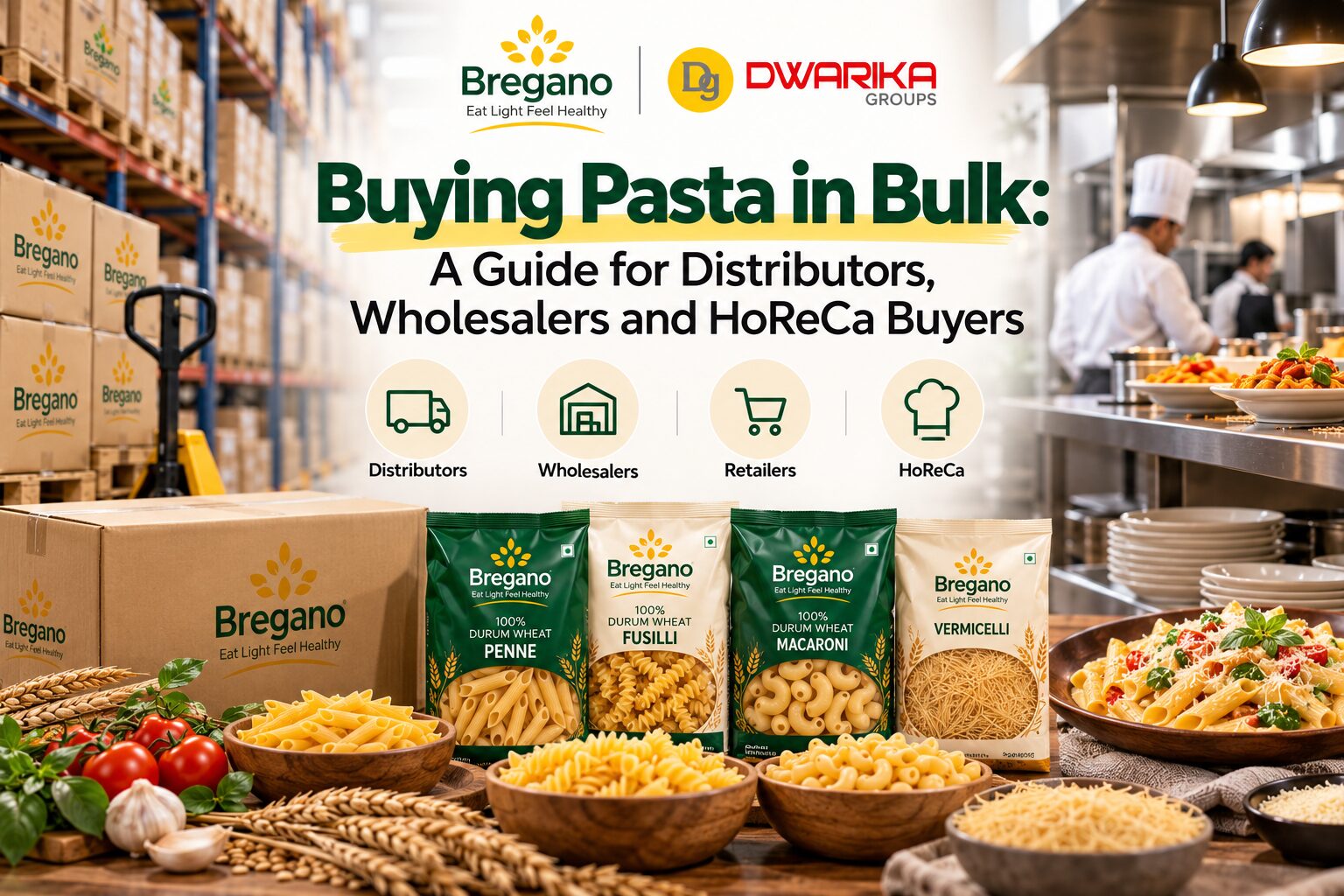
Pasta has moved well beyond Italian restaurants in India. It is on café menus, in school and office canteens, in hotel buffets and on the shelves of neighbourhood kirana stores.
If you buy pasta in bulk, whether to distribute, resell or cook, the supplier you choose affects your margins, your customers’ experience and how smoothly your business runs. A good supplier keeps your shelves and kitchens stocked. A poor one leads to stock-outs, inconsistent batches and unhappy customers.
This guide covers what different bulk buyers need, the shapes worth stocking, what to check in a bulk pasta manufacturer in India, how to test samples, what drives pricing, how to plan supply and how to store stock well.
| Buyer | What they need most |
|---|---|
| Distributors | A recognised brand, steady supply, reliable margins and marketing support to push sell-through |
| Wholesalers | Competitive pricing, consistent availability and pack sizes that move quickly in their market |
| Retailers and kirana stores | Consumer packs at the right price points and a brand customers recognise |
| Hotels, restaurants and cafés (HoReCa) | Large packs, consistent cooking performance and shapes that hold up in service |
| Institutional kitchens and caterers | Large volumes, predictable pricing and dependable delivery schedules |
Knowing which group you belong to helps you ask the right questions when you compare suppliers.
Most bulk buyers in India build their range around a few dependable shapes:
| Shape | Popular uses | Why bulk buyers like it |
|---|---|---|
| Penne | White sauce, red sauce and baked pasta in cafés and homes | Holds sauce well and is easy to portion |
| Fusilli | Pasta salads, masala pasta and quick-service dishes | Spirals trap sauce and seasoning |
| Macaroni | Masala macaroni, kids’ lunchboxes and baked dishes | Familiar to Indian households and quick to cook |
| Vermicelli | Seviyan kheer, upma and savoury breakfast dishes | Steady everyday and festive demand across India |
For recipe ideas your customers will love, see our masala macaroni recipe for kids’ lunchboxes and seviyan kheer recipe. For more on sourcing these shapes, read our guides to fusilli and penne supply and vermicelli for bulk and private label.
For a deeper checklist, read our guide on how to choose the right pasta manufacturing partner.
Never place a large order on a price list alone. Ask for samples and test them properly:
Bulk buyers usually choose between two routes:
| Route | What it means | Best for |
|---|---|---|
| Branded supply | You buy and resell the manufacturer’s own brand | Distributors and retailers who want a ready brand with marketing support |
| Private label | The manufacturer packs pasta under your brand | Businesses building their own brand or offering a house brand to customers |
With private label, your brand is on the pack, so you need your own FSSAI licence or registration as the marketer, and you hold final legal sign-off on label declarations such as net quantity, MRP and mandatory disclosures under FSSAI and Legal Metrology rules. The manufacturer can verify technical print parameters, but legal accountability for the label stays with you.
If you are considering your own brand, our guide on private label pasta manufacturing explains how it works.
Bulk pasta prices are not fixed. They depend on several factors:
When you compare quotes, compare the landed cost per kilo for the same pack size and specification, not just the headline price.
Running out of a fast-moving shape costs you sales and customer trust. A little planning prevents it:
Dry pasta keeps well, but only if it is stored properly:
Buying pasta in bulk is about more than the price per kilo. The right supplier gives you consistent quality, dependable supply, the shapes and pack sizes your market needs, and support to grow.
Test samples carefully, compare landed costs fairly, plan your supply ahead of demand, and store stock well. With the right partner, bulk pasta can become a steady, reliable part of your business.
Bregano is made by Dwarika Food Products in Rudrapur, Uttarakhand. It supplies pasta, vermicelli, staples and condiments for wholesale, distribution, private labelling and export.
Based on Bregano’s published information:
Try Bregano pasta before you order in bulk:
Browse the full range on the Bregano online shop.
Distributors and wholesalers can apply through the Become a Distributor page. The form asks for your registered business name and GST number. You can also call +91-9012143222 or email sales@dwarikagroups.com.
How do I find a reliable bulk pasta manufacturer in India?
Check licences and certifications, test samples, confirm capacity and product range, and get order terms in writing before you commit.
What is the minimum order for bulk pasta?
MOQs vary by manufacturer, product and pack format. Ask each supplier for its MOQ per SKU.
Which pasta shapes work best for restaurants and caterers?
Short shapes such as penne, fusilli and macaroni are widely used because they hold sauces well and are easy to portion. Test cooking performance with your own recipes.
Is all pasta made from durum wheat?
No. Premium pasta uses 100% durum wheat semolina, while economy or blended variants may use refined wheat flour or mixed flours. Check the ingredient list and match it to your customers and price point.
How should bulk pasta be stored?
In a cool, dry place off the floor, away from moisture and strong smells, with older stock used first.
How do I compare quotes from different suppliers?
Compare the landed cost per kilo, including freight, for the same shape, pack size and specification.
Can I get pasta packed under my own brand?
Many manufacturers offer private labelling. Bregano offers it through its contract manufacturing service. You will need your own FSSAI licence or registration as the brand owner, and you remain responsible for the label declarations on your pack.
How can I avoid running out of stock?
Track sales by shape, set reorder levels based on lead time, keep buffer stock of best-sellers and share forecasts with your supplier before peak seasons.
How can I become a Bregano distributor?
Apply through the Become a Distributor page with your business details and GST number, or call +91-9012143222.