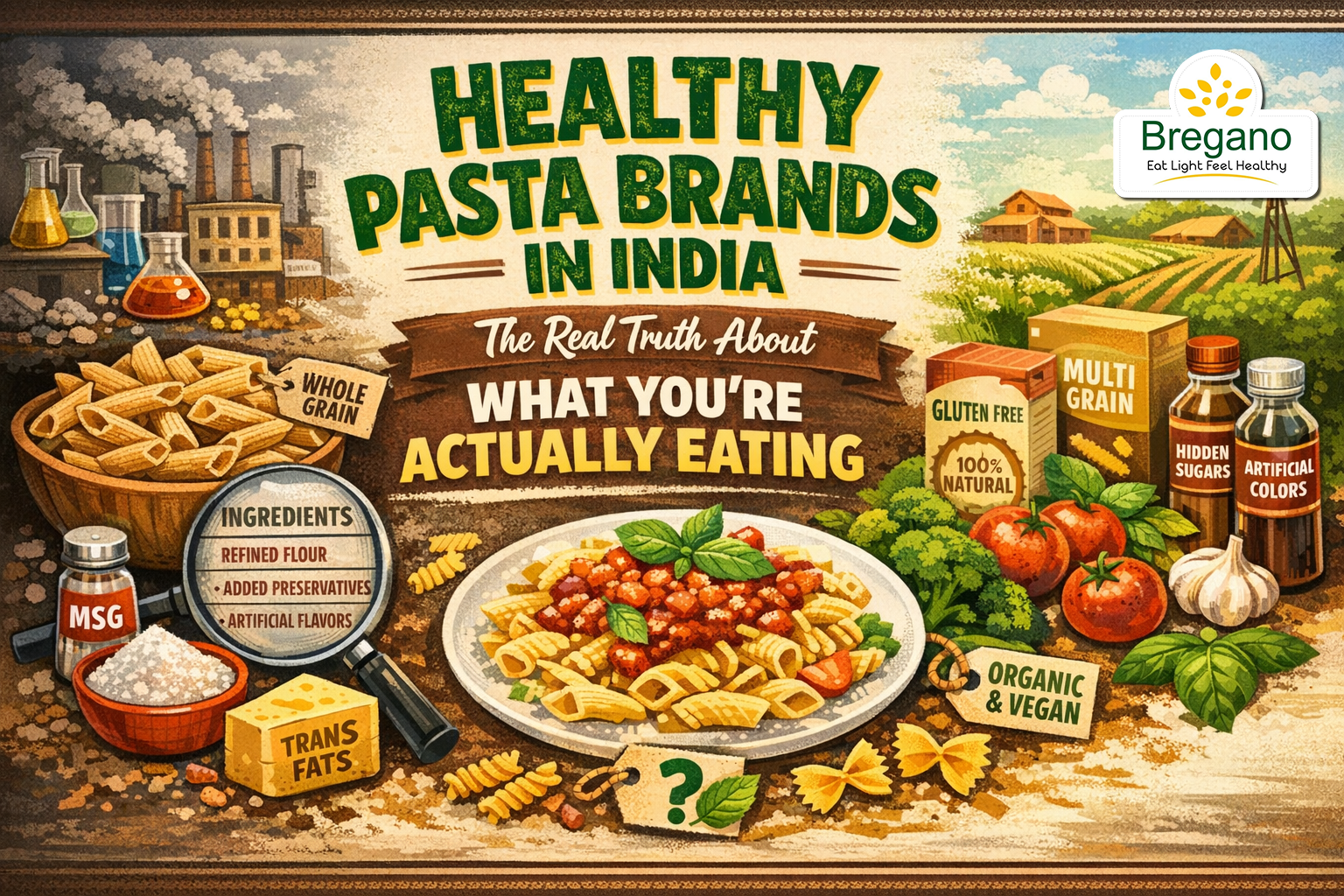
Let me tell you something that might surprise you.
Most pasta sold in India isn’t actually healthy.
Not even close.
Yes, the packaging says “healthy pasta.”
Yes, the ads show fit people eating pasta bowls.
Yes, the brand talks about nutrition.
But when you turn the packet around and read the ingredient list that’s where the truth lives.
And for many brands, that truth is uncomfortable.
Having spent years in the food industry, specifically pasta manufacturing, I’ve seen what goes into these packets. I’ve walked factory floors, spoken to manufacturers, and read hundreds of ingredient labels.
So let’s break this down honestly:
Because you deserve to know what you’re feeding your family.
Pasta consumption in India has exploded.
Quick dinners, tiffins, weekend meals pasta is everywhere.
At the same time, health awareness has grown. People are:
This created a problem for many pasta brands.
Most of their products were made from maida (refined wheat flour) something consumers now actively avoid.
So instead of changing the product, many brands changed the marketing.
They added:
And honestly? It worked.
Because most people don’t know what actually makes pasta healthy or unhealthy.
Let’s fix that.
Short answer: Yes, a lot of it is.
Pick up random pasta packets in any grocery store. Read the ingredients. You’ll often see:
Some brands mention semolina or durum wheat but in many cases, it’s mixed with maida.
A common ratio:
Then it’s marketed as “semolina pasta.”
Why?
Brands using 100% durum wheat semolina are still the minority and they cost more because good ingredients cost more.
So yes, much of the pasta sold in India is either maida-based or maida-mixed, even when marketed as healthy.
Unhealthy option: Maida
Healthy option: Durum wheat semolina (suji)
Even healthier options
The flour alone decides 90% of the health value of pasta.
Healthy pasta does not need:
Good quality pasta naturally has a long shelf life if manufactured properly.
Quality pasta uses:
Cheap, fast manufacturing damages nutrition even with decent raw materials.
Pasta itself is not unhealthy.
Good quality pasta made from durum wheat semolina:
Pasta is a regular part of the Mediterranean diet, one of the healthiest diets studied globally.
The problem isn’t pasta.
The problem is:
Fix those, and pasta becomes a genuinely healthy meal.
From highest to lowest nutrition:
For most Indian households, 100% durum wheat semolina pasta offers the best balance of nutrition, taste, and affordability.
Soulfull
Organic India
Disano
Full transparency factual details only.
What we make
Nutritional profile
Certifications
Availability
Honest assessment:
Not the cheapest. Not imported luxury pasta. Just properly made, Italian-style semolina pasta produced in India with full transparency.
Bambino
Likely semolina-mixed
Reliable for price
Budget friendly
Del Monte
Claims durum wheat
Widely available
Average quality
ITC / Sunfeast
Better than cheapest brands
Focused on volume
Saffola
Health branding
Ingredient check required
Very cheap pasta (₹40–60 range):
Cheap doesn’t mean value when it comes to food.
First ingredient should say:
Avoid:
Most “healthy pasta” claims are marketing.
Real healthy pasta:
The price difference between maida pasta and good semolina pasta is small but the health difference is massive.
Your health is worth reading the label.
Bregano
100% durum wheat semolina
No maida • No preservatives
Italian PAVAN technology
Shop online: shop.bregano.in
Instagram: @breganoproducts
We’re not claiming to be the only healthy option just transparent about what we make and how we make it.
And in today’s market, that already matters.