
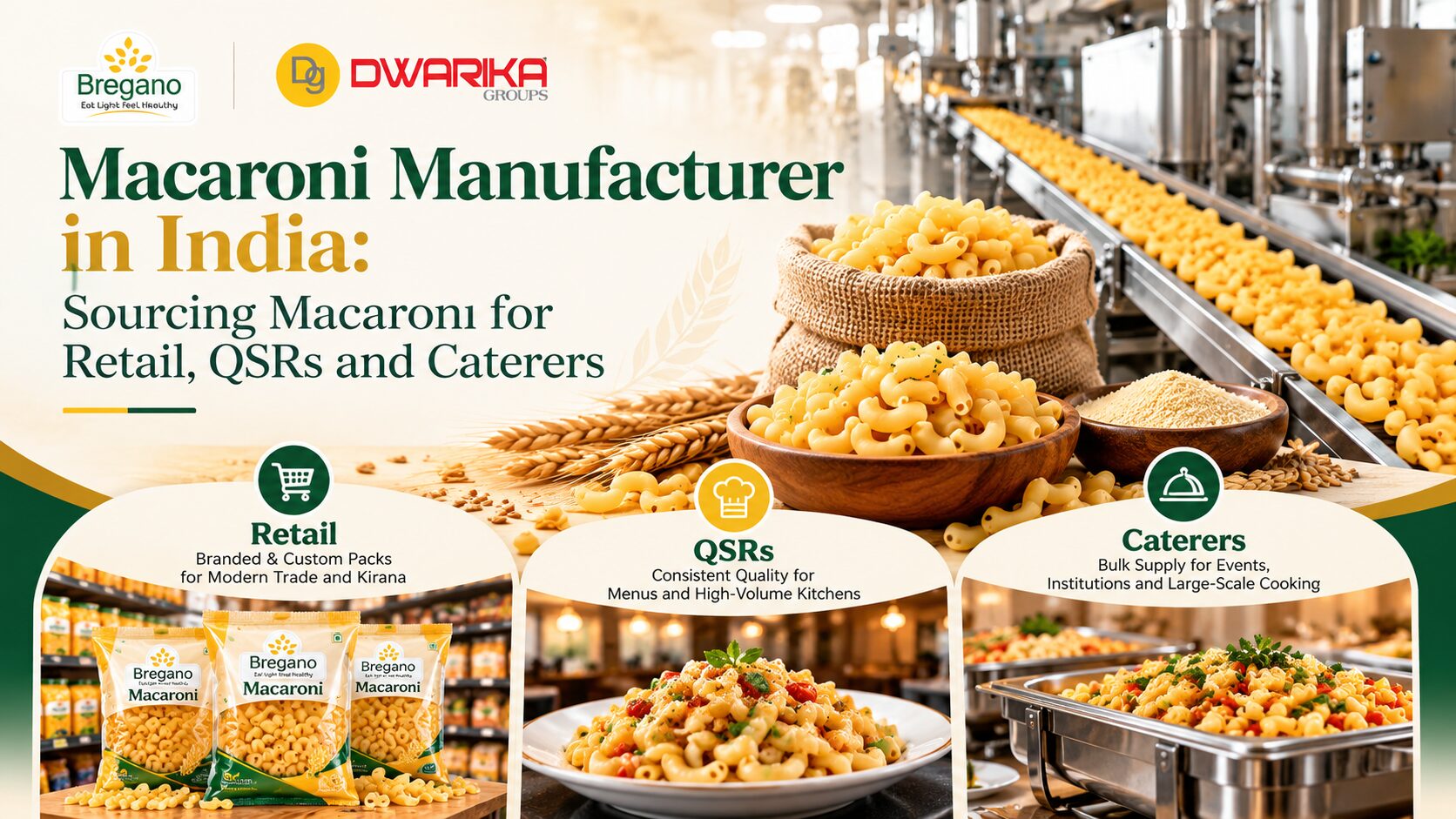
Macaroni is one of the most familiar pasta shapes in Indian kitchens. It goes into masala macaroni at home, cheesy bakes at cafés, and large-batch dishes in canteens and catering kitchens.
But macaroni for a retail shelf, a quick-service restaurant and a catering contract are three different buying decisions. Each needs different pack sizes, a different level of consistency and a different kind of supplier support.
This guide explains why macaroni works across so many channels, what each channel needs, the quality markers to check, how to test samples and cook in bulk, and how to source from a macaroni manufacturer in India.
A few traits make macaroni a dependable product for almost any food business:
Knowing how your customers use macaroni helps you choose the right product and pack size.
| Dish | Where it is popular |
|---|---|
| Masala macaroni | Home kitchens, school lunchboxes, street-style food stalls |
| Macaroni in white sauce or cheese sauce | Cafés, QSRs and kids’ menus |
| Baked macaroni | Cafés, bakeries and party catering |
| Macaroni salad | Buffets, catering and health-focused menus |
| Tomato or red sauce macaroni | Canteens, institutional kitchens and home cooking |
For a simple dish that sells well with families, see our masala macaroni recipe for kids’ lunchboxes.
| Channel | Typical use | What to prioritise |
|---|---|---|
| Retail and kirana stores | Home cooking | Attractive consumer packs, clear labelling, the right price point and a recognisable brand |
| Modern trade and quick commerce | Planned and impulse purchases | Strong packaging, consistent stock availability and good pack visuals for apps |
| Quick-service restaurants (QSRs) | Menu dishes cooked to order | Consistent cooking time, shape that holds up under holding and reheating, and steady supply |
| Caterers and institutional kitchens | Large-batch cooking | Larger packs, uniform cooking in bulk and predictable pricing |
| Private label brands | Selling under their own name | Custom packaging, grammage options, a manufacturer with capacity to grow, and their own FSSAI licence and label sign-off |
Before you place an order, check samples for these markers:
For a wider checklist on choosing a supplier, read our guide on how to choose the right pasta manufacturing partner. You can also review Bregano’s pasta manufacturing capabilities.
These general tips help commercial kitchens get consistent results:
Macaroni is one of the easiest pasta shapes to sell in India, but only when the quality is consistent and the pack fits the channel. Retailers need shelf-ready packs, QSRs need dependable cooking performance, and caterers need volume at predictable prices.
Test samples in your real dishes, check ingredients and credentials, and choose a manufacturer that can supply steadily as you grow. If you want to sell macaroni under your own brand, our guide on private label pasta manufacturing explains how to get started. Explore private-label and contract pasta manufacturing for commercial requirements.
Bregano is made by Dwarika Food Products in Rudrapur, Uttarakhand. Macaroni is part of its pasta range, alongside penne and fusilli.
How do I choose a macaroni manufacturer in India?
Check ingredients, cooking performance, shape consistency, packaging quality and the plant’s licences and certifications. Test samples before you order in volume.
What is macaroni made from?
It depends on the product. Premium macaroni uses 100% durum wheat semolina, while economy or blended variants may use refined wheat flour (maida) or mixed flours. Always check the ingredient list on the pack.
Is elbow macaroni good for restaurants and caterers?
Its small, uniform shape is easy to portion and holds sauce well. Test it with your own recipes and holding times before switching suppliers.
How should macaroni be cooked for large batches?
Use plenty of salted water, stir early, and cook slightly firm if the macaroni will be held in sauce or reheated. Start with the pack’s cooking time and adjust.
How should I store bulk macaroni?
In a cool, dry place, off the floor and away from moisture, using older stock first.
What is the difference between macaroni and penne?
Both are short tube shapes. Macaroni is smaller and curved, while penne is straighter with angled ends. Both work well with Indian-style sauces.
Where can I buy Bregano Macaroni?
On the Bregano online shop. For bulk orders, enquire through the Bregano website.
Can Bregano make macaroni under my brand?
Bregano offers private labelling and contract manufacturing for pasta. Enquire through the contract manufacturing page. As the brand owner, check applicable FSSAI licensing and registration requirements, and final legal sign-off on label declarations such as net quantity, MRP and mandatory disclosures stays with you.