
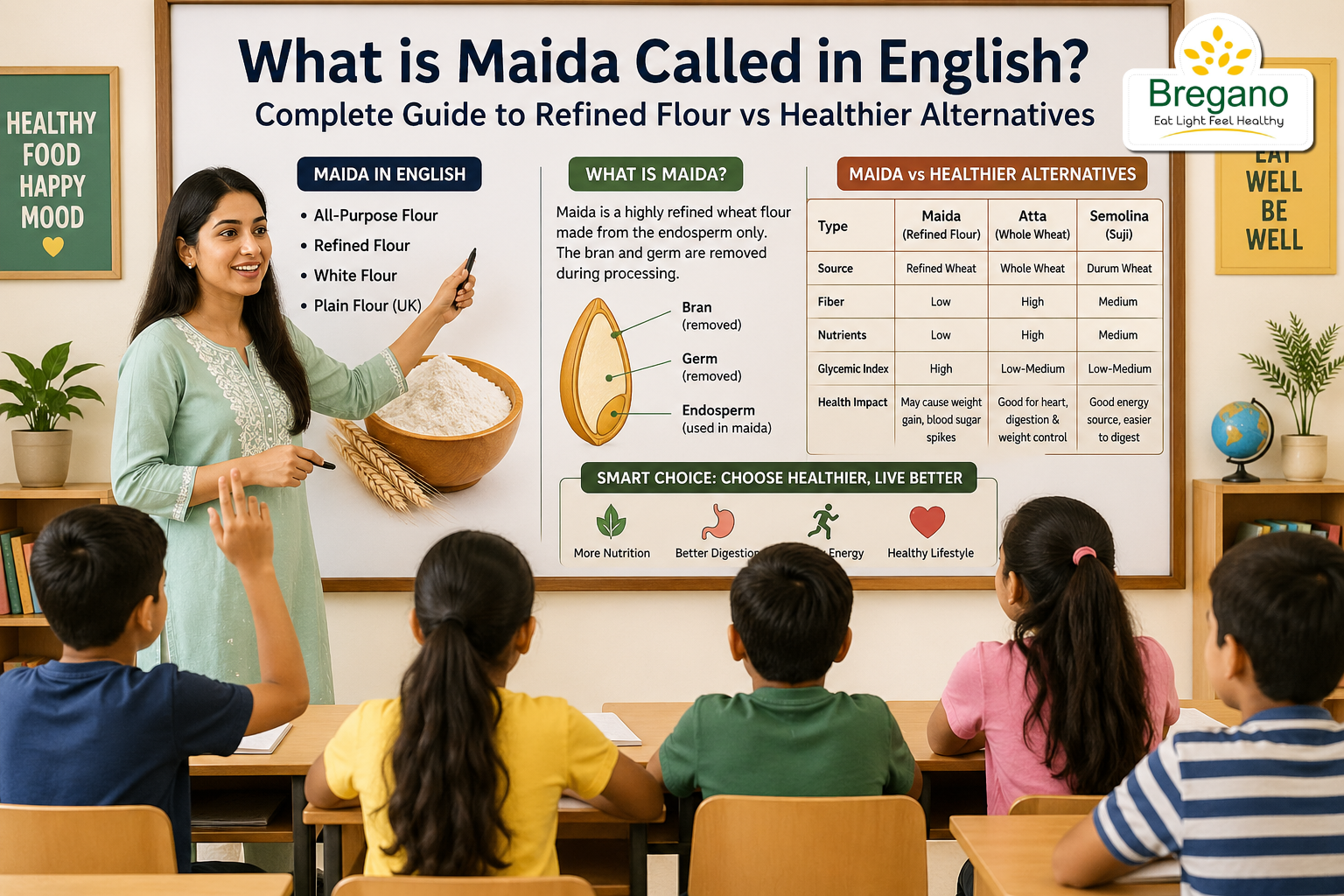
Everything you need to know about maida (refined flour) what it is, health effects, and why you should choose better alternatives
Quick Answer: Maida is called “All-Purpose Flour” “Refined Flour” or “White Flour” in English.
What it is: Highly refined wheat flour made from the endosperm only (bran and germ removed) Common uses: Bread, cakes, samosas, naan, pizza base, biscuits Health concern: Low nutrition, high glycemic index linked to obesity and diabetes
Maida has several English names all referring to the same product:
In English maida is commonly known as all-purpose flour or plain flour.
Why all-purpose?
However there’s an important difference:
This term highlights the processing that the wheat undergoes to create maida specifically the removal of the bran and germ.
Refined means:
This is a more general term that can also refer to other types of refined flour.
Called white because:
In the Indian context, plain flour is universally known as maida.
Used in British cooking for:
Maida, maida flour, or maida mavu is a type of wheat flour originated from the Indian subcontinent. It is a super-refined wheat flour used in Indian cuisine to make pastries and other bakery items like breads and biscuits.
Maida is a finely-milled, refined, and bleached wheat flour, widely used in Indian and Pakistani cuisine for making various dishes like naan, paratha, samosas and sweets.
It is a type of refined wheat flour that is finely milled after the bran (outer layer) and germ have been removed from the wheat grain, leaving behind only the starchy endosperm.
Texture:
Color:
Taste:
Cooking Properties:
Understanding the manufacturing process explains why maida has so little nutrition.
Source: Regular soft wheat varieties (NOT durum wheat) Note: Not the hard, protein-rich durum wheat used for pasta
This is the critical step where nutrition is lost:
Wheat grain has 3 parts:
The wheat grains are first cleaned and tempered and then they undergo a milling process to remove the outer layers, leaving only the starchy endosperm.
Result: 70-90% of nutrients removed in this step alone.
This endosperm is then ground into a fine white flour which is maida.
Process:
The process of making all-purpose flour involves milling wheat grains to remove the bran and germ, leaving behind the endosperm. This endosperm is then finely ground to produce a smooth and powdery flour.
Why bleach?
Bleaching agents used:
Health concern: Some bleaching chemicals may have negative health effects.
The refining process results in a flour with a finer texture and lighter color compared to whole wheat flour.
All three come from wheat, but processing makes them completely different nutritionally.
| Parameter | Maida (Refined Flour) | Atta (Whole Wheat) | Semolina (Suji/Sooji) |
| English Name | All-purpose flour, refined flour | Whole wheat flour | Semolina, durum wheat flour |
| Source | Regular soft wheat | Regular wheat | Durum wheat (hardest variety) |
| Parts Used | Endosperm only | Entire grain (bran + germ + endosperm) | Endosperm of durum wheat |
| Texture | Very fine, powdery | Coarse, grainy | Coarse, granular |
| Color | Pure white (bleached) | Brown/tan | Golden yellow |
| Protein | 8-11% | 11-13% | 12-15% (highest) |
| Fiber | 2-3% | 10-12% | 3-5% |
| Glycemic Index | 70-85 (High) | 45-55 (Low-Medium) | 45-55 (Low-Medium) |
| Processing | Highly refined, bleached | Minimally processed | Moderately processed |
| Nutrition | Very low | High | Medium-High |
| Common Uses | Bread, cakes, samosas, naan | Roti, chapati, paratha | Pasta, upma, halwa |
| Health Rating | Avoid | Good | Better |
“Maida and atta are actually both natural grains in origin, coming from the wheat grain. However, maida is far more processed, milled in factories excessively, and often bleached. Atta retains more of the protein, bran, and germ.”
Visual difference:
Critical difference:
Unlike maida (refined flour), semolina is packed with fibre, vitamins and slow-digesting carbs, making it a preferred choice for health-conscious consumers across India.
Semolina flour is a coarse, golden-yellow flour made from durum wheat, one of the hardest and most nutritious wheat varieties.
This high-protein, high-gluten grain is what gives pasta its firm texture and ability to hold sauces perfectly.
Why semolina is healthier:
Maida consumption in any food should be totally avoided or use in very small quantities as any consumption of this will cause a larger spike in blood sugar levels which is not good for diabetics, heart patients.
Maida is significantly lower in fibre and protein (gluten), which is why it is preferred for achieving a specific light, fluffy, and tender texture in many Indian delicacies.
What’s missing:
Compared to whole wheat flour:
“Refined flour is the finest type of wheat flour containing high calorie content but minimal nutritional value.”
Result: You’re eating “empty calories” energy without nutrition.
What this means:
Glycemic Index measures how quickly food raises blood sugar:
Maida = GI 70-85 (Very High)
What happens after eating maida:
“The development of prediabetes comes from uncontrolled eating sugar and refined food products for many years and the classic symptom is if you have excess belly fat. This leads to diabetes and further onwards to heart attack, high blood pressure, strokes, impotence and kidney damage.”
Why maida causes weight gain:
Mechanism 1: High-calorie, low-satiety
Mechanism 2: Insulin spikes
Mechanism 3: Addictive eating pattern
“This is a highly processed fine wheat flour containing high calories but very low or minimal nutritional value.”
Low fiber = poor digestion:
Fiber content comparison:
“Refining maida strips away most of its dietary fiber. As you might know, fiber is very important to ensure proper digestion as it adds bulk to the stool and keeps the bowel movement smooth and regular.”
Problems caused:
Regular consumption of maida can lead to different problems like constipation, irregular bowel movements, and bloating.
Multiple factors contribute:
Factor 1: High Glycemic Index
Factor 2: Weight Gain
Factor 3: Inflammation
“This leads to diabetes and further onwards to heart attack, high blood pressure, strokes, impotence and kidney damage.”
“Apart from the above-mentioned health problems, maida can also lead to other issues like cardiovascular health issues.”
How maida affects heart health:
Factor 1: Weight gain
Factor 2: Inflammation
Factor 3: Blood sugar issues
Factor 4: Reduced nutrition
Skin problems:
Mental health:
Addiction-like cravings:
Energy crashes:
Most people consume maida almost on a daily basis instead of just enjoying it during special occasions.
Maida appears in more foods than you realize, often unlabeled or disguised.
Bakery Items:
Indian Snacks:
Street Food:
Sweets:
Pasta (Most Brands):
“Most budget pasta in India is made with maida (refined wheat flour) lower structure weaker texture.”
Reality check:
“Indian regulations do not mandate a minimum semolina percentage. As a result, a brand can legally use 30% semolina + 70% maida and still label it ‘semolina pasta.'”
What to look for:
Sauces and Gravies:
Processed Foods:
Known as the Great Bread Maker, maida atta makes its way into your diet through bread, biscuits, cakes, cookies.
It’s simpler than you believe to switch to healthier flours. Here are some great options:
Whole Wheat Flour (Atta): Less processed and includes the bran and germ, hence full of fiber and nutrition.
Benefits:
Uses:
Nutrition (per 100g):
Best for pasta and specific dishes:
Semolina flour is a coarse, golden-yellow flour made from durum wheat, one of the hardest and most nutritious wheat varieties.
Why it’s healthier than maida:
Unlike maida (refined flour), semolina is packed with fibre, vitamins, and slow-digesting carbs, making it a preferred choice for health-conscious consumers across India.
Uses:
Critical for pasta consumers:
Many pasta brands today use refined flour (maida), which removes the grain’s natural nutrients and fibre.
What to choose:
Benefits:
Common blends:
Uses:
A balanced diet filled with whole grains such as brown rice, less refined atta, millets such as ragi, jowar, sorghum, bajra and gluten free oats are better for daily consumption than maida flour.
Options:
Benefits:
Benefits:
Uses:
For special diets:
Note: Expensive, specialty use
Always check the first 3 ingredients:
Red flags (means maida):
Good signs:
Remember: Ingredients are listed by weight. If maida/wheat flour appears first, that’s the main ingredient.
Critical importance:
The flour alone decides 90% of the health value of pasta.
How to identify quality pasta:
Step 1: Read Ingredients
What you want to see:
Durum wheat semolina (100%)
Ingredients: Durum wheat semolina, water, salt
Avoid:
Wheat flour
Refined wheat flour
Maida
Vague terms like made with durum wheat
If ‘wheat flour’ appears before durum semolina, it’s mostly maida.
Step 2: Check Color
Good pasta is naturally golden yellow (durum semolina color).
Step 3: Check Protein Content
Look at protein per 100g.
Step 4: Accept Price Reality
Sweet spot: ₹80-140 per 400-500g for 100% durum pasta.
Why quality costs more:
Cheap doesn’t mean value when it comes to food.
Bregano Recommendation:
At Bregano, we use 100% durum wheat semolina to create delicious, nutritious, and maida-free pasta that fits every lifestyle.
Why Bregano pasta is different:
Restaurant food often contains maida:
Home cooking advantages:
Instead of: → Choose:
However maida snacks once in a way or in our desserts and treats is OK, provided we are aware of the amounts we are consuming.
Awareness is key:
Maida is called all-purpose flour refined flour or white flour in English.
Most accurate term: Refined wheat flour
Most common term: All-purpose flour
In UK: Plain flour
Yes, but with a key difference:
Similarities:
Differences:
Bottom line: Indian maida is typically LESS nutritious than Western all-purpose flour.
Yes, regular consumption of maida is bad for health.
“Maida consumption in any food should be totally avoided or used in very small quantities.”
Health problems:
Occasional consumption (festivals, special occasions) is acceptable, but daily use should be avoided.
Maida and atta are actually both natural grains in origin coming from the wheat grain. However maida is far more processed milled in factories excessively and often bleached. Atta retains more of the protein bran and germ.
Key differences:
| Parameter | Maida | Atta |
| Processing | Highly refined | Minimally processed |
| Parts used | Endosperm only | Whole grain |
| Color | White | Brown |
| Texture | Fine, smooth | Coarse, grainy |
| Nutrition | Very low | High |
| Fiber | 2-3% | 10-12% |
| GI | 70-85 (high) | 45-55 (low) |
Yes, but results will differ:
What changes:
Works well for:
Doesn’t work well for:
Better approach: Use atta for daily foods, use maida very rarely for special treats.
It depends entirely on the brand.
The honest answer is simple: it depends entirely on the brand.
Reality in India:
₹40-70 packs: Mostly maida or maida-heavy blends ₹80-120 packs: Mixed semolina + maida (often low-grade) ₹120-180 packs: More likely 100% durum wheat semolina Imported Italian pasta: Always 100% durum wheat semolina
Indian regulations do not mandate a minimum semolina percentage. As a result, a brand can legally use 30% semolina + 70% maida and still label it ‘semolina pasta.
How to avoid maida pasta:
Read ingredients: Look for 100% Durum Wheat Semolina
Avoid: Wheat flour , Refined wheat flour , Maida
Choose brands like Bregano:
Bregano pasta on the other hand, is made using pure durum semolina, making it a healthier, high-protein alternative.
Unlike many other pasta brands in India, Bregano uses only 100% durum wheat semolina to offer you a healthier experience. Our pasta is completely maida-free, vegetarian, and free from preservatives and trans fats.
Two reasons:
It may contain chemicals like benzoyl peroxide and alloxan which are added during the bleaching process.
The whiter the flour, the more processed and bleached it likely is.
No, diabetics should strictly avoid maida.
This will cause a larger spike in blood sugar levels which is not good for diabetics, heart patients.
Why it’s dangerous:
Better alternatives for diabetics:
No maida itself is not banned.
However:
For pasta lovers:
Choose 100% semolina pasta:
Bregano Pasta verified maida-free:
We focus on pasta manufacturing in India with the highest standards so that every bite supports a healthier lifestyle.
For bread:
For snacks:
Maida = All-purpose flour = Refined flour = White flour
All refer to the same highly processed, low-nutrition product that has become a staple in modern diets but shouldn’t be.
Key takeaways:
Maida is unhealthy high GI, low nutrition, causes weight gain, diabetes risk
Better alternatives exist whole wheat, semolina, millets, oats
Read labels carefully wheat flour usually means maida in India
Choose quality pasta look for “100% durum wheat semolina”
Cook at home more control your ingredients
A balanced diet filled with whole grains such as brown rice, less refined atta, millets such as ragi, jowar, sorghum, bajra and gluten free oats are better for daily consumption than maida flour.
The switch from maida to healthier alternatives is easier than you think and your body will thank you.
If you’re looking for healthy, maida-free pasta, Bregano is your answer.
100% Durum Wheat Semolina Absolutely no maida
No Preservatives, No Additives Clean ingredients
High in Protein 10-13g per 100g
High in Fiber Better digestion
Low Glycemic Index Better blood sugar control
Italian PAVAN Technology Consistent quality
FSSAI | GMP | GHP Certified Food safety assured
Made in India State-of-the-art facility in Rudrapur, Uttarakhand
Unlike maida (refined flour), semolina is packed with fibre, vitamins, and slow-digesting carbs, making it a preferred choice for health-conscious consumers across India.
This high-protein, high-gluten grain is what gives pasta its firm texture and ability to hold sauces perfectly.
Bregano Penne Pasta Perfect for thick sauces
Bregano Fusilli Pasta Holds flavor in every spiral
Bregano Macaroni Pasta Kids’ favorite, tiffin-perfect
All made from 100% durum wheat semolina. Zero maida. Pure nutrition.
🛒 Shop Online: www.shop.bregano.in
📱 Follow us on Instagram: @breganoproducts
📸 Share your healthy pasta recipes: Tag us with #BreganoRecipes
Made with Semolina. Made for Health. Made by Bregano.
Keywords: what is maida called in english, maida meaning in english, maida vs atta, maida vs all purpose flour, is maida bad for health, maida in pasta, refined flour health effects, maida alternatives, durum wheat semolina, healthy pasta without maida, maida free products India, semolina vs maida, what is refined flour