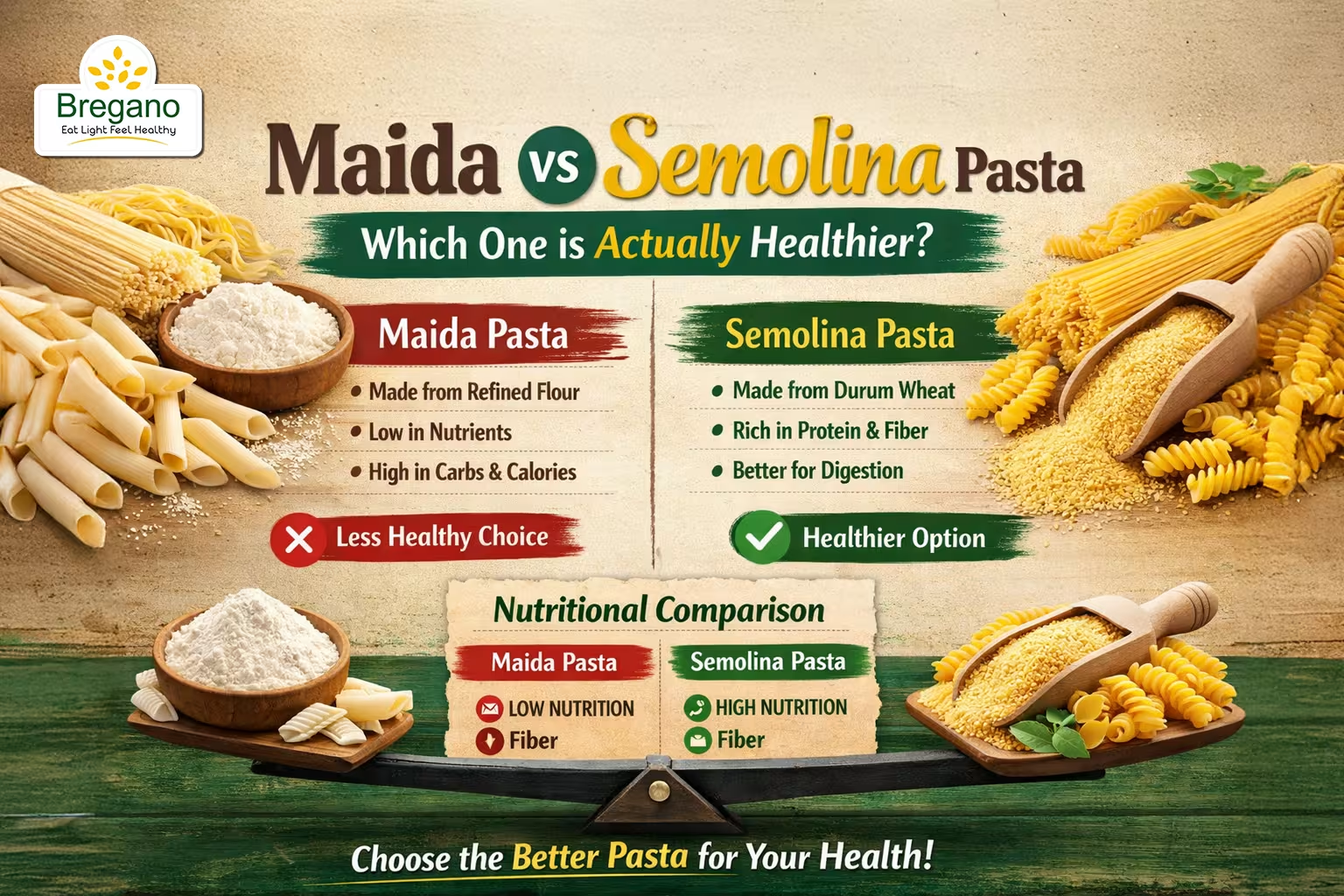
Let’s begin with an uncomfortable truth the pasta industry rarely admits.
Most pasta sold in India is made from maida, or refined wheat flour the same ingredient found in white bread, naan, and bhature.
However, if you walk into any supermarket, you’ll notice a very different story being told. Pasta packets scream “healthy,” “nutritious,” and “wholesome.” The packaging shows fit people, rustic Italian landscapes, and clean labels.
But now, flip the pack over.
More often than not, the first ingredient reads “wheat flour” or “refined wheat flour.”
In simple terms, that’s maida.
Having spent years inside pasta manufacturing facilities, I’ve seen this gap firsthand. Ingredient lists frequently fail to match marketing claims. At the same time, I’ve spoken to countless consumers who genuinely believed that all pasta is made from suji.
So let’s clear the confusion — honestly, clearly, and with proof.
No corporate fluff. No half-truths.
The honest answer is simple: it depends entirely on the brand.
Globally, authentic Italian pasta is made from durum wheat semolina (suji). That is the gold standard.
In India, however, things are very different.
₹40–70 packs: Mostly maida or maida-heavy blends
₹80–120 packs: Mixed semolina + maida (often low-grade)
₹120–180 packs: More likely to be 100% durum wheat semolina
Imported Italian pasta: Always 100% durum wheat semolina
Indian regulations do not mandate a minimum semolina percentage.
As a result, a brand can legally use 30% semolina + 70% maida and still label it “semolina pasta.”
That’s exactly why reading ingredients is non-negotiable.
For a clear brand-level explanation, read:
👉 Suji vs Maida Pasta (Bregano’s breakdown)
If you want a no-confusion option:
👉 Bregano’s no-maida healthy pasta
Maida is refined wheat flour, and the refining process strips wheat of its value.
During processing:
Bran (fiber) is removed
Germ (nutrients) is removed
Only the starch-heavy endosperm remains
Flour is bleached to achieve a white color
The end result is a fine white powder with very little nutrition left.
It’s cheap
It’s consistent
It’s easy to process
It has a long shelf life
It delivers higher profit margins
Almost zero fiber
High glycemic index
Rapid blood sugar spikes
Poor satiety
Hunger returns quickly
For a neutral explanation of wheat refinement:
👉 https://en.wikipedia.org/wiki/Wheat_flour
Semolina used for pasta comes from durum wheat, a hard wheat variety grown specifically for pasta-making.
Unlike maida, the processing is very different.
Coarsely milled (not finely refined)
Retains more nutrients
Naturally golden in color
Higher protein content
Strong gluten structure
⚠️ Important: This is durum wheat semolina, not the regular rava used for upma.
Compared to maida pasta, semolina pasta offers:
Nearly double the protein
More fiber
Naturally occurring B-vitamins
Lower glycemic index
Slower digestion
Scientific evidence supports this:
👉 Durum wheat pasta shows a lower glycemic response
👉 GI values for quality pasta are often below 55
Protein: 5–6g
Fiber: 1–2g
GI: 70–85 (high)
Nutrients: minimal
Protein: 10–13g
Fiber: 3–5g
GI: 45–55 (low–medium)
Minerals & B-vitamins: naturally present
This difference is significant — not marginal.
Digests quickly
Blood sugar spikes in 30–40 minutes
Energy crash follows
Hunger returns fast
Digests slowly
Energy remains stable
Insulin response is controlled
Keeps you full for 3–4 hours
Why structure matters:
👉 https://www.sciencedirect.com/science/article/pii/S002231662200596X
Maida pasta often leads to:
Low satiety
Frequent cravings
Overeating
Empty calorie intake
In contrast, semolina pasta supports:
Better portion control
Longer fullness
Protein-driven metabolism
Research even shows that quality pasta consumers often have lower BMI:
👉 https://pmc.ncbi.nlm.nih.gov/articles/PMC4973136/
| Maida Pasta | Semolina Pasta |
|---|---|
| Turns mushy | Holds shape |
| Slippery | Slightly rough |
| Poor sauce hold | Excellent sauce cling |
| Breaks easily | Firm, al dente |
That signature al dente bite comes directly from durum wheat’s protein structure.
“Refined wheat flour” in ingredients
Very white color
Shiny, smooth surface
₹50 or less per 500g
No mention of “durum wheat”
Semolina (suji) pasta is objectively better for:
Nutrition
Blood sugar control
Weight management
Satiety
Digestion
Maida pasta is only “better” if:
You can’t afford ₹30–40 extra
You prefer bland, mushy food
There is no health scenario where maida wins.
Verified options include:
Bregano
Borges
Disano (most variants)
Imported brands: Barilla, De Cecco, Garofalo
👉 Bregano Premium Penne (100% durum wheat)
👉 Bregano Macaroni (100% semolina)
👉 Family Pasta Combo
Step 1: Read Ingredients
Look for: Durum wheat semolina
Avoid: Refined wheat flour / maida
Manufacturing insight:
👉 https://www.bregano.in/how-pasta-is-manufactured-in-india-a-step-by-step-guide/
Step 2: Check Color
Golden yellow = good
White or pale = maida
Step 3: Feel the Texture
Matte & rough > shiny & smooth
Step 4: Accept Price Reality
₹100–180 per 500g usually means real semolina
Step 5: Cook and Observe
Notice how full you feel after 2 hours — the difference is obvious.
Recipes & types:
👉 https://www.bregano.in/types-of-pasta-types-of-pasta/
👉 https://www.bregano.in/bregano-fusilli-pasta/
This isn’t about fear.
It’s about awareness.
For just ₹30–50 extra, you get:
Better nutrition
Better digestion
Better energy
Better long-term health
That’s cheaper than most snacks — and far more valuable.
👉 Explore more pasta insights
👉 Shop 100% durum wheat semolina pasta
Your body will notice the difference.