
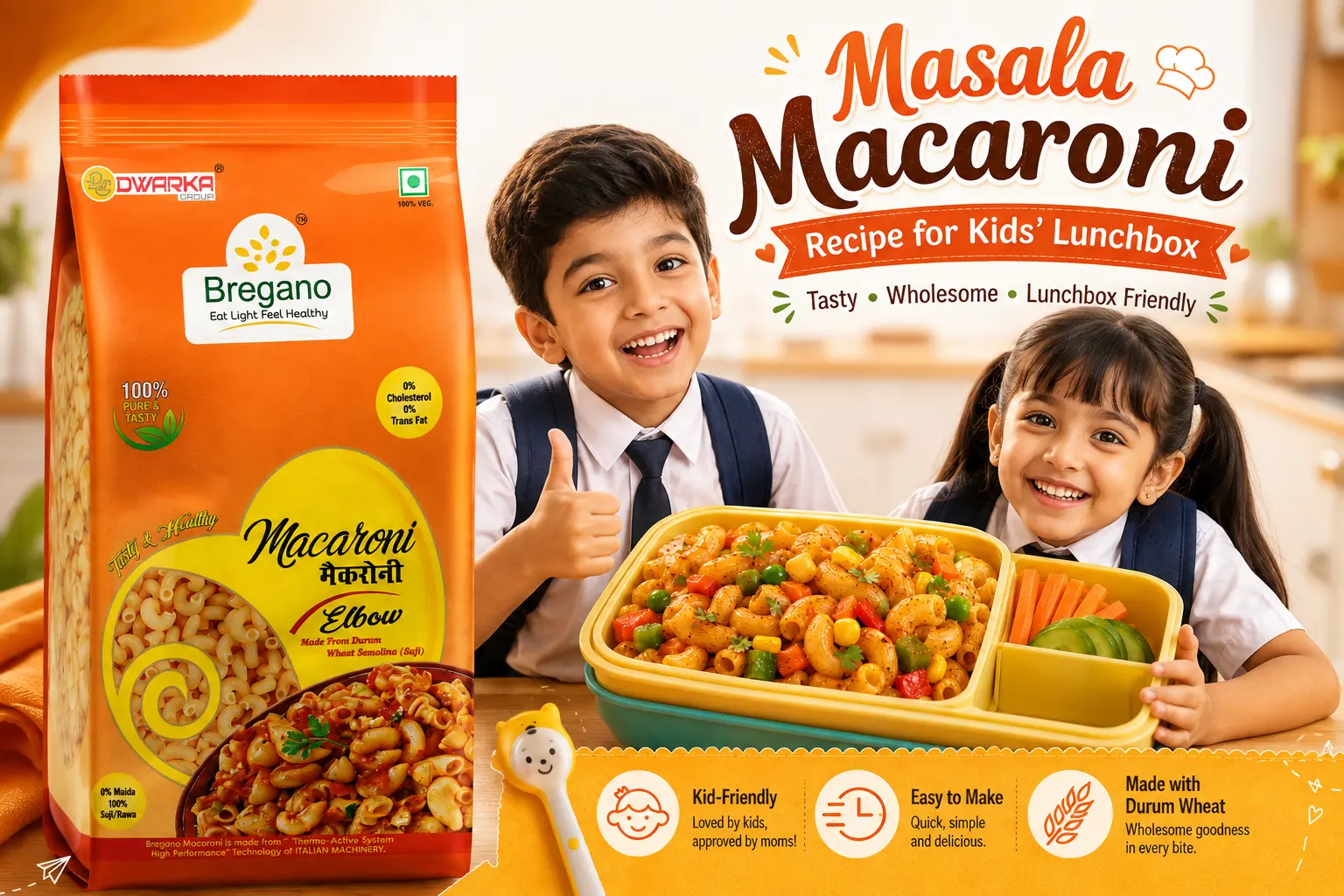
Every parent who packs a school lunchbox knows this particular anxiety.
You spend twenty minutes in the morning making something decent. You pack it carefully. Your kid comes home. You open the box. Half of it is still there. Sometimes all of it.
With pasta, there is an additional layer of disappointment: even when they do eat it, there is a good chance it is clumped together, gone cold and sticky, and looks nothing like the thing you cooked two hours earlier.
This recipe solves both problems.
The masala here is mild enough for kids but has enough flavour that they actually want to eat it. The macaroni shape, small curved tubes that are easy to scoop with a small fork or spoon, is specifically why macaroni works better in a lunchbox than any other pasta shape. And the technique prevents the sticky-clump problem that ruins most tiffin pasta before it even leaves the house.
There is also a conversation worth having about what pasta you are starting with, because it determines whether the lunchbox pasta is genuinely nourishing or just a vehicle for sauce. That part comes after the recipe.
Not all pasta shapes are equal for tiffin purposes. This is worth understanding before going into the recipe.
Macaroni, those small curved elbow-shaped tubes, are the right shape for three practical reasons.
First, size. Macaroni is small enough for young children to manage with a spoon or fork without cutting. Long pasta like spaghetti or even penne can be awkward in a small lunchbox container when a child is trying to eat quickly between classes. Macaroni fits on a spoon naturally.
Second, texture stability. Bregano’s own website notes that macaroni pasta holds shape and does not go sticky, making it ideal for lunchboxes. This is a function of both the shape and the ingredient. A small, thick-walled tube shape holds up better over two to three hours at room temperature than thin or flat pasta shapes.
Third, sauce capture. The curved tube shape of macaroni holds masala sauce inside the curve and on the surface. Every bite carries flavour. Flat pasta or straight pasta lets sauce slide off. Macaroni carries it.
Among all types of pasta in India, macaroni remains a favourite for both kids and adults. The reason it has stayed popular across decades of Indian kitchens is that it genuinely works with Indian masala flavour profiles in a way that other shapes sometimes struggle to.
Before the recipe, one honest point about what macaroni is made from.
Most budget macaroni in India is made from maida: refined wheat flour. Maida pasta for a daily school lunchbox means your child is eating refined starch five days a week. Low protein, low fiber, high glycemic index. It fills them up fast and leaves them hungry again within an hour because refined starch digests quickly.
Quality macaroni made from 100% durum wheat semolina is a different product nutritionally. Bregano Macaroni is made from 100% durum wheat semolina, high in protein, low in fat, zero trans fat and zero cholesterol. It contains no preservatives, no additives, and no maida. The higher protein content (10 to 13 grams per 100 grams compared to 5 to 7 in maida pasta, per USDA FoodData Central reference values) means the pasta digests more slowly and keeps kids full and energised through afternoon classes rather than crashing by lunch’s end.
Bregano Macaroni is easy to digest and packed with fibre, making it perfect for growing bodies.
For a parent packing a daily lunchbox, this distinction between durum wheat and maida-based pasta is worth knowing once and acting on permanently. The recipe below works with any macaroni, but the nutrition story belongs only to quality semolina pasta.
Available in 400 grams, 450 grams, and 900 grams packs. For a family packing pasta tiffin two to three times a week, the 900-gram pack is the practical choice.
Prep time: 10 minutes Cook time: 20 minutes Total time: 30 minutes Serves: 2 kids’ lunchbox portions
For boiling:
For the masala:
Step 1: Boil the macaroni correctly
Fill a large pot with enough water to submerge the pasta with room to move. This is important: pasta cooked in too little water releases starch into the small volume of water, and that starchy water coats the pasta and makes it sticky. Plenty of water keeps the cooking water from becoming starchy too quickly.
Bring water to a rolling boil. Add salt and one teaspoon of oil. The oil at this stage is not traditional in Italian cooking but it prevents clumping in the first few minutes before the pasta gets some movement going.
Add the Bregano Macaroni pasta to the boiling water and cook according to the package instructions until al dente, typically around 8 to 10 minutes. Al dente means the pasta has a slight firmness at the centre when you bite it. Not hard, not soft. Firm.
For a lunchbox specifically, cook it slightly less than you would for immediate eating. Pasta that sits for two to three hours in a box continues softening from residual heat and its own moisture. If you cook it to perfect softness in the kitchen, it will be slightly over-soft by lunchtime. Pull it out just before you think it is done.
Once cooked, drain the pasta in a strainer and set it aside. Immediately run cold water over it for about 30 seconds. This stops the cooking process and removes surface starch, which is the main cause of clumping. Toss with a few drops of oil while still in the strainer. Set aside.
Step 2: Build the masala base
Heat oil or butter in a wide pan on medium heat. Add cumin seeds and let them splutter, about 30 seconds.
Add finely chopped onions. This is where patience pays off: sauté the onions on medium heat until they are soft, translucent, and beginning to turn light golden at the edges. Five to six minutes. Rushing this step produces raw-onion flavour in the finished dish, which most children find unpleasant.
Add ginger-garlic paste. Sauté for one minute until the raw smell disappears.
Add the pureed or finely chopped tomatoes. Cook on medium heat, stirring occasionally, until the tomatoes break down completely and the oil begins to separate from the masala. This takes five to six minutes. The tomatoes need to cook down fully: undercooked tomatoes taste sharp and acidic, which is off-putting for young children.
Step 3: Add spices
Add turmeric, red chilli powder (adjust or skip based on your child’s preference), coriander powder, and salt. Stir well. Cook the spices in the masala for two minutes. This blooms the spices and mellows any raw sharpness.
For younger or spice-sensitive children: skip the red chilli entirely. Use just turmeric, a small pinch of cumin powder, and a very small pinch of garam masala. The dish will still have a warm, familiar Indian flavour without heat.
Step 4: Add vegetables
Add chopped capsicum, peas or corn. Stir and cook for three to four minutes until the vegetables are just tender but still have a little bite. Overcooked vegetables in a lunchbox pasta become mushy and unappetising by the time the child opens the box.
Step 5: Add macaroni and finish
Add the drained Bregano Macaroni to the pan. Mix gently but thoroughly so every piece is coated with masala. Cook on low heat for two to three minutes, stirring once. This brief time in the masala allows the pasta to absorb the flavours slightly.
Add garam masala. Stir. Taste and adjust salt.
Remove from heat. Add a few drops of lemon juice and fresh coriander. The lemon is important: it brightens the flavour of the dish and helps prevent the masala from tasting flat after sitting in a box for two hours.
Step 6: Pack for the lunchbox
Let the macaroni cool for five minutes before packing. Packing hot pasta directly into a sealed box creates steam inside the container, which settles back onto the pasta and makes it sticky and wet-looking by lunchtime.
Use a container with a tight lid. If your child’s lunchbox has a divider, keep the pasta in one section and a small side (curd, cut fruit, or a biscuit) in another.
Three things in this recipe work together to prevent the clump problem.
The first is cold water rinse after boiling. Rinsing stops the cooking and removes surface starch. Surface starch is glue. Removing it removes the clumping mechanism.
The second is tossing with oil before packing. A very small amount of oil creates a light film around each macaroni piece that physically prevents them from fusing together as they cool.
The third is the macaroni shape itself. Macaroni pasta holds shape and does not go sticky, making it ideal for lunchboxes. Small, thick-walled tubes cool more evenly than flat or thin pasta, so there is no part that stays hot and sticky while another part cools. Uniform cooling means uniform texture.
If you have tried tiffin pasta before and had the sticky-block problem, test whether all three of these steps are in your process. Usually one is missing.
Getting the spice right is the single most common reason kids do not finish tiffin pasta. Too spicy and they leave it. Too bland and they leave it. Here is the guide:
Ages 2 to 4: No red chilli at all. Quarter teaspoon of turmeric only. A tiny pinch of garam masala. More butter than oil in the masala. Add mild cheese on top before packing.
Ages 5 to 8: Quarter teaspoon red chilli powder. Half teaspoon turmeric. Half teaspoon garam masala. Lemon at the end. This is the sweet spot for most children in this age group.
Ages 9 to 12: The full recipe as written. Some children in this range actively prefer more chilli, in which case add a small amount of finely chopped green chilli at the onion stage.
For mixed-age siblings sharing from the same pot: Cook with no red chilli, then add chilli flakes to the older child’s portion separately before packing.
The base recipe stays the same. What changes week to week is the add-in.
Cheese masala macaroni: Remove from heat, add two tablespoons of grated processed cheese or mozzarella while the pasta is still warm. Stir until melted through. Kids who are hesitant about pure masala pasta usually love this version.
Corn and capsicum: Add half a cup of boiled corn and finely diced capsicum in three colours. The colour makes the box visually appealing and children eat with their eyes first.
Peas and carrot: Finely diced carrot (small enough to cook through in three minutes) and frozen peas. Classic, nutritious, familiar.
Tomato-heavy: Skip garam masala, double the tomatoes, add a teaspoon of pizza pasta sauce. Closer to Italian style, which some children prefer over the full Indian masala profile.
Butter and mild spice: Replace oil with butter throughout. Add just cumin, a tiny bit of turmeric, and salt. Finish with a small squeeze of lemon. The butter version is particularly good for younger children or when the child is under the weather and needs something comforting but easy.
A lunchbox with only pasta is a carbohydrate-heavy meal. Here is what completes it nutritionally:
Protein side: A small container of curd, a boiled egg (if your child eats eggs), a few cubes of paneer, or a small serving of rajma.
Fruit: Any fruit your child will actually eat. Cut mango in summer, orange segments, a small banana. Easy to eat with fingers, no mess.
Crunchy element: A small packet of roasted peanuts or a biscuit. Children like having something to crunch. It makes the lunchbox feel more complete.
Water bottle: Always separate and full. Children who stay well-hydrated through the school day tend to eat better at lunch.
If mornings are usually a breakfast scramble too, our besan chilla recipe is another quick, protein-forward option worth keeping in rotation alongside this lunchbox pasta.
Morning school schedules are real. Here is how to do the night-before prep without sacrificing texture.
Boil the macaroni the night before. Rinse with cold water, toss with a few drops of oil, and store in an airtight container in the fridge. The pasta keeps perfectly overnight.
Make the masala the night before if you prefer. Store separately in the fridge.
In the morning: heat the masala in the pan, add the cold pasta directly from the fridge, toss for two minutes on low heat until warmed through and fully coated. Done in five minutes.
This two-stage approach is the most practical for busy mornings. All the chopping, boiling, and masala cooking happens the night before. Morning is just assembly and brief reheating.
Everything below is taken directly from bregano.in. Nothing assumed.
Made from 100% durum wheat semolina, the finest quality hard wheat. Not maida. High in protein, low in fat. Zero trans fat. Zero cholesterol. No preservatives, no additives, no fillers, no anti-caking agents, no MSG. Guided by the vision of Mr. Balram Agrawal, Bregano represents a blend of tradition, innovation, and trust. Italian PAVAN Thermo-Active System: the fully automated production technology that ensures consistent quality, perfect texture, and precise drying. FSSAI certified, GMP, GHP, FSSC 22000, HACCP, and Halal certified. Part of Dwarika Group, food manufacturing since 1992. Bregano launched in 2019. 7-acre fully automated facility in Rudrapur, Uttarakhand. Pack sizes: 400 grams, 450 grams, and 900 grams.
Available online at shop.bregano.in, Amazon, Flipkart, instamart. Follow @breganoproducts on Instagram for recipes and updates.
For cooking: the package instructions recommend cooking al dente, typically 8 to 10 minutes in boiling salted water. Drain and set aside.
What pasta is best for kids’ lunchboxes?
Macaroni is the best pasta shape for lunchboxes. It is small enough for young children to eat easily, holds its shape over two to three hours without going mushy, and the curved tube shape holds masala sauce so every bite has flavour. Bregano Macaroni specifically is noted on their website as being ideal for lunchboxes because it holds shape and does not go sticky.
How do I prevent macaroni from clumping in the lunchbox?
Three steps: rinse the boiled pasta under cold water immediately after draining to stop cooking and remove surface starch, toss with a few drops of oil while still in the strainer, and allow the finished dish to cool for five minutes before packing in a closed box. Hot pasta packed into a sealed container creates steam that makes pasta sticky.
Is Bregano Macaroni safe and healthy for kids daily?
Yes. Bregano Macaroni is easy to digest and packed with fibre, making it perfect for growing bodies. It is made from 100% durum wheat semolina with no maida, no preservatives, no additives, no trans fat, and zero cholesterol. The higher protein content of semolina pasta (compared to maida pasta) provides more sustained energy through the school day.
How long does masala macaroni last in a lunchbox?
At room temperature (not in direct sunlight), well-made masala macaroni stays good for three to four hours. This covers the time from morning packing to lunchtime at school comfortably. If the school allows warmed food, brief reheating in a microwave-safe container for 60 to 90 seconds with a drop of water restores the texture fully.
Can I add cheese to the masala macaroni for kids?
Yes, and it is a good idea for younger or more selective children. Add two tablespoons of grated processed cheese or mozzarella off the heat while the pasta is still warm. Stir until melted through. The cheese makes the masala milder, creamier, and more palatable for children who find pure Indian masala pasta too assertive.
How do I adjust the spice level of masala macaroni for very young children?
For children aged 2 to 4, skip red chilli entirely. Use only a quarter teaspoon of turmeric, a tiny pinch of garam masala, and more butter than oil in the masala. The dish will still have a warm, golden colour and a mild savoury flavour that young children enjoy without the heat.
Can I make masala macaroni the night before for a school lunchbox?
Yes. Boil the pasta the night before, rinse with cold water, toss with a few drops of oil, and store in the fridge. Make the masala separately and store in the fridge. In the morning, heat the masala, add the cold pasta, toss for two minutes on low heat until warmed through and coated. Pack and send.
Order Bregano Macaroni at www.shop.bregano.in Available in 400g, 450g, and 900g packs. FSSAI, GMP, GHP, FSSC 22000, HACCP, and Halal certified. 100% Durum Wheat Semolina. No Maida. No Preservatives. Italian PAVAN Technology. Part of Dwarika Group, food manufacturing since 1992. Follow @breganoproducts on Instagram for more recipes.