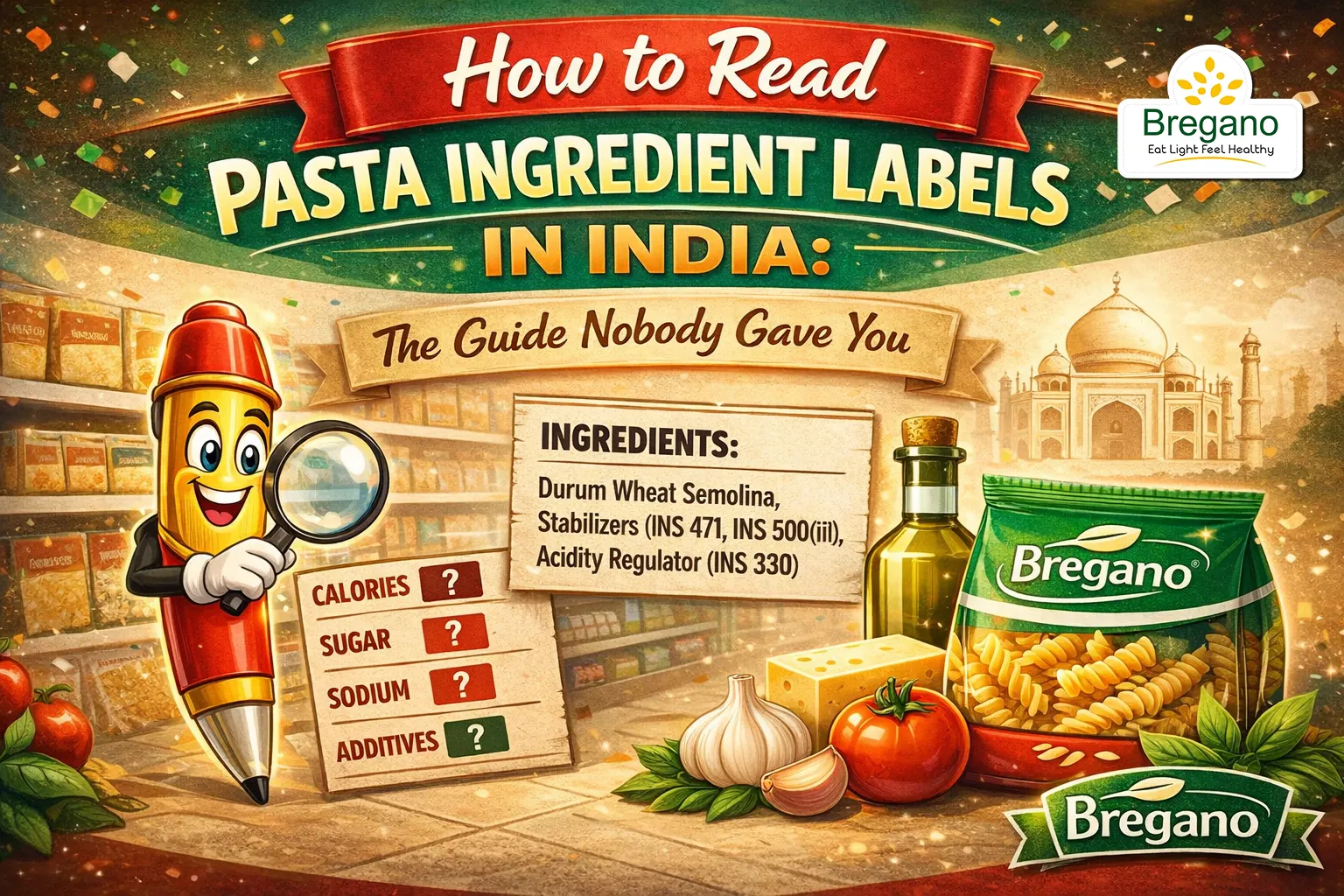
Most people in India buy pasta based on:
The picture on the front of the packet
The price
Maybe the brand name if they’ve heard of it
Almost nobody flips the packet over and reads the ingredient list.
Food companies know this. They depend on it.
That’s why packets scream “Healthy”, “Premium”, “Italian-Style”-while the back quietly tells a very different story.
I’ve spent years in food manufacturing. I’ve seen how labels are designed, where ambiguity is used, and how marketing hides behind legality.
This guide will teach you how to actually read pasta labels in India – not the marketing on the front, but the truth on the back.
Once you learn this, you’ll never buy pasta the same way again.
India does have food labeling regulations – but they allow room for interpretation.
The Food Safety and Standards Authority of India (FSSAI) mandates what must be shown, but not always how clearly it must be explained.
This leads to misleading-but-legal practices like:
“Wheat flour” instead of maida
“Made with durum wheat” without percentages
“Natural flavours” that are lab-processed
“Enriched” nutrients added back after stripping
If you don’t know how to decode labels, you’re making decisions based on half-truths.
👉 If you’re confused about maida vs semolina, read this first:
🔗 Maida vs Semolina Debate
According to Food Safety and Standards (Labelling and Display) Regulations, 2020, every packaged food in India must display:
Name of food
Ingredient list (descending order by weight)
Nutritional information (per 100g)
Net quantity
Manufacturing & best before dates
Manufacturer details
14-digit FSSAI license number
Veg / Non-veg symbol
Country of origin
Batch / lot number
📄 Official Regulation PDF:
🔗 https://www.fssai.gov.in/upload/uploadfiles/files/Compendium_Labelling_Display_23_09_2021.pdf
📌 Official FSSAI Regulations Page:
🔗 https://fssai.gov.in/cms/food-safety-and-standards-regulations.php
The front is marketing, not information.
Ignore:
Healthy
Premium
Italian-style
High protein
Trust only what’s verified on the back.
Ingredients are listed by weight.
Durum wheat semolina (100%)
100% semolina
👉 Learn what this actually means:
🔗 What “100% Semolina” Really Means
Semolina + wheat flour (percentages must be declared)
Wheat flour (maida)
Refined wheat flour
“Wheat products”
Long ingredient lists
👉 Understand how pasta is actually manufactured in India:
| Term | What It Sounds Like | Reality |
|---|---|---|
| Wheat Flour | Whole wheat | Usually maida |
| Made with Durum Wheat | 100% semolina | Could be 20% |
| Natural Flavours | Fresh ingredients | Lab-processed extracts |
| Enriched | Extra nutrition | Nutrients added back |
| No Preservatives | Clean | Uses “natural” preservatives |
10–13g → Good semolina pasta
7–10g → Average
Below 7g → Maida-based
👉 Is pasta healthy or unhealthy?
Whole wheat: 6–8g
Semolina: 3–5g
Maida: 1–2g
Ideal: <50mg
Red flag: 300mg+
Must be 0g (non-negotiable)
👉 See a real semolina pasta product spec (Penne):
Ingredient: Durum wheat semolina (100%)
Protein: 12g
Fibre: 4g
Sodium: 20mg
Verdict: Buy it.
👉 Macaroni made from durum semolina
Wheat flour (65%)
Artificial colour (Tartrazine)
Sodium: 450mg
Verdict: Avoid.
Every product must show:
FSSAI logo
14-digit license number
A short ingredient list doesn’t mean boring meals.
👉 Example of a clean-label pasta sauce
Good pasta is simple:
Durum wheat semolina first
10g+ protein
Short ingredient list
Low sodium
Zero trans fat
Clear FSSAI compliance
Anything else is compromise disguised as marketing.
Bregano Pasta
Ingredient: Durum wheat semolina (100%)
No maida
No preservatives
Made with Italian PAVAN Thermo-Active System
Certified: FSSAI, GMP, GHP, FSSC 22000, HACCP, Halal
🛒 Shop combos:BREGANO STORE
🔗 When you read our label, you know exactly what you’re eating.
That’s how food should be.