
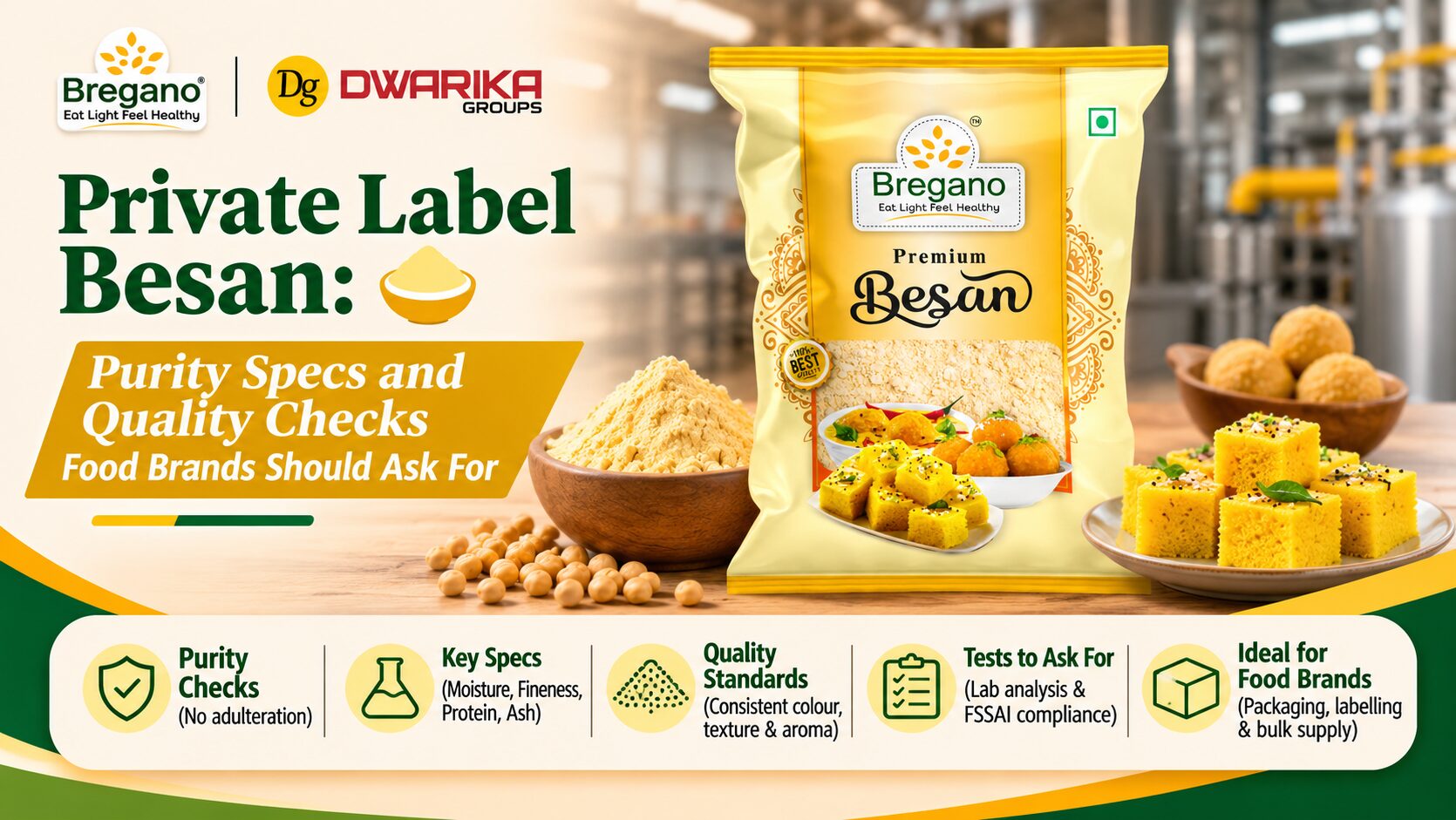
Besan (gram flour) goes into pakoras, chilla, ladoo, kadhi, dhokla and countless namkeen snacks. Households buy it regularly. Namkeen makers, sweet shops, caterers and restaurants buy it by the sack. That everyday use makes besan a practical product for private label brands.
But besan is also a product where buyers worry about purity. A shopper cannot see what is inside a sealed pack, so they rely on the brand name. Your specs, testing and labelling decide whether your brand earns that trust or loses it.
This guide covers what a food brand should agree with its besan manufacturer before the first production run: raw material, purity checks, grades, packaging, labelling and supply.
Besan should be made from one ingredient: ground chana dal (split Bengal gram). If anything else is blended in, it must be declared on the label.
That single-ingredient promise is a strong selling point. Make sure your manufacturer can support it with testing, not just a statement on the pack.
Before you fix your specs, decide who your main buyer is. Each buyer group looks for something different.
Many brands start with one channel, such as household retail, and add bulk supply once production is stable.
Adulteration is a known concern for flours and pulses in India. FSSAI’s DART (Detect Adulteration with Rapid Test) book includes simple home tests for common adulterants in foods. For a brand, home tests are not enough. You need lab testing and documented specs.
Purity also protects your business. One complaint about quality can damage a new brand’s reviews and retailer relationships. Clear specs and batch records make it easier to trace and fix a problem if one ever comes up.
| Spec | Why it matters |
|---|---|
| Raw material | Chana dal only, from an identified source |
| Purity | Tested for adulterants and other flours |
| Particle size (mesh) | Fine for sweets and batters, coarser for some snacks |
| Moisture | Affects shelf life and lumping |
| Colour | Should match the approved sample |
| Foreign matter | Defined limits |
| Microbiological tests | As per FSSAI standards |
| Batch testing | Reports for each batch or agreed frequency |
Get these written into your supply agreement before the first production run.
If your target buyers make gram flour snacks commercially, consistency from batch to batch matters more than pack design. A small change in grind can change how a batter coats, how a snack fries and how a sweet sets.
Do not approve a sample on looks alone. Test it the way your buyers will use it.
Besan is a fine flour, so it needs packaging that protects it from moisture, pests and odours. Moisture can cause lumps and affect quality over time.
Your best-before date must be backed by shelf-life testing of your product in your chosen packaging. If you change the pack material, test again.
Net quantity numerals must also meet the Legal Metrology minimum height, from 1 mm to 6 mm depending on the pack’s main display panel. Bulk sacks and small retail packs fall in different size bands, so check each pack format.
Besan demand rises around festivals, when households and sweet shops make ladoo and other sweets, and in the monsoon, when pakoras are a common snack. Share your sales plan with your manufacturer early, so raw material and production slots are booked before the busy season starts.
Clear answers to these questions tell you whether a manufacturer can support your brand as it grows.
People search for “recipe with besan” and “besan flour recipe” all the time. Printing a recipe on the pack or linking to recipes helps your brand get used more often. Bregano already shares recipes such as Top 10 Besan Recipes and 15 Easy Besan Snack Recipes.
Bregano offers Premium Besan as part of its staples range. On Flipkart, it is available in the Penne + Besan combo. The full range is on Bregano Shop and Amazon. Besan is also listed on our contract manufacturing page. Brands that want to launch besan under their own label can speak with our private label team about specs, packaging and supply.
What is besan made from?
Besan is made by grinding chana dal (split Bengal gram).
Is besan the same as gram flour?
Yes. Besan is commonly called gram flour or chickpea flour in English.
How can a brand check besan purity?
Through lab testing against agreed specs, backed by batch-wise reports from the manufacturer.
Which besan grade do namkeen makers use?
It depends on the snack. Ask buyers for their preferred particle size and test samples with them.
Does besan contain gluten?
Pure besan is made from chana dal and does not contain wheat. If it is processed on lines that also handle wheat, a precautionary allergen line may be needed. Check with your compliance advisor.
How should besan be stored?
In a cool, dry place, in a sealed pack or airtight container after opening.
Can I sell besan under my own brand without a mill?
Yes. Private label manufacturing lets you sell under your brand while a manufacturer produces and packs it.
Launch your besan brand with Bregano.
Related reads: Top 10 Besan Recipes · 15 Easy Besan Snack Recipes · Contract Manufacturing at Bregano