
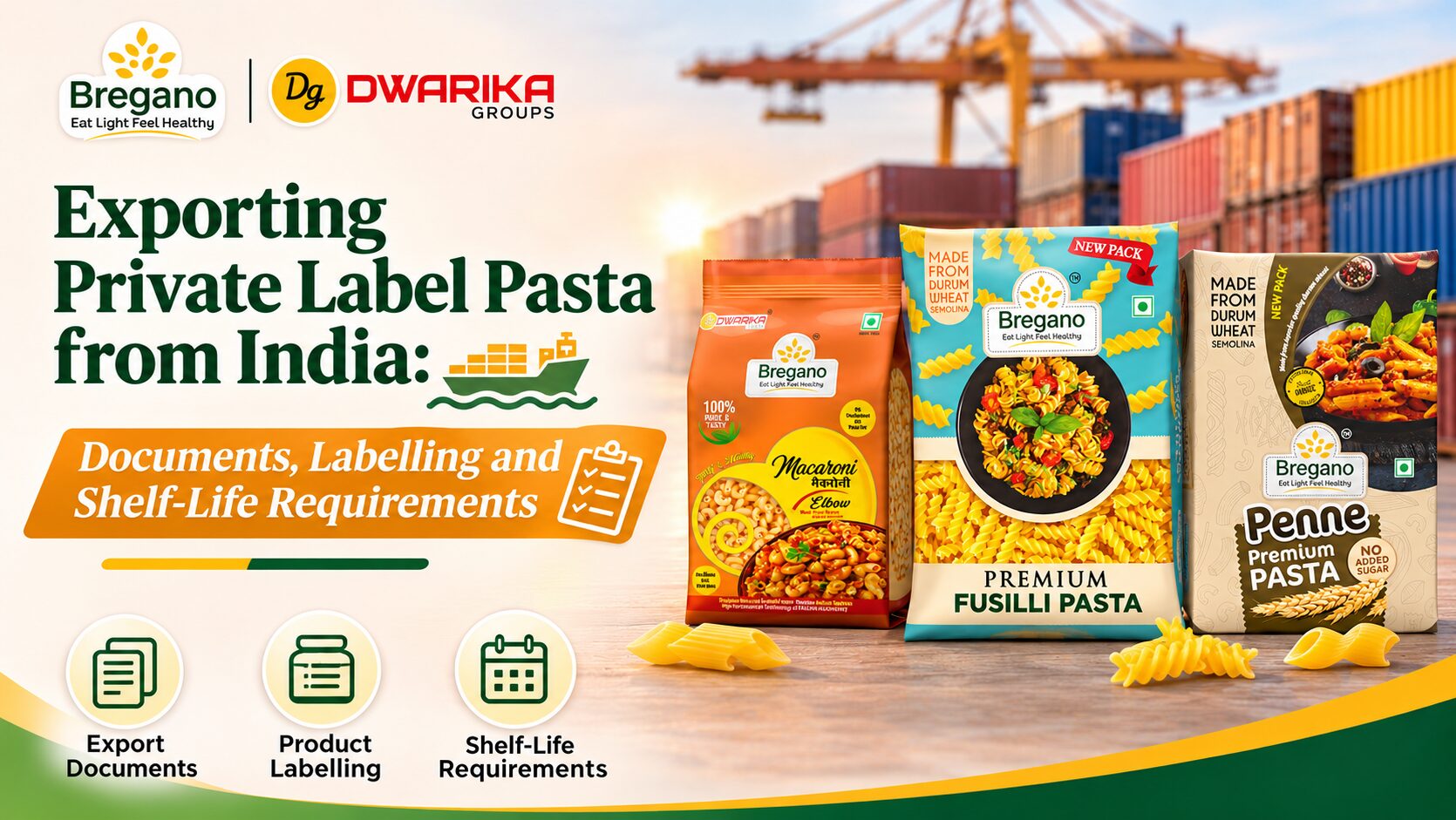
India is a large wheat producer with a growing food processing sector. That makes it a sourcing option for importers, distributors and brands that want private label pasta at scale. But exporting food involves more than placing an order. Documents, destination labelling and shipping conditions all need planning.
This guide explains what buyers and brand owners should prepare before sourcing pasta from an Indian manufacturer for export.
Every country sets its own rules for imported food. Before any production, confirm:
The importer usually knows these rules well. Share them with your manufacturer at the start.
Exact documents depend on the destination and the buyer. Commonly requested documents include:
| Document | Purpose |
|---|---|
| Commercial Invoice | Value and details of goods |
| Packing List | Contents of each carton or pallet |
| Certificate of Origin | Shows where goods were produced |
| Bill of Lading or Airway Bill | Shipping contract and receipt |
| Certificate of Analysis | Test results for the batch |
| Health or Sanitary Certificate | Required by some destinations |
The exporter also needs an Importer Exporter Code (IEC) from the Directorate General of Foreign Trade (DGFT). Confirm the full document list with your freight forwarder or customs broker.
A pack designed for India may not be accepted abroad. Export packs often need:
Some brands use one pack with a local sticker. Others print market-specific packs. Discuss MOQ for each option with your manufacturer.
Sea freight can take weeks, and containers face heat and humidity. Protect dry pasta with:
Importers and retailers often ask for a minimum remaining shelf life on arrival. Plan production timing so stock reaches the market with enough shelf life left. Your best-before date must be supported by shelf-life testing of the product in its export packaging.
Include ingredient specification, cooking quality, moisture, packaging, labelling and testing frequency in your supply agreement. Approve a reference sample before the first shipment.
Before placing an export order, buyers should review the following areas with their manufacturer:
| Step | What to Check | Why It Matters |
|---|---|---|
| 1. Food Rules | Ingredients, additives, language, nutrition and allergen requirements | Helps ensure the product meets destination-country requirements |
| 2. Export Documents | Invoice, packing list, certificate of origin, shipping documents and test reports | Supports shipment documentation and customs clearance |
| 3. Export Labelling | Local language, nutrition format, importer details, country of origin and allergens | Helps ensure the pack is suitable for the destination market |
| 4. Transit Packaging | Moisture barrier, strong cartons, palletisation and moisture control | Helps reduce damage during long-distance transportation |
| 5. Shelf Life | Remaining shelf life and export-pack shelf-life testing | Helps ensure products arrive with sufficient shelf life |
| 6. Quality Specs | Ingredients, cooking quality, moisture, packaging and testing frequency | Helps maintain consistent product quality across shipments |
Bregano manufactures pasta and offers private label production for food brands. Share your target market, pasta shapes and pack format, and our team will discuss what is possible.
Learn more about our pasta manufacturing and the company.
Yes. Discuss your destination’s requirements with the manufacturer before production.
Commonly an invoice, packing list, certificate of origin and shipping documents. Some countries need more. Confirm with your customs broker.
Often, yes. Labelling rules differ by country.
The Importer Exporter Code, issued by DGFT, needed to export from India.