
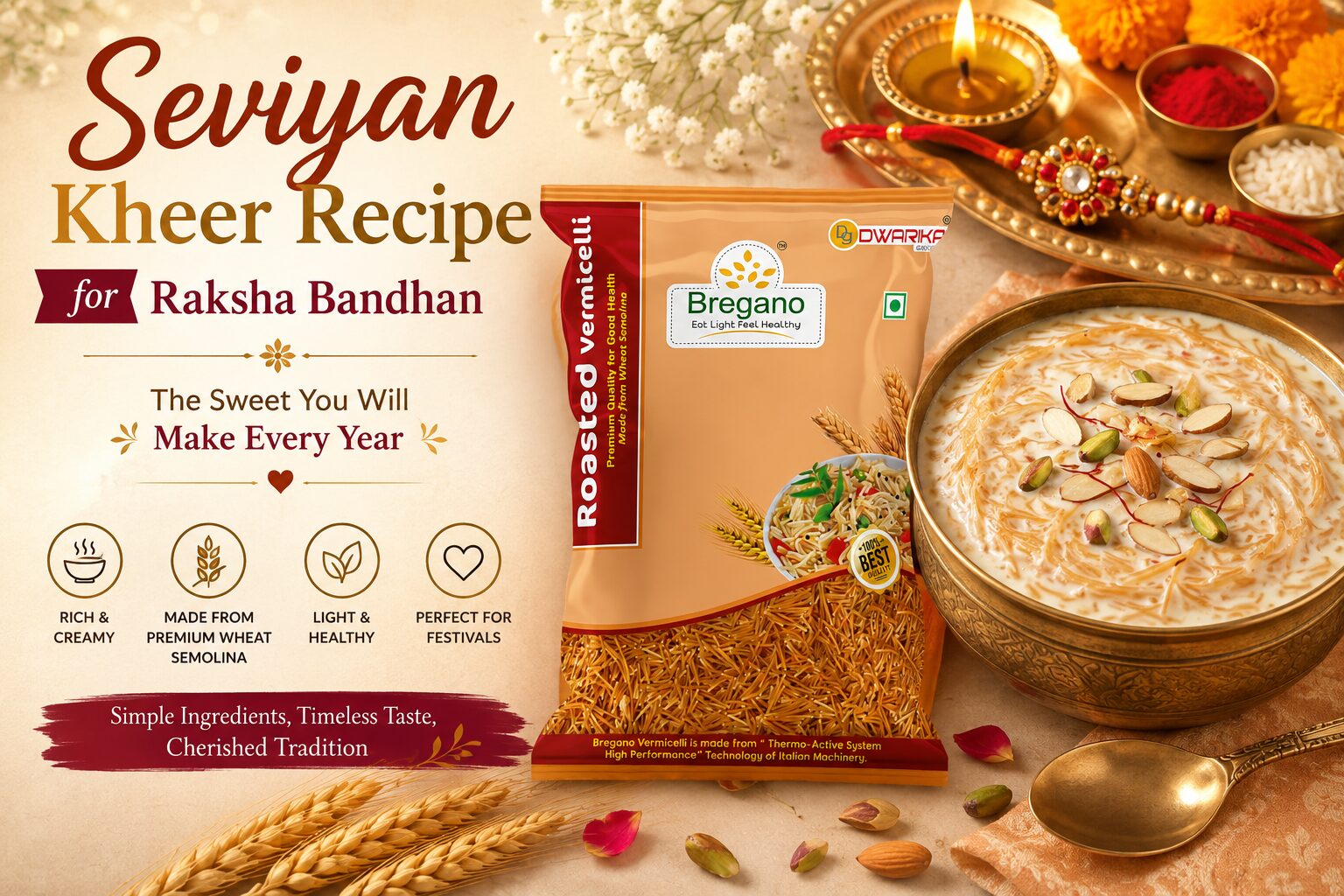
Raksha Bandhan has a specific rhythm to it.
The morning starts early. Someone is ironing clothes. Someone else is hunting for the rakhi that was definitely kept somewhere safe last week. The kitchen begins to smell of ghee and cardamom before the household has quite woken up. And at the centre of that kitchen smell, almost always, is seviyan kheer.
It is not the most elaborate festive dish in the Indian repertoire. It does not require overnight preparation or specialist ingredients or a technique that takes years to master. What it requires is attention, patience, and the right vermicelli. And when it comes together, creamy and fragrant and just sweet enough, it is one of those dishes that makes a festival feel properly celebrated in a way that ordered desserts rarely do.
This is the full guide. The base recipe, the consistency secret, the variations that work, the mistakes that ruin it, and why the seviyan you start with determines more than anything else about how the kheer turns out.
There is a practical reason and a cultural one.
The practical reason first. Seviyan kheer is made in advance and served at room temperature or chilled. On a festival morning when the house is full and people are coming and going, a dessert that you made two hours earlier and simply serve when needed is genuinely useful. You are not standing over a hot pan when the rakhi ceremony is happening. You are present. The kheer handles itself.
The cultural reason is harder to articulate but most people who grew up in North Indian households recognise it immediately. Certain sweets belong to certain occasions in a way that feels non-negotiable. Seviyan at Eid. Kheer at Janmashtami. And seviyan kheer, specifically, at Raksha Bandhan. Part of what makes the festival feel like the festival is the smell of cardamom-laced milk reducing on the stove that morning.
Desserts made with roasted vermicelli, like seviyan or sheer khurma, offer a sweet indulgence without excessive calories. This framing from Bregano’s own website acknowledges what most people intuitively know: seviyan kheer is a lighter, less guilt-inducing festive sweet than mithai heavy with ghee and sugar. When made with quality roasted semolina vermicelli, it is also genuinely more nutritious than most celebration desserts.
Here is the thing about seviyan kheer that most recipes do not address honestly.
The quality of the vermicelli determines the quality of the kheer. Not the quality of the milk. Not how much sugar you add. Not whether you use saffron or cardamom. The vermicelli.
Two problems come from low-quality vermicelli in a kheer.
The first is texture. Cheap maida-based vermicelli breaks down quickly in hot milk. The strands dissolve rather than soften. You get a starchy, thick, paste-like kheer instead of a creamy one with identifiable, slightly firm strands. The texture is the soul of a good seviyan kheer. When it is lost, so is the dish.
The second is flavour. Quality semolina vermicelli has a mild, natural wheat flavour that plays well with milk, cardamom, and nuts. Maida vermicelli is essentially flavourless starch. It adds body to the milk but nothing else. The kheer tastes thin in a way that extra sugar cannot fix.
Bregano Roasted Vermicelli is made from 100% durum wheat semolina (sooji), not maida or refined flour. It is roasted to perfection, providing a delightful, nutty flavour. It contains no preservatives, additives, or trans fats.
That nutty pre-roasted quality is what matters most for kheer specifically. When you briefly toast the vermicelli in ghee before adding milk, the roasting deepens from a mild nuttiness into something more pronounced and fragrant. That flavour carries through the entire kheer and is the difference between a kheer that tastes like something and a kheer that just tastes sweet.
Bregano’s own product description positions it directly for this use: SWEET CELEBRATION: Perfect partner for your happy and auspicious moments with Kheer, Pongal, Sweets, etc.
Available in 400 gram and 860 gram packs. For a Raksha Bandhan kheer for a family of six to eight, a 400-gram pack leaves you with plenty for another recipe later in the week.
Prep time: 5 minutes Cook time: 25 to 30 minutes Total time: 35 minutes Serves: 4 to 6
Step 1: Toast the vermicelli in ghee
Heat ghee in a heavy-bottomed, wide pan on medium heat. Add the Bregano Roasted Vermicelli. Since it is pre-roasted, this step is brief: you are warming the strands in ghee to coat them and deepen their flavour, not roasting them from raw. Stir continuously for one to two minutes until the vermicelli is evenly coated and a shade deeper than when it went in, and the ghee smells fragrant and nutty.
Add cashews. Sauté for another minute until the cashews are lightly golden. Add raisins. Stir for 30 seconds until they plump up slightly. Remove the nuts and raisins from the pan and set them aside. This prevents them from overcooking in the milk later.
Step 2: Add milk and bring to boil
Pour in the full litre of full-fat milk. Bring to a boil on medium-high heat, stirring occasionally. Do not walk away during this stage: milk boils over quickly and the bottom can catch if you are not watching. Keep the heat at medium-high and stir every 30 to 40 seconds, scraping the bottom of the pan each time.
Once the milk comes to a full rolling boil, reduce heat to medium-low.
Step 3: Simmer and reduce
This is the step where patience matters. Let the milk simmer with the vermicelli, stirring every two to three minutes, for 15 to 20 minutes. During this time, two things are happening: the milk is reducing and concentrating, which deepens the flavour and creates a creamier consistency. And the vermicelli is softening and absorbing milk, swelling from thin strands into tender, slightly plump ones.
The kheer is ready when the milk has visibly reduced and the consistency has thickened. When you drag a spoon across the surface, it should leave a trace that fills slowly rather than immediately. This is the consistency you want: rich and coating, not watery, but also not so thick that it sets solid.
Note: the kheer will thicken further as it cools. If it looks too thin in the pan, it will thicken correctly by the time it reaches room temperature or chilling temperature. If it already looks perfectly thick in the pan, it will be too thick once cooled. Account for this and pull it off the heat slightly before it reaches the thickness you want to serve it at.
Step 4: Add sugar, saffron, cardamom
Add sugar and stir until completely dissolved. Add the saffron-soaked milk, cardamom powder, and rose water if using. Stir well. Cook for two to three more minutes.
Step 5: Add nuts and finish
Add back the reserved cashews and raisins. Add sliced almonds. Stir gently.
Nuts: cashews and raisins add a crunch and sweetness. The combination of the creamy, slightly thick kheer against the crunch of a warm cashew is one of those textural contrasts that makes a dish genuinely worth eating rather than just nutritionally adequate.
Step 6: Serve
Serve warm, or refrigerate for two to three hours and serve chilled. Garnish with a few extra sliced almonds and a strand of saffron.
Chilled seviyan kheer served in small bowls or glasses is the more elegant Raksha Bandhan presentation. The flavours also deepen after a few hours in the fridge as the vermicelli continues to absorb the milk.
The most common failure mode in seviyan kheer is getting the consistency wrong in one of two directions.
Too thin: the milk was not reduced enough, or too much milk was used relative to the vermicelli. Result: a watery kheer that separates in the bowl and tastes diluted.
Too thick: the kheer was reduced too far in the pan, or it was chilled before accounting for the thickening that happens on cooling. Result: a dense, pudding-like mass that is pleasant but not quite the flowing, creamy kheer it should be.
The fix for both problems is understanding that the kheer continues to change after you stop cooking it.
It thickens on cooling at room temperature. It thickens more in the fridge. If you are serving chilled, pull it off the heat when it still looks slightly thinner than you want. If you are serving warm, pull it at the consistency you want to serve.
If your kheer has gone too thick after chilling: add two to three tablespoons of warm milk and stir gently. It loosens immediately.
If your kheer is too thin after serving warm: return to the pan on medium-low heat and reduce for five more minutes, stirring continuously.
For kheer and milk-based recipes, you control the consistency through cook time rather than a fixed ratio. This is the core principle: there is no single correct water or milk ratio for kheer because every stove, pan, milk brand, and vermicelli behaves slightly differently. The cook time is the variable you adjust, not the ingredient amounts.
The base recipe above is the classic. These variations are for the households that make seviyan kheer more than once a year and want to keep it interesting.
Variation 1: Condensed Milk Seviyan Kheer
Replace half the sugar with three to four tablespoons of condensed milk added in the final two minutes of cooking. Condensed milk adds richness and a very slightly caramelised sweetness that sugar alone does not achieve. The kheer is creamier, slightly denser, and stays good in the fridge for longer than the base recipe. Good for when you are making it a day ahead for a large gathering.
Variation 2: Jaggery Seviyan Kheer
Replace white sugar entirely with grated jaggery. Add off the heat after removing the pan from the stove: jaggery can cause milk to curdle if added while still at full boil. Stir until dissolved in the residual heat. The flavour is deeper, with a molasses note that is very different from the clean sweetness of sugar. If you have not had seviyan kheer with jaggery before, make a small test batch first as the taste is distinctly different and not universally loved.
Variation 3: Saffron-Forward Seviyan Kheer
Double the saffron quantity and soak it in warm milk for at least 20 minutes before adding. The kheer turns a deep golden-yellow and the saffron flavour becomes prominent rather than background. This is the Raksha Bandhan version that looks genuinely beautiful in a small glass or shot cup, garnished with a single strand of saffron on top. For photographs and presentation, this version is the most striking.
Variation 4: Dry Fruit Heavy Seviyan Kheer
Add chopped pistachios, charoli (chironji), and dried rose petals alongside the standard cashews and raisins. This is the sheer khurma variation, closer in spirit to the Eid preparation. Dates, finely sliced, can also be added in the final five minutes of cooking. This is the most elaborate variation and the richest. For a Raksha Bandhan where the sweet is the centrepiece rather than one of several dishes, this is the version to make.
Raksha Bandhan mornings are busy. The single most practical piece of advice in this entire blog is this: make the kheer the night before.
The flavours improve overnight. The saffron deepens. The cardamom integrates. The vermicelli absorbs more milk and becomes slightly softer and more yielding. A kheer made the morning before Raksha Bandhan and refrigerated overnight is genuinely better than one made fresh on the morning of the festival.
Cover the bowl with cling film or a lid pressed against the surface of the kheer to prevent a skin from forming. Refrigerate for up to 24 hours.
Before serving, check the consistency. If it has thickened more than you want, add two to three tablespoons of cold or warm milk and stir gently. Add a few fresh nuts on top. Done.
How you serve seviyan kheer at a festival changes how it is received.
Small glasses or kulhads are more festive than bowls. The height-to-width ratio of a glass or kulhad shows the kheer off better than a flat bowl where it spreads out and looks like less than it is.
Garnish matters. A single strand of saffron on top, a few sliced pistachios, maybe a dried rose petal: these take 30 seconds and make the kheer look like it came from a mithai shop rather than your kitchen. For a festival where the visual presentation is part of the celebration, this small extra effort is worth it.
Serve chilled for summer Raksha Bandhan (which it almost always is, falling in August). Cold seviyan kheer on a warm day is a more satisfying experience than room-temperature kheer in the heat.
If you are packaging the kheer as a gift for a sibling or family member, small glass jars with tight lids work perfectly. Label them, tie a ribbon, and the kheer becomes the gift rather than an accompaniment to one.
Mistake one: Not stirring frequently enough during reduction.
When milk heats in a pan, proteins and sugars in the milk settle and burn at the bottom if left undisturbed. A burnt milk base changes the entire flavour of the kheer, adding a slightly bitter, scorched taste that no amount of sugar or cardamom can mask. Stirring every two to three minutes, scraping the bottom each time, prevents this entirely. It is not a difficult technique. It just requires being present in the kitchen during the 20-minute reduction.
Mistake two: Adding sugar too early.
Sugar, when added to hot milk early in the cooking process, slows the reduction. The kheer takes longer to thicken and the milk proteins behave differently in a sugared liquid. Always add sugar in the final five minutes of cooking, after the milk has already reduced to near the consistency you want. The same applies to condensed milk if using the variation above.
Both mistakes are recoverable in the moment (scorching less so once it has started) but much easier avoided with awareness.
Everything below is verified directly from bregano.in.
From Bregano’s product description directly: SWEET CELEBRATION: Perfect partner for your happy and auspicious moments with Kheer, Pongal, Sweets, etc.
Desserts made with roasted vermicelli, like seviyan or sheer khurma, offer a sweet indulgence without excessive calories.
Pack sizes: 400 grams and 860 grams.
Certifications: FSSAI, GMP, GHP.
Part of Dwarika Group, food manufacturing since 1992. Bregano launched 2019. 7-acre fully automated facility in Rudrapur, Uttarakhand. Guided by the vision of Mr. Balram Agrawal.
Vermicelli is a nutritious ingredient that provides essential nutrients such as carbohydrates, protein, and fibre. It is low in fat and calories.
Where to buy: shop.bregano.in, Amazon, Flipkart, instamart, and JioMart.
Follow @breganoproducts on Instagram for recipes and updates.
What is seviyan kheer?
Seviyan kheer is a traditional Indian sweet made by simmering vermicelli (seviyan) in full-fat milk with sugar, cardamom, and nuts until the milk reduces and the dish becomes creamy and fragrant. It is also known as vermicelli kheer or semiya kheer depending on the region. It is one of the most popular sweets made for Raksha Bandhan, Eid, Diwali, and other festivals across India.
What type of vermicelli is best for seviyan kheer?
Roasted vermicelli made from 100% durum wheat semolina is the best choice. The pre-roasting develops a mild nutty flavour that deepens further when briefly toasted in ghee. Maida-based vermicelli tends to break down in hot milk rather than softening into tender strands, which produces a starchy, paste-like kheer instead of a creamy one. Bregano Roasted Vermicelli is made from 100% durum wheat semolina, roasted to perfection, with no preservatives or additives.
How do I make seviyan kheer thicker?
Continue simmering on medium-low heat, stirring every two to three minutes, until the milk reduces further. Remember that the kheer thickens significantly as it cools, so remove from heat when it looks slightly thinner than the final consistency you want. For a quick fix on already-cooked kheer that is too thin: return to the pan and reduce for five more minutes.
Can I make seviyan kheer the night before?
Yes, and it is recommended for festive occasions. The flavours deepen overnight and the saffron and cardamom integrate fully. Cover and refrigerate for up to 24 hours. Before serving, stir gently and add a few tablespoons of milk if it has thickened too much in the fridge. Garnish fresh before serving.
How many calories are in seviyan kheer?
A typical serving of seviyan kheer, approximately 150 grams, contains roughly 180 to 220 kilocalories depending on how much sugar and ghee is used and the fat content of the milk. Desserts made with roasted vermicelli like seviyan offer a sweet indulgence without excessive calories compared to heavier mithai.
Can I use low-fat milk for seviyan kheer?
You can, but the kheer will be less creamy and take longer to reach the right consistency since low-fat milk has less protein and fat to contribute to the body of the dish. If using low-fat milk, add one to two tablespoons of condensed milk in the final stage to restore some creaminess.
Can seviyan kheer be served warm or cold?
Both. Warm seviyan kheer is traditional and comforting. Chilled seviyan kheer is more refreshing for a summer festival like Raksha Bandhan and also easier to serve when people are coming and going throughout the day. The flavour is slightly different between warm and cold: chilled kheer is more intense and concentrated. Both are correct.
Order Bregano Roasted Vermicelli at www.shop.bregano.in Available in 400g and 860g packs. FSSAI, GMP, GHP certified. 100% Durum Wheat Semolina. No Maida. No Preservatives. Roasted to Perfection. SWEET CELEBRATION: Perfect partner for Kheer, Pongal, Sweets, and all your auspicious moments. Part of Dwarika Group, food manufacturing since 1992. Follow @breganoproducts on Instagram for festival recipes and cooking tips.