
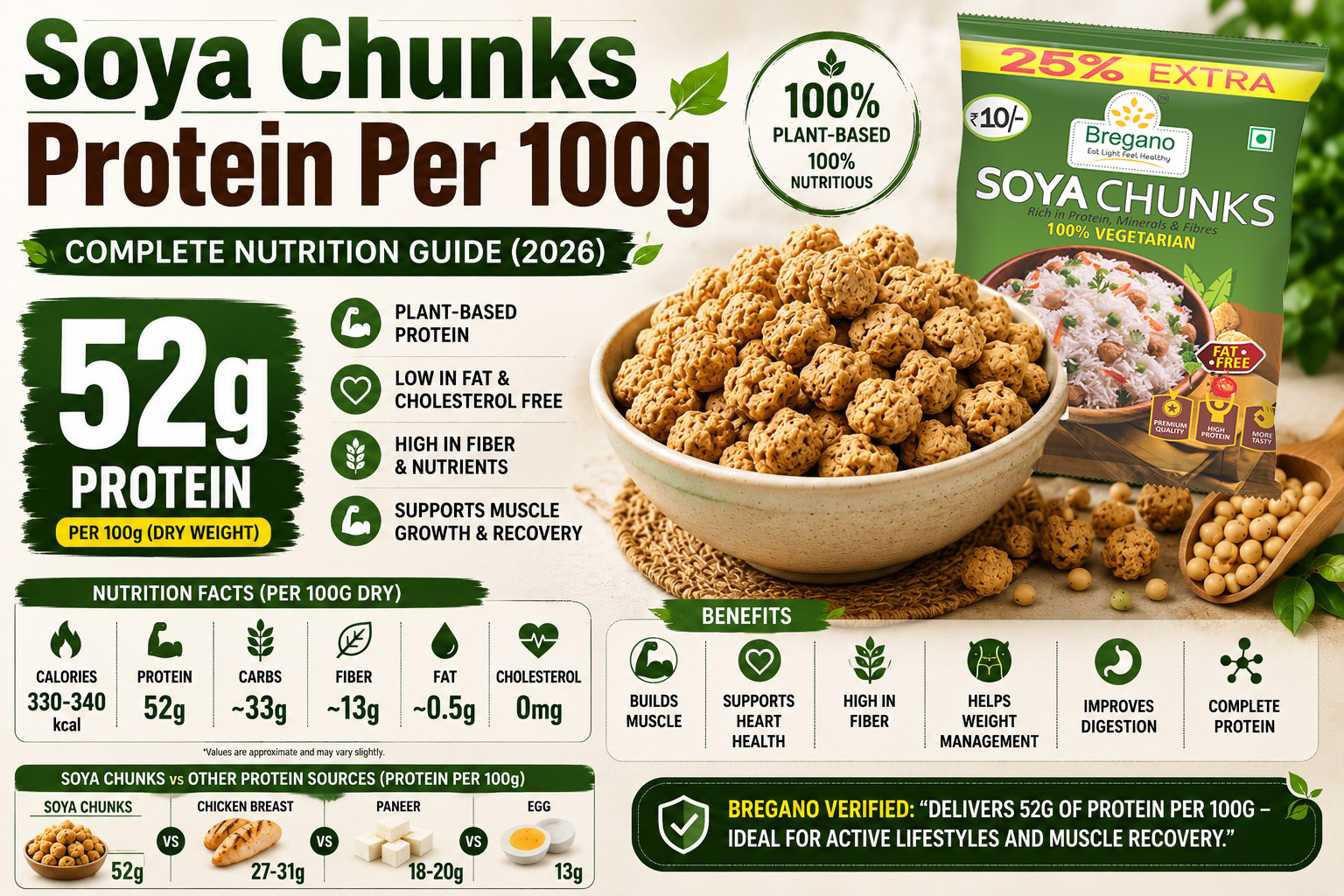
52 grams of protein per 100g (dry weight).
That is the verified figure for soya chunks, one of the highest plant-based protein concentrations of any food available in Indian kitchens. To put it in perspective: chicken breast contains roughly 27-31g protein per 100g, paneer contains around 18-20g, and eggs contain around 13g. Soya chunks in dry form contain nearly double the protein of chicken.
This number explains why soya chunks have become the default protein source for vegetarian athletes, gym-goers, and health-conscious Indian households.
Bregano Verified: Delivers 52g of protein per 100g ideal for active lifestyles and muscle recovery.
That figure comes directly from Bregano’s official product page for their Soya Chunks and is consistent with standard nutritional data for defatted soy flour-based textured vegetable protein (TVP).
| Nutrient | Amount (per 100g dry) |
| Calories | ~330-340 kcal |
| Protein | 52g |
| Carbohydrates | ~33g |
| Dietary Fiber | ~13g |
| Fat | ~0.5g |
| Cholesterol | 0mg |
Key takeaways from this table:
Protein dominates the profile. At 52g per 100g, protein makes up more than half the dry weight. This is rare for any food plant-based or otherwise.
Fat is negligible. At approximately 0.5g per 100g, soya chunks are functionally fat-free in their dry form. This matters for anyone managing dietary fat or cholesterol.
Zero cholesterol. Being plant-derived, soya chunks contain no cholesterol at all. This is a meaningful advantage over animal proteins for people concerned about heart health.
Fiber is substantial. At ~13g per 100g, soya chunks deliver meaningful dietary fiber alongside their protein unlike most animal proteins, which contain zero fiber.
After cooking (rehydrated): When soya chunks are soaked and cooked, they absorb water and roughly double in size. The protein per 100g of cooked/rehydrated soya chunks drops to approximately 13-16g per 100g because of the added water weight but the total protein in the serving remains the same as in the dry portion you started with.
Soya chunks, also known as textured vegetable protein (TVP), are a meat substitute made from defatted soy flour. They’re known for their meaty texture and high protein content, making them a favourite among vegetarians and vegans.
The manufacturing process is straightforward. Soybeans are pressed to extract oil. The solid by-product of defatted soy flour is then extruded under heat and pressure into chunk shapes, which puff up and are dried. The result is a dense, shelf-stable, high-protein ingredient with a naturally neutral flavour.
They are also known as:
When hydrated, soya chunks take on a texture similar to meat, which makes them an excellent addition to various dishes.
This texture-mimicking quality, combined with their protein content, is why soya chunks work in everything from curries and biryani to tikkas and salads.
For vegetarians and vegans in India, getting adequate protein from food alone can be challenging. Dal, paneer, and rajma are common sources but none come close to soya chunks’ 52g per 100g.
Bregano Soya Chunks stand out as one of the richest vegetarian protein sources, making them perfect for Indian diets.
Plant-based proteins are cholesterol-free, easy to digest, and eco-friendly.
Soya protein is also a complete protein; it contains all nine essential amino acids that the human body cannot produce on its own. This is unusual for plant proteins, which are often deficient in one or more essential amino acids.
Delivers 52g of protein per 100g ideal for active lifestyles and muscle recovery.
High in Protein: Soya chunks are a great protein source, essential for muscle repair and growth.
Protein is required for muscle protein synthesis, the biological process by which your body builds and repairs muscle tissue after exercise. At 52g per 100g, a single serving of soya chunks (roughly 25-30g dry) provides 13-16g of protein, which contributes meaningfully toward daily protein targets for active individuals.
For vegetarian gym-goers and athletes, soya chunks are one of the most efficient and affordable ways to meet elevated protein requirements without relying on dairy or animal protein.
Low in fat and cholesterol supports heart health.
Low in Fat: They are low in fat, making them a healthy alternative to meat.
With approximately 0.5g fat per 100g (dry) and zero cholesterol, soya chunks place minimal burden on cardiovascular health. For individuals monitoring LDL cholesterol or managing heart conditions, replacing higher-fat animal protein with soya chunks is a practical dietary swap.
High in fiber, it promotes gut health and aids with digestion.
At approximately 13g fiber per 100g dry, soya chunks provide both soluble and insoluble fiber. Dietary fiber:
This fiber content sets soya chunks apart from most animal protein sources, which contain zero dietary fiber.
Can soya chunks be eaten daily? Yes, they are safe and nutritious for daily consumption.
For most healthy adults, moderate daily consumption of soya chunks (one or two servings per day as part of a balanced diet) is considered safe and nutritious. The key is moderation as with any single food source, excessive consumption of soya to the exclusion of other proteins is not advisable.
Are they good for children? Yes, high in protein and easy to digest for kids.
Children have elevated protein requirements relative to their body weight to support growth and development. Soya chunks provide high-quality complete protein in a form that is easy to cook, easy to chew (when cooked properly), and easy to incorporate into familiar Indian dishes.
Are soya chunks a good meat alternative? Yes, they are an excellent plant-based protein source.
The combination of high protein content, meaty texture when hydrated, neutral base flavour, and ability to absorb spices makes soya chunks one of the best functional meat replacements available particularly for Indian cooking styles where the masala and sauce are the dominant flavour carriers.
| Food (per 100g) | Protein | Fat | Cholesterol | Fiber | Calories |
| Soya Chunks (dry) | 52g | 0.5g | 0mg | 13g | ~335 kcal |
| Chicken Breast | 27-31g | 3-5g | 85-90mg | 0g | ~165 kcal |
| Paneer | 18-20g | 20-25g | 60-70mg | 0g | ~265 kcal |
| Eggs (whole) | 13g | 11g | 373mg | 0g | ~155 kcal |
| Rajma (cooked) | 8-9g | 0.5g | 0mg | 6-8g | ~127 kcal |
| Dal (cooked) | 7-9g | 0.5g | 0mg | 4-5g | ~115 kcal |
| Tofu | 8-10g | 4-5g | 0mg | 0.3g | ~76 kcal |
What this table shows:
Soya chunks (dry) contain more protein per 100g than any other food on this list including chicken breast. The comparison is somewhat indirect because chicken is typically consumed as-is while soya chunks double in volume after rehydration. But when you compare the actual protein yield from the serving you cook, soya chunks are highly competitive.
The fat and cholesterol comparison is where soya chunks really stand out against animal proteins. Zero cholesterol and near-zero fat make them the clear choice for heart-health-focused diets.
The fiber comparison shows another unique advantage: soya chunks provide substantial fiber alongside their protein, something no animal protein source can offer.
Getting the cooking right is essential. Improperly prepared soya chunks end up rubbery, bland, or mushy all problems that good technique eliminates.
Step 1: Soak properly
Soak soya chunks in hot water until they become soft, spongy, and fully expanded. This typically takes 15-20 minutes. Proper hydration is essential because under-soaked chunks stay tough in the center.
Not Soaking Properly: Always soak them in hot water to ensure they’re tender.
Step 2: Drain and squeeze
Drain and Squeeze: After soaking, drain the water and squeeze out any excess liquid from the soya chunks.
Squeezing is important. The water absorbed during soaking carries some of the raw soy odor. Squeezing it out results in a cleaner-tasting final dish.
Step 3: Rinse again
Rinse: Rinse the chunks in cold water and squeeze again to remove any remaining water. Now they’re ready to be cooked!
Boil in salted water for better flavour
Boiling the soaked chunks in lightly salted water before adding to your dish seasons them from the inside, not just the surface.
Season generously
Absorbs spices and flavors effortlessly perfect for Indian cuisine.
Underseasoning: Soya chunks need to be well-seasoned to bring out their flavour.
Soya chunks have a neutral flavour by design. This is actually an advantage: they absorb whatever spices and sauces you cook them with. Under-seasoning is the most common mistake.
Don’t overcook
Overcooking: Overcooked soya chunks can become mushy, so cook them just right.
Once the chunks have been soaked and are going into a gravy or curry, they need only 7-10 minutes of cooking time. Extended simmering breaks down their texture.
Air frying works
Can I air-fry soya chunks? Absolutely. They become crispy and flavorful with minimal oil.
For those who want a crispy preparation with minimal oil tikka-style or as a dry snack, air frying is a good option.
Boil and rinse the soya chunks. Squeeze dry. Sauté onions in oil until golden. Add ginger-garlic paste and chilli. Add spices and tomato puree. Cook until oil separates. Add soya chunks with ½ cup water. Simmer for 7 minutes. Garnish with coriander and serve hot.
Soya Pulao: Mix chunks with basmati rice and veggies.
Soya Tikka Wrap Grill marinated chunks in paratha with onions and chutney.
Soya 65 Fry with cornflour and Bregano Masala for a spicy treat.
Can I use masalas with soya chunks?
Definitely. Garam Masala and Kitchen King work wonderfully.
This section contains only claims directly verified from Bregano’s official website. Nothing has been assumed or inferred.
Protein content (verified): Delivers 52g of protein per 100g ideal for active lifestyles and muscle recovery.
Ingredients (verified): Made from 100% defatted soy flour, no preservatives, no additives.
Fat and cholesterol (verified): Low in fat and cholesterol supports heart health.
Product name/variety (verified): Bregano Soya Chunks & Mini Soya Chunks (pack Of 2 X 200 g)
The product is available in both regular Soya Chunks and Mini Soya Chunks variants, sold as a pack of 2 x 200g.
Also known as (verified): Also known as meal maker or soya nuggets, these small, spongy chunks are protein-rich, low in fat, and incredibly versatile.
Target audience (verified): Whether you’re a gym-goer, vegetarian, or someone seeking nutritious alternatives, Bregano Soya Chunks offer a delicious and trustworthy solution.
Position in Indian diets (verified): Bregano Soya Chunks stand out as one of the richest vegetarian protein sources, making them perfect for Indian diets.
Plant-based benefits (verified): Plant-based proteins are cholesterol-free, easy to digest, and eco-friendly.
Where to order (verified): Order now at www.bregano.in and experience the health benefits of Bregano Soya Chunks.
Social media (verified): Follow us on Instagram @breganoproducts for recipes, nutrition facts, and cooking tips.
Brand Heritage (verified from brand book and multiple Bregano pages): Bregano is part of Dwarika Food Products, under the Dwarika Group established in 1992. The brand launched in 2019. Manufacturing facility: 7-acre plant in Rudrapur, Uttarakhand. Certifications include FSSAI, GMP, GHP, FSSC 22000, HACCP, and Halal.
What is NOT verified / not stated on Bregano’s website:
52 grams of protein per 100g (dry weight). This is verified from Bregano’s official website: Delivers 52g of protein per 100g ideal for active lifestyles and muscle recovery.
This is the dry weight figure. After soaking and cooking, soya chunks absorb water and expand so 100g of cooked/rehydrated soya chunks will contain less protein per 100g by weight, but the total protein in your serving is determined by how much dry product you started with.
Per 100g dry weight, soya chunks (52g protein) contain more protein than chicken breast (27-31g per 100g). However, this is a dry vs. cooked comparison.
When you hydrate 100g of dry soya chunks, you get approximately 200-220g of cooked product with the same ~52g of protein. Meanwhile 100g of cooked chicken contains ~27-31g protein.
For a vegetarian diet, soya chunks are one of the best protein sources available. They also offer zero cholesterol and significant fiber advantages chicken does not have.
A typical single serving of dry soya chunks is 25-30g (approximately 1/4 cup dry), which provides roughly 13-16g of protein and roughly 85-100 calories before cooking.
For most adults with moderate protein needs (~0.8-1g protein per kg body weight per day), one to two servings of soya chunks as part of a mixed protein diet is reasonable. Athletes or individuals targeting higher protein intake may eat more.
Can soya chunks be eaten daily? Yes, they are safe and nutritious for daily consumption.
Protein is largely heat-stable. Cooking soya chunks does not significantly destroy their protein content. What changes is the weight of the product because water is absorbed, the protein-per-100g of cooked product appears lower, but the actual grams of protein in your serving remain constant.
The soaking water you squeeze out contains minimal protein, mostly water-soluble minor compounds responsible for the raw soy smell. Squeezing is recommended for flavour, not a cause for concern about protein loss.
Yes, for several reasons. The high protein content increases satiety. Protein takes longer to digest than carbohydrates and triggers satiety hormones more strongly. The high fiber content also contributes to fullness. And the calorie count is moderate relative to the volume and nutrition provided.
Low in Fat: They are low in fat, making them a healthy alternative to meat.
The near-zero fat content also means soya chunks add minimal caloric density compared to higher-fat proteins like paneer or nuts.
No. Soya chunks must be soaked and cooked before eating. Raw, dry soya chunks are hard, difficult to chew, and contain anti-nutritional factors (such as trypsin inhibitors) that interfere with protein digestion. Cooking neutralizes these factors, making the protein fully bioavailable.
The protein content and nutritional profile are the same, the difference is purely size. Mini soya chunks are smaller in dimension and are suited for dishes where smaller pieces work better: quick stir-fries, fried rice, bhurji-style preparations, or dishes where you want more even distribution throughout.
Bregano offers both: Bregano Soya Chunks & Mini Soya Chunks (pack Of 2 X 200 g).
Yes. Soya chunks are made from defatted soy flour, a plant ingredient. They contain no animal-derived ingredients.
Made from 100% defatted soy flour, no preservatives, no additives.
This makes them suitable for both vegetarian and vegan diets.
No. Soya (soybean) is naturally gluten-free. Soya chunks made purely from defatted soy flour contain no wheat, barley, or rye, the grains that contain gluten. However, if you have celiac disease or severe gluten sensitivity, check for cross-contamination disclosure on the specific product you buy.
Order now at www.bregano.in and experience the health benefits of Bregano Soya Chunks.
Online: shop.bregano.in, Amazon India, Flipkart, Instamart
Follow us on Instagram @breganoproducts for recipes, nutrition facts, and cooking tips.
Soya chunks deliver 52g of protein per 100g, a figure verified from Bregano’s official website and consistent with standard nutritional data for defatted soy TVP. No other commonly available Indian kitchen ingredient approaches this protein density on a plant-based basis.
For vegetarians, gym-goers, budget-conscious shoppers, or anyone looking to increase protein intake without relying on expensive supplements or animal protein, soya chunks are one of the most practical and well-rounded food choices available.
Bregano Soya Chunks made from 100% defatted soy flour with no preservatives and no additives are a clean, trusted option available across India online and offline.
Shop now at www.shop.bregano.in Follow @breganoproducts on Instagram for recipes and nutrition tips.
Keywords: soya chunks protein per 100g, soya chunks nutrition facts, soya chunks protein content, soya chunks health benefits, meal maker protein, soya nuggets protein, how much protein in soya chunks, soya chunks vs chicken protein, soya chunks for gym, Bregano soya chunks