
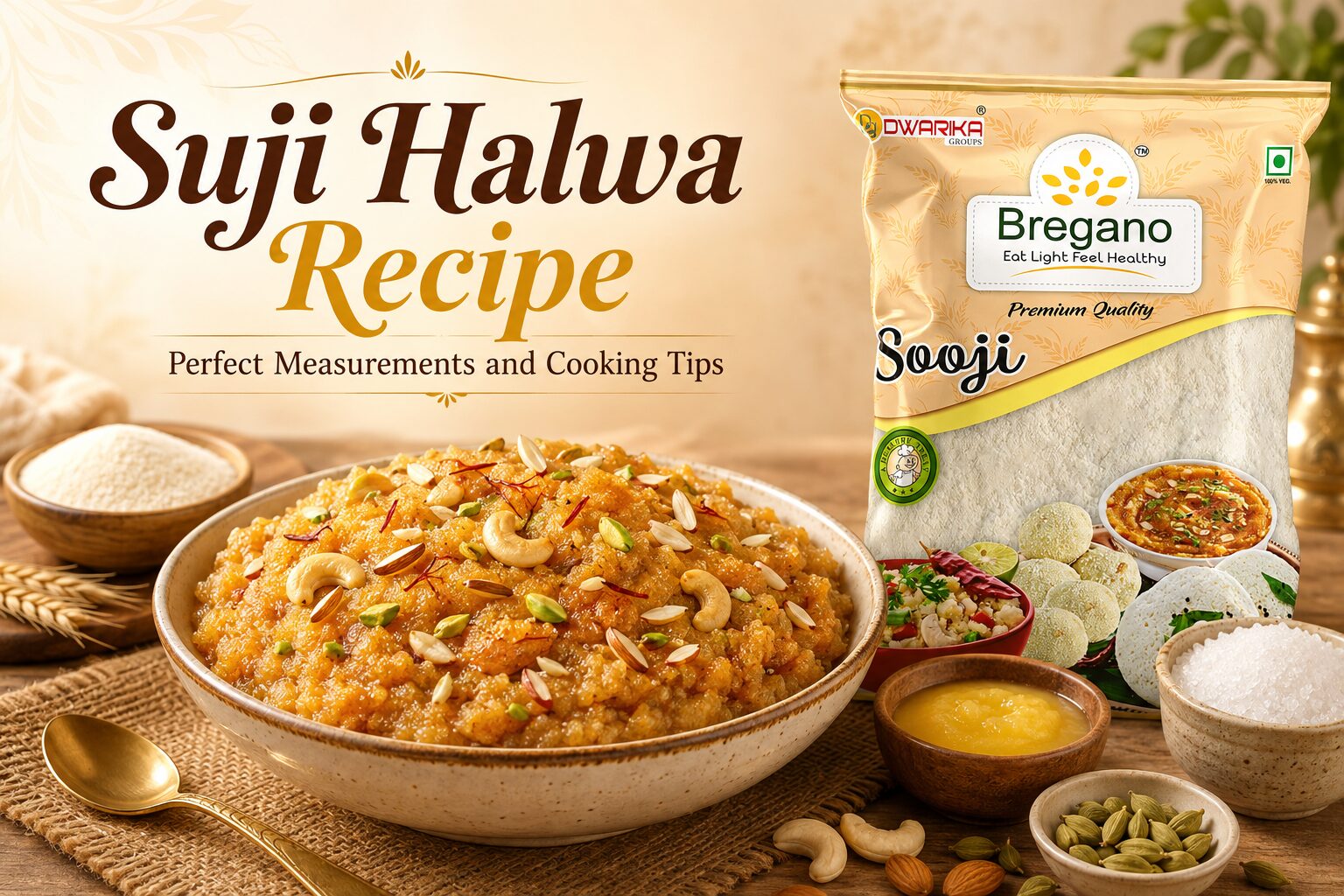
Some dishes are technically simple but fail constantly in practice. Suji halwa is one of them.
Not because the recipe is complicated. Because two specific things, both easy to get right once you know them, go wrong quietly and the result is halwa that is either lumpy, gummy, too dry, or tastes of raw semolina underneath all the ghee and sugar.
This blog fixes both of those things. The measurements are exact, not approximate. The roasting technique is explained in the kind of detail that actually makes a difference. The water ratio question, which is where most recipes are vague, is answered precisely. And the variations cover everything from prasad to a sweet breakfast to the restaurant-style halwa that arrives in a brass bowl with a pool of ghee on top.
If you have made suji halwa before and it was fine but not memorable, this guide is for you.
Suji halwa, also known as sooji halwa, sheera, or rava kesari in different parts of India, is a warm sweet made from semolina (suji or sooji) roasted in ghee and cooked in sugar syrup or sweetened water until it reaches a soft, cohesive, deeply fragrant consistency.
It is one of the oldest and most widely made Indian sweets. It is served as prasad in temples and homes during pujas. It is made for festival mornings when something sweet needs to be ready before the ceremony begins. It appears at weddings, on thali menus, as a quick weekday dessert, and as a breakfast on cold winter mornings with a drizzle of extra ghee.
The dish’s footprint across Indian food culture is enormous. What varies by region is the texture: North Indian halwa tends to be drier, each grain of sooji distinct, the halwa holding its shape when spooned. South Indian sheera or rava kesari is wetter, more fluid, sometimes coloured with saffron, eaten with pooris. Both are correct within their traditions.
The base recipe in this blog produces the North Indian style: soft, fragrant, holding shape without being sticky, rich with ghee and cardamom.
Before technique, the ratios. Most suji halwa recipes online give approximate measurements. The problem with approximations in halwa is that a small variation in the suji-to-water ratio produces a large change in the final texture. Too little water and the halwa is dry and grainy. Too much and it is gummy and paste-like.
These are the verified ratios that produce a correctly textured halwa:
Standard suji halwa ratio:
Suji (semolina): 1 cup Ghee: half cup Sugar: half cup to three-quarters cup (adjust to sweetness preference) Water: 2 cups (for a standard consistency) Cardamom powder: half teaspoon Milk: quarter cup (optional, adds richness)
What these ratios produce: soft, spoonable halwa that holds its shape when plated and melts on the tongue without being gummy or dry.
For prasad consistency (slightly drier, holds shape firmly): reduce water to 1 and a half cups per 1 cup suji.
For restaurant style (wetter, more ghee, pooling on the plate): increase ghee to three-quarters cup and water to 2 and a half cups per 1 cup suji.
For breakfast halwa (lighter, less sweet): reduce sugar to quarter cup and ghee to one-third cup.
The water quantity is the single variable that most determines final texture. Everything else affects flavour. Water affects structure.
Before the recipe, a conversation about the primary ingredient that almost no suji halwa blog addresses.
Suji is semolina: coarsely milled wheat. But not all suji is the same. The coarseness of the grind, the freshness of the wheat, and the quality of the source grain all affect how the halwa behaves and tastes.
Fresh, quality sooji: faint, clean wheat aroma. Light golden or cream colour. Consistent granule size. When dry-roasted in ghee, it turns golden quickly and develops a strong, warm, nutty fragrance.
Old or poor-quality sooji: flat or slightly stale smell. Inconsistent granule size, meaning some parts roast faster than others, producing uneven colour and flavour. The halwa made from it tastes dull even with correct technique and good ghee.
Bregano Sooji is described on their website as finely milled and quality tested, part of the Everyday Cooking Combo alongside Maida and Besan. Customer reviews confirm: the sooji is fine texture and fresh. Makes halwa, everything turns out good.
Each ingredient in Bregano’s range is hygienically processed, finely milled, and packed to preserve freshness, so every dish starts with the best.
Pack size: 500 gram packs, available as part of the Everyday Cooking Combo.
The key word in those descriptions is freshness. Suji that has been sitting in a warm, humid pantry for six months makes detectably worse halwa than fresh, properly stored suji. Moisture-proof, sealed packaging that maintains freshness from the factory to your kitchen is the practical difference.
Prep time: 5 minutes Cook time: 20 to 25 minutes Total time: 30 minutes Serves: 3 to 4
1 cup Bregano Sooji (semolina) Half cup ghee (clarified butter) Half to three-quarters cup sugar (adjust to taste) 2 cups water Half teaspoon cardamom powder Quarter cup milk (optional) 2 tablespoons cashews, broken 1 tablespoon raisins A few saffron strands soaked in 2 tablespoons warm milk (optional) Extra ghee for finishing (optional)
Step 1: Prepare the sugar syrup
This step is often skipped in quick recipes and it is a mistake. Preparing the sugar syrup separately before roasting the suji gives you complete control over the halwa’s texture.
In a separate pot, combine 2 cups water, sugar, and milk if using. Bring to a boil, stirring until the sugar dissolves completely. Add saffron-soaked milk if using. Keep this on low heat while you roast the suji. It should stay warm, not boiling hard, when you add it to the suji.
Why warm syrup matters: when you add cold water to hot roasted suji, the temperature shock can cause the suji to clump and cook unevenly. Warm sugar syrup slides into the hot suji smoothly, allowing even, rapid absorption.
Step 2: Roast the suji in ghee
This is the most important step in the entire recipe.
Heat ghee in a heavy-bottomed wide pan on medium heat. Add the cashews first. Sauté until they are light golden, about one minute. Add raisins, stir for 30 seconds until they plump up. Remove cashews and raisins from the pan and set aside.
Add Bregano Sooji to the ghee in the pan. Reduce heat to medium-low.
Roast the suji continuously, stirring without stopping, until it turns light golden and smells deeply nutty and fragrant. This takes eight to twelve minutes depending on your pan and stove. The suji should go from its raw cream colour to a warm golden tone throughout, not just at the edges.
Roasting is the flavour development phase. Raw suji tastes chalky and flat. Correctly roasted suji smells of warm toasted wheat and ghee combined, a specific, comforting aroma that you will recognise immediately as the smell of halwa being made. That aroma is the signal: the roasting is done.
Two signs you are there: The suji has changed from its raw pale colour to a uniform warm golden. The kitchen smells of toasted grain and ghee.
One sign you have gone too far: The suji begins to darken unevenly and smells slightly sharp. Stop immediately if you see this.
Step 3: Add the warm sugar syrup
This is the moment that requires the most care.
Reduce heat to low. Pour the warm sugar syrup into the roasted suji in a slow, steady stream. Stir continuously as you pour. The mixture will bubble and steam aggressively as the syrup hits the hot ghee-coated suji. This is normal. Keep stirring.
Once all the syrup is added, stir continuously on low heat until the suji absorbs all the liquid and the halwa comes together in a cohesive mass that begins to leave the sides of the pan. This takes three to five minutes.
The key during this phase: do not stop stirring. The suji absorbs liquid from the bottom up. If you stop stirring, the bottom sets and sticks while the top remains liquid, creating lumps that are very difficult to dissolve later.
Step 4: Add cardamom and finish
Add cardamom powder. Stir through. At this point, if you want a richer finish (restaurant style), add one to two extra tablespoons of ghee and stir through until absorbed. The ghee creates a slight sheen on the halwa and enriches the mouthfeel significantly.
Step 5: Rest before serving
Remove from heat. Cover the pan and let the halwa rest for three to five minutes. During this resting phase, the halwa sets slightly, the steam redistributes through the mass, and the texture becomes more cohesive and uniform.
Step 6: Garnish and serve
Add the reserved cashews and raisins. Garnish with additional chopped pistachios or almonds if desired. Serve warm.
The roasting phase is what separates good halwa from great halwa, so it deserves more space than a single paragraph.
Continuous stirring, not occasional: Suji roasts from the bottom of the pan where it makes direct contact with the ghee and heat. If left undisturbed even for 60 seconds, the bottom layer roasts faster than the rest. The result is unevenly roasted suji where some granules are dark and some are still raw. These dark granules add a slightly bitter note to the halwa. Keep the spatula moving throughout.
Medium-low heat, not high: High heat roasts the outside of each suji granule while the interior remains raw. When liquid is added later, the raw interior absorbs it unevenly and creates a lumpy texture. Medium-low heat roasts the granules more uniformly, inside and out.
The ghee quantity matters for roasting: Half a cup of ghee for one cup of suji sounds like a lot. It is the correct amount. The suji needs to be fully coated in ghee during roasting so that each granule heats evenly and develops flavour uniformly. Insufficient ghee causes dry spots in the pan where suji burns instead of roasting.
Time: eight to twelve minutes: This varies by pan material (cast iron holds heat differently than nonstick), stove type (gas versus induction), and granule size. Use colour and aroma as your primary guides, not the clock. Golden colour and strong nutty aroma are reliable; eight to twelve minutes is the typical range.
Prasad suji halwa is typically simpler and slightly drier than everyday halwa. Reduce water to one and a half cups per cup of suji. Increase sugar slightly to three-quarters cup. No milk, no saffron. Keep the nut garnish minimal. The prasad version is meant to be drier so it can be distributed in small amounts that hold their shape in a hand or a small piece of banana leaf.
This is the version most commonly served at temples and at home during Navratri, Satyanarayan puja, and other religious occasions. Its simplicity is intentional.
Replace one cup of the water with one cup of full-fat milk. Soak a generous pinch of saffron in two tablespoons of warm milk and add with the liquid. Increase ghee slightly to three-quarters cup. The milk creates a creamier, richer halwa with a deeper gold colour from the saffron. This is the version served in better thali restaurants and at wedding menus. Finish with a small pool of extra ghee poured on top just before serving.
Replace white sugar with an equal quantity of grated jaggery dissolved in the warm water. The flavour is notably different: deeper, slightly caramelised, with a mild molasses note. The colour of the halwa darkens to a warm brown rather than golden. For health-conscious households, jaggery provides additional iron and minerals not present in refined sugar. Add jaggery off the heat or in warm water rather than direct heat to avoid a sharp bitterness from overheated jaggery.
Reduce ghee to three tablespoons. Reduce sugar to a quarter cup. Increase milk to half a cup, replacing some of the water. Add a small pinch of nutmeg alongside the cardamom. The result is a lighter, less intensely sweet halwa that works as a morning meal rather than a dessert. Serve with a glass of warm milk or chai. This is the version that fits naturally into a daily breakfast rotation rather than a special occasion.
Add two tablespoons each of sliced almonds, broken cashews, and raisins inside the halwa while cooking, not just as garnish on top. Press two to three sliced pistachios and a strand of saffron into the top of each portion when serving. This is the festive-gifting version: more textured, visually generous, and richer than the everyday recipe. Packed into small containers with a ribbon, it makes a genuinely good homemade gift for neighbours and family during festivals.
Lumpy halwa: The most common problem. Two causes. First, liquid was added to cold or unevenly roasted suji, causing the outer layer to set before the interior could absorb it. Second, stirring stopped after the liquid was added, allowing lumps to form in still sections of the pan. Fix for next time: ensure suji is evenly roasted, add warm liquid (not cold), and stir continuously until all liquid is absorbed.
Dry, grainy halwa: Too little water for the quantity of suji, or the halwa was cooked too long after the liquid was absorbed and dried out further on the residual heat. Fix: add two to three tablespoons of warm water while the halwa is still in the pan, stir on low heat for one minute until absorbed.
Gummy, sticky halwa: Too much water. The suji absorbed more liquid than it could structure properly. Fix for next time: reduce water by a quarter cup. In the moment, you can continue cooking on low heat, stirring constantly, until excess moisture evaporates. This takes patience.
Raw flour taste in the finished halwa: Under-roasting. The suji did not spend enough time in the ghee at sufficient heat to develop flavour through the Maillard reaction. The only fix is to roast properly in the next batch: golden colour throughout, strong nutty aroma. There is no way to fix under-roasted suji after the liquid has been added.
Flat flavour despite enough sugar and cardamom: Usually a freshness issue with the suji. Old or stale sooji lacks the wheat character that makes good halwa distinctive. Quality fresh sooji (like Bregano, hygienically processed and packed to preserve freshness) roasts to a more complex flavour than old suji regardless of technique.
With poori: The most classic North Indian pairing. Hot, puffed pooris and warm suji halwa. The slight saltiness and chewiness of the poori against the sweetness and richness of the halwa is one of Indian food’s great complementary combinations. Served on festival mornings for generations.
As prasad: In small portions at room temperature. The halwa should be firm enough to hold its shape in the hand when distributed.
As breakfast: Warm, with a small drizzle of extra ghee and a cup of chai. Filling, warming, and genuinely nourishing on a cold morning.
As dessert: Served warm in small bowls, garnished with saffron and sliced pistachios. A pool of extra ghee on top is traditional for festive occasions.
In tiffin: Suji halwa packs and travels reasonably well at room temperature for two to three hours. It is commonly packed as a sweet in children’s tiffin alongside savoury items.
Everything below is taken directly from bregano.in and shop.bregano.in.
Bregano Sooji: finely milled and quality tested. Fresh, clean ingredients. Perfect for daily Indian cooking. Ideal for snacks, bakes, and sweets.
Customer reviews from shop.bregano.in (verified): “The sooji is fine texture and fresh.” “Makes halwa, everything turns out good. Recommended.” “Sooji is nice for upma.”
Each ingredient is hygienically processed, finely milled, and packed to preserve freshness, so every dish starts with the best.
Pack size: 500 grams, available as part of the Everyday Cooking Combo (Bregano Maida 500g + Bregano Sooji 500g + Bregano Besan 500g).
Certifications: FSSAI, GMP and GHP.
Part of Dwarika Group / Bregano’s manufacturing legacy, food manufacturing since 1992. Bregano launched 2019. Manufacturing at a 7-acre fully automated facility in Rudrapur, Uttarakhand. Guided by the vision of Mr. Balram Agrawal.
Where to buy: Bregano online store, Amazon, Flipkart, Instamart, and JioMart.
Follow @breganoproducts on Instagram for recipes and updates.
What is the correct water ratio for suji halwa?
2 cups water per 1 cup suji produces standard, correctly textured halwa. For prasad style, use 1 and a half cups. For restaurant style (wetter and richer), use 2 and a half cups. The water quantity is the single variable that most determines final texture.
Why does my suji halwa turn lumpy?
Two causes: cold liquid added to hot suji, or stirring stopped after the liquid was added. Always add warm or hot sugar syrup to the roasted suji, and stir continuously without stopping until all the liquid is absorbed.
How long should I roast suji for halwa?
Eight to twelve minutes on medium-low heat, stirring continuously. Use colour and aroma as primary guides: golden colour throughout and a strong nutty aroma indicate correct roasting. The time varies by pan material and stove type.
Can I make suji halwa without ghee?
You can substitute oil, but the flavour changes meaningfully. Ghee contributes its own nutty, caramelised character to the roasting that oil does not. The halwa will still be edible with oil but will taste noticeably flatter. For a reduced-ghee version, use three tablespoons of ghee (not zero) and compensate with extra sugar and cardamom.
Can suji halwa be made in advance?
Yes. Make up to four hours in advance and reheat in the pan on low heat with two to three tablespoons of warm water or milk added back in, stirring until loosened. Do not microwave without adding a splash of water first as it dries the halwa further.
Is suji halwa healthy?
In moderate portions it provides complex carbohydrates, iron, B vitamins, and protein from semolina, alongside the calorie-dense contribution of ghee and sugar. For breakfast halwa with reduced ghee and sugar, it is a reasonable occasional choice. For prasad or festival portions (small quantities), the calorie density is manageable. A full-ghee dessert version daily is high in saturated fat and sugar and is best as an occasional treat.
What is the best sooji for halwa?
Fine-textured, fresh sooji from quality wheat produces halwa with a clean, nutty flavour and smooth texture. Bregano Sooji is described as finely milled and quality tested, hygienically processed and packed to preserve freshness. Available in 500 gram packs at the Bregano online store.
Order Bregano Sooji online Available in 500g packs as part of the Everyday Cooking Combo (Maida + Sooji + Besan). Finely milled. Quality tested. Fresh, clean ingredients. FSSAI, GMP, GHP certified. Part of Dwarika Group, food manufacturing since 1992. Follow @breganoproducts on Instagram for more recipes.