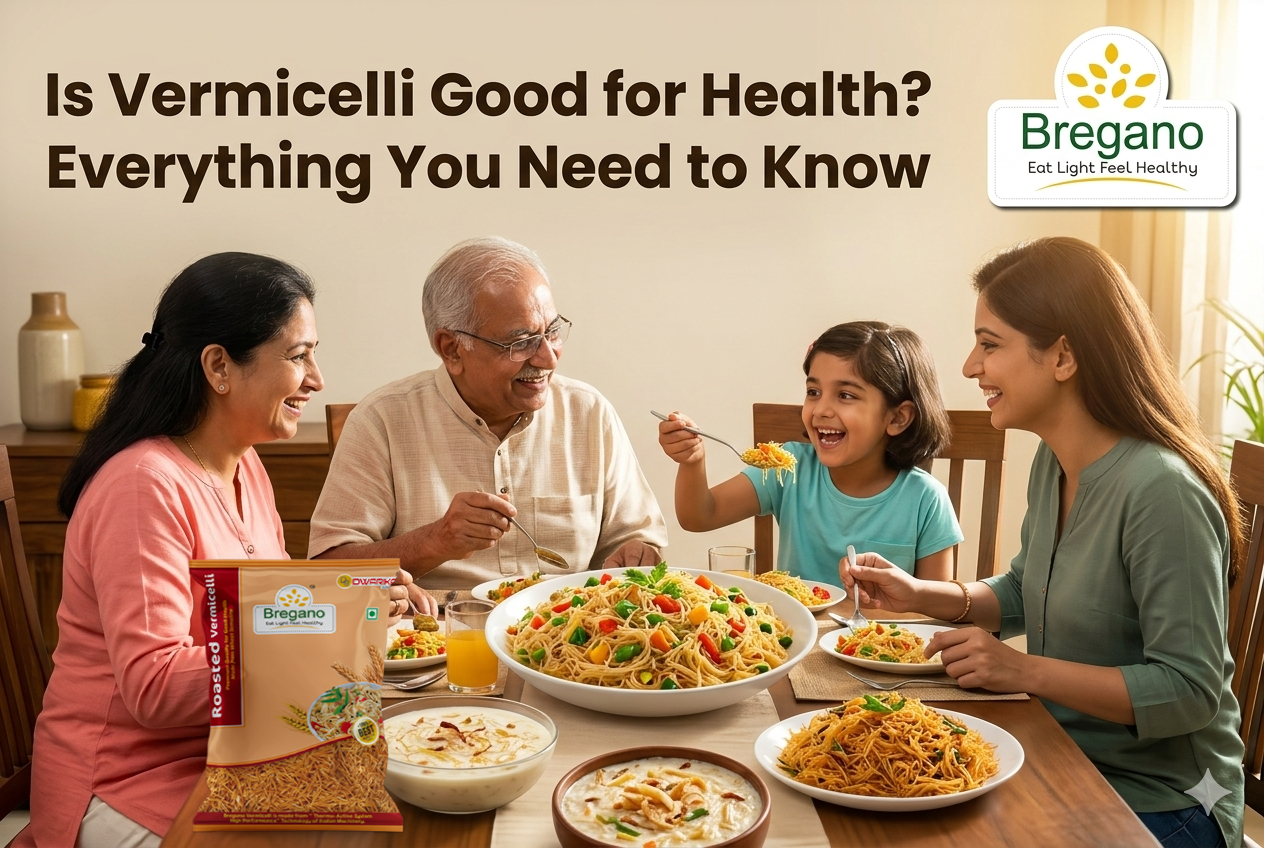
Is Vermicelli Good for Health? Everything You Need to Know

Is Vermicelli Good for Health? Everything You Need to Know

The complete truth about vermicelli, its health benefits, and whether it belongs in your daily diet

You’re standing in the grocery store, staring at two breakfast options.

Option A: A packet of vermicelli. ₹40 for 400g. Quick to cook. Familiar taste.

Option B: Imported oats. ₹180 for 500g. “Heart-healthy!” the package screams.

Your brain does the math: Vermicelli is cheaper… but is it actually healthy?

You’ve grown up eating vermicelli. Upma for breakfast. Sweet kheer on festivals. Quick evening snacks.

But now you’re health-conscious. You read nutrition labels. You question everything.

And that little voice in your head whispers: “Is vermicelli even good for me?”

Here’s what makes this question complicated:

Your grandmother swears by vermicelli upma. “I’ve eaten it for 60 years and I’m fine!”

Your dietitian friend says, “It’s just refined carbs. Skip it.”

Health blogs say, “Vermicelli is nutritious!” while others warn, “It’s processed junk food.”

So who’s right?

The truth is: They’re all partially correct.

Whether vermicelli is healthy or not depends entirely on:

  • What type of vermicelli you choose
  • How it’s made ingredients matter enormously
  • How you prepare it cooking method changes everything
  • When and how much you eat timing and portion size
  • What you eat it with vegetables, protein, or just oil and sugar

In this complete guide, I’m going to give you the full picture about vermicelli and health:

  • Vermicelli nutrition facts actual numbers, not vague claims
  • Health benefits science-backed, not myths
  • Different types suji vs maida vs rice  massive difference
  • Weight loss can it help or hurt?
  • Daily consumption is it safe for everyday eating?
  • How to cook it healthy preparation matters more than you think
  • Best vermicelli for breakfast quality indicators to look for

By the end, you’ll know exactly whether vermicelli deserves a place in your kitchen  and if yes, how to choose and cook it the right way.

Let’s start with the most fundamental question.

What Exactly Is Vermicelli?

The Basics

Vermicelli is a type of thin pasta made from wheat flour or sometimes rice flour

Names in India:

  • Hindi: Seviyan or Sevaiyan
  • Telugu: Semiya
  • Tamil: Semiya
  • Kannada: Shavige
  • Malayalam: Semiya

Physical appearance: Thin, thread-like strands thinner than spaghetti

How Vermicelli Is Made

Traditional process:

  1. Wheat flour is mixed with water to form dough
  2. Dough is extruded through a machine to create thin strands
  3. Strands are cut to desired length
  4. Dried to produce vermicelli

Roasted vermicelli:

  • Regular vermicelli is roasted (toasted) until golden
  • Roasting adds nutty flavor and aroma
  • Pre-roasted saves cooking time
  • Can also be dry-roasted at home

Types of Vermicelli Available in India

  1. Wheat Vermicelli Most Common
  • Made from wheat flour
  • Two sub-types:
  1. Rice Vermicelli
  • Made from rice flour
  • Naturally gluten-free
  • Common in South Indian and Southeast Asian cuisine
  1. Millet Vermicelli
  • Made from various millets
  • Higher nutrition than regular wheat
  • More expensive

THE BIGGEST DIFFERENCE: Suji vermicelli vs Maida vermicelli

This is critical for health. We’ll cover this in detail.

Vermicelli Nutrition Value: The Complete Breakdown

Wheat Vermicelli Uncooked – Per 100g:

Calories: 350-370 kcal
Carbohydrates: 70-75g
Protein: 10-13g
Fat: 1-2g
Fiber: 2-4g (higher if made from semolina/whole wheat)
Iron: 2-4mg
B Vitamins: Good source especially B1, B3, B9

Glycemic Index: 35-50 varies by type  lower for semolina-based

Important Note: Prepared vs Uncooked

100g dry vermicelli100g cooked vermicelli

When cooked, vermicelli absorbs water and expands significantly.

100g dry vermicelliBecomes ~250-300g cooked (depending on cooking method)

Actual eating portions:

1 plate vermicelli upma 200g cooked:

  • Made from ~70-80g dry vermicelli
  • Calories: 250-300 kcal (including vegetables and tempering oil)
  • Protein: 7-10g
  • Carbs: 50-55g
  • Fat: 5-8g

1 bowl sweet vermicelli kheer 250g:

  • Made from ~60g dry vermicelli
  • Calories: 350-450 kcal milk + sugar adds calories
  • Protein: 10-12g
  • Carbs: 60-70g
  • Fat: 10-15g

Suji Vermicelli vs Maida Vermicelli: Nutritional Difference

Aspect Suji/Semolina Vermicelli Maida/Refined Flour Vermicelli
Made From Durum wheat semolina (coarse) Refined wheat flour (fine)
Protein 12-13g per 100g 10-11g per 100g
Fiber 3-4g per 100g 1-2g per 100g
Glycemic Index 35-45 (Low-Medium) 50-60 (Medium-High)
B Vitamins Higher (less refined) Lower (removed during refining)
Iron 3-4mg per 100g 2-3mg per 100g
Texture Slightly grainy, firmer Smooth, softer
Color Slightly yellowish Pure white
Health Rating  Better choice  Less nutritious

Bottom line: Suji vermicelli is significantly healthier than maida vermicelli.

Vermicelli Health Benefits: What Science Says

1. Good Source of Energy Carbohydrates

Why it matters:

  • Vermicelli is carbohydrate-rich (70-75g per 100g dry)
  • Carbs are body’s primary fuel source
  • Provides quick energy boost

Best for:

  • Active individuals
  • Athletes
  • Growing children
  • Morning breakfast (when you need energy for the day)

Vermicelli provides quick energy, making it ideal for those with active lifestyles or needing an energy pick-me-up during the day.

2. Low in Fat

Vermicelli plain, uncooked: 1-2g fat per 100g

Why this helps:

  • Low-fat foods support heart health
  • Helpful for weight management
  • Reduces calorie density

Important caveat:

  • The fat content comes from how you cook it
  • Roasting in oil adds fat
  • Deep-fried vermicelli snacks are high-fat

When prepared with minimal oil, vermicelli remains a low-fat food choice.

3. Moderate Protein Content

Vermicelli protein: 10-13g per 100g dry semolina-based

Why protein matters:

  • Essential for muscle building and repair
  • Supports tissue maintenance
  • Helps with satiety

While not a high-protein food, vermicelli still contributes to daily protein intake, especially when paired with protein-rich ingredients like peanuts, vegetables, or served with dal/yogurt.

4. Contains Dietary Fiber

Fiber in vermicelli: 2-4g per 100g higher in semolina-based

Benefits of fiber:

  • Aids digestion
  • Prevents constipation
  • Helps regulate blood sugar levels
  • Promotes gut health
  • Increases satiety

The fiber in roasted vermicelli aids digestion and prevents constipation by adding bulk to the stool.

5. Rich in B Vitamins

Vermicelli contains:

  • Vitamin B1 Thiamine: Energy metabolism
  • Vitamin B3 Niacin: Nervous system support
  • Vitamin B9 Folate: Cell growth and DNA synthesis

B vitamins play a crucial role in metabolism and the nervous system.

These vitamins help:

  • Convert food into energy
  • Support brain function
  • Maintain healthy skin and muscles
  • Reduce fatigue

6. Good Iron Content

Vermicelli provides 2-4mg iron per 100g

Why iron is important:

  • Prevents anemia
  • Maintains healthy blood cell levels
  • Improves oxygen flow throughout body
  • Reduces fatigue and weakness

Especially important for:

  • Women menstruation causes iron loss
  • Children growing bodies need iron
  • Vegetarians fewer dietary iron sources

Pro tip: Add lemon juice to vermicelli dishes  Vitamin C increases iron absorption by up to 300%.

7. Lower Glycemic Index Semolina-Based

Glycemic Index GI of vermicelli:

  • Rice vermicelli: GI 55-65 Medium
  • Maida vermicelli: GI 50-60 Medium
  • Semolina vermicelli: GI 35-45 Low-Medium

Why lower GI matters:

  • Slower blood sugar spike
  • Sustained energy release
  • Better for diabetics in moderation
  • Reduces insulin surge
  • Supports weight management

The toasting process can lower its glycemic index, making it a healthier choice for maintaining blood sugar levels.

8. Gluten-Free Options Available

Rice vermicelli and millet vermicelli are naturally gluten-free.

Benefits for gluten-sensitive individuals:

  • Safe for celiac disease patients
  • Improves digestive health
  • Reduces chronic inflammation
  • Enhances energy levels

Wheat-based vermicelli contains gluten and is not suitable for those with gluten intolerance.

Is Suji Vermicelli Healthy? The Definitive Answer

Short answer: Yes, suji (semolina) vermicelli is a healthy option when consumed in moderation and prepared correctly.

Why Suji Vermicelli Is Healthier Than Maida Vermicelli

  1. Less Processed
  • Semolina (suji) is coarsely ground durum wheat
  • Maida is highly refined (bran and germ removed)
  • Less processing = More nutrients retained
  1. Higher Protein
  • Suji: 12-13g per 100g
  • Maida: 10-11g per 100g
  1. More Fiber
  • Suji: 3-4g per 100g
  • Maida: 1-2g per 100g
  1. Lower Glycemic Index
  • Suji: 35-45 (better blood sugar control)
  • Maida: 50-60 (faster blood sugar spike)
  1. Richer in Micronutrients
  • More B vitamins
  • Higher iron content
  • Better mineral profile

Suji Vermicelli Benefits

 Energy: Sustained energy release, no sugar crash
Digestion: Fiber aids digestive health
Weight: Can support weight management (when prepared healthy)
Blood Sugar: Better for diabetics than maida vermicelli
Satiety: Higher protein and fiber keep you full longer
Heart: Low fat supports cardiovascular health
Anemia: Good iron content helps prevent iron deficiency

When Suji Vermicelli Becomes Unhealthy

 Excessive oil: Deep-fried or cooked with 3-4 tbsp oil
High sugar: Sweet kheer with 5-6 tbsp sugar
Large portions: 200g+ dry vermicelli in one sitting
No vegetables: Plain vermicelli without nutritional additions
Daily dessert consumption: Sweet vermicelli every day
Replaces all grains: Eating only vermicelli, no variety

The key: Moderation, preparation method, and balanced diet.

Vermicelli for Weight Loss: Can It Help or Hurt?

The question everyone asks: “Can I eat vermicelli during weight loss?”

The Honest Answer

Yes, vermicelli can be part of a weight loss diet  when prepared correctly.

How Vermicelli Can Support Weight Loss

  1. Lower Calorie Than Many Alternatives

Breakfast comparison:

  • 2 parathas with butter: 600-700 kcal
  • Poori-bhaji (4 pooris): 550-650 kcal
  • 4 bread slices with butter and jam: 450-500 kcal
  • Healthy vermicelli upma (1 plate): 250-300 kcal 

Replacing high-calorie breakfast with healthy vermicelli = 300-400 kcal saved daily

  1. Moderate Protein and Fiber = Better Satiety
  • Protein: 7-10g per plate (with additions like peanuts)
  • Fiber: 3-4g per plate (with vegetables)
  • Result: Keeps you full for 3-4 hours
  • Prevents mid-morning snacking
  1. Low Fat When Cooked Right

Weight-loss vermicelli preparation:

  • 1 tsp oil (not 2-3 tbsp)
  • Lots of vegetables (peas, carrots, beans, capsicum)
  • Minimal sugar (skip in savory dishes)
  • Roasted peanuts for protein
  • Result: 250-280 kcal per filling plate
  1. Versatile and Sustainable

Weight loss diets fail when:

  • Food is boring
  • Too restrictive
  • Culturally unfamiliar

Vermicelli solves this:

  • Tasty and familiar
  • Multiple recipes (upma, salads, soups)
  • Easy to prepare
  • Family-friendly

You can stick with it long-term = Sustainable weight loss

When Vermicelli Sabotages Weight Loss

 Cooked in excessive oil (3-4 tbsp = 360+ kcal just from oil!)
Sweet preparations (kheer with full-fat milk and sugar = 450+ kcal)
Large portions (200g dry vermicelli = 700+ kcal before any additions)
Minimal vegetables (low fiber, low satiety, hungry again quickly)
High-calorie toppings (fried cashews, lots of ghee, coconut)
Eaten as extra meal (not replacing high-calorie foods, just adding calories)

Weight Loss Vermicelli: The Formula

For effective weight loss:

Ingredients:

  • 60-70g dry vermicelli (suji-based)
  • 1 tsp oil
  • 1.5 cups mixed vegetables
  • Spices and tempering (mustard seeds, curry leaves)
  • 1 tbsp roasted peanuts
  • Lemon juice

Result: 250-280 kcal, 8-10g protein, filling meal

Compare to sweet kheer: 450+ kcal, less filling, sugar spike

Verdict: Savory vermicelli upma = Weight loss friendly 
Sweet vermicelli kheer = Occasional treat only 

Is Vermicelli Healthy for Daily Eating?

Can you eat vermicelli every single day?

The Balanced Answer

Vermicelli can be part of a daily diet  with important conditions:

When Daily Vermicelli Is Fine

Moderate portions: 60-80g dry per day (1 meal)
Suji-based: Choose semolina vermicelli, not maida
Varied preparation: Rotate between upma, salads, soups
Balanced diet: Include other grains (rice, roti, millets) on other meals
With vegetables: Always add vegetables for fiber and nutrients
Protein additions: Peanuts, dal, yogurt on the side
Minimal oil and sugar: Healthy preparation method

Example healthy daily schedule:

  • Breakfast: Vermicelli upma (60g dry) with vegetables
  • Lunch: Rice/roti with dal and vegetables
  • Dinner: Roti with vegetables and protein

This provides:

  • Dietary variety
  • Complete nutrition
  • Moderate vermicelli consumption
  • Sustainable eating pattern

When Daily Vermicelli Becomes Problematic

 Large portions: 150-200g dry per day
 Multiple times daily: Breakfast + snack + dessert
 Only maida vermicelli: Missing out on better nutrition
 Always sweet preparations: Kheer, pudding every day
 No dietary variety: Only vermicelli, no other grains
 Excessive oil/sugar: Unhealthy preparation daily
 Replacing vegetables: Vermicelli instead of vegetables in diet

The Key Principle: Dietary Diversity

No single food should dominate your diet  including vermicelli.

Healthy eating pattern:

  • Vermicelli: 2-3 times per week 
  • Rice/roti: 4-5 times per week 
  • Millets: 1-2 times per week 
  • Variety within each category 

This ensures:

  • Complete nutrition
  • Different micronutrients
  • Balanced macronutrient intake
  • Prevents nutritional deficiencies
  • Keeps meals interesting

Healthy Breakfast Vermicelli: Best Preparation Method

Here’s how to make vermicelli truly healthy:

Recipe: Weight-Loss Friendly Vermicelli Upma

Ingredients:

  • 60g roasted vermicelli (suji-based)
  • 1 tsp oil
  • 1/2 tsp mustard seeds
  • 1/2 tsp cumin seeds
  • 8-10 curry leaves
  • 1 green chili, slit
  • 1 medium onion, chopped
  • 1.5 cups mixed vegetables (carrots, peas, beans, capsicum)
  • 1/4 tsp turmeric
  • Salt to taste
  • 1 tbsp roasted peanuts
  • Fresh coriander
  • Lemon juice

Method:

  1. If not pre-roasted: Dry roast vermicelli on medium heat until golden brown. Set aside.
  2. Tempering: Heat 1 tsp oil. Add mustard seeds, cumin seeds, curry leaves.
  3. Sauté vegetables: Add onion, sauté until translucent. Add green chili, all vegetables.
  4. Cook vegetables: Add splash of water, cover, cook 6-7 minutes.
  5. Add vermicelli: Mix in roasted vermicelli. Add 2 cups water, stir gently.
  6. Cook: Cover and cook on low heat 10 minutes until water absorbed.
  7. Finish: Add peanuts, coriander, lemon juice. Mix gently.

Serve hot.

Nutrition per serving:

  • Calories: 250-280 kcal
  • Protein: 9-10g
  • Carbs: 48-50g
  • Fat: 6-7g
  • Fiber: 4-5g

This is suitable for weight loss: Low in fat and calories, ideal for a light, filling meal.

Pro Tips for Healthy Vermicelli

  1. Always roast vermicelli (if not pre-roasted) to avoid stickiness 2. Use exact water ratio (2 cups water for 1 cup vermicelli with vegetables) 3. Measure oil (1 tsp, not eyeballed pouring) 4. Load vegetables (1:1 or 2:1 ratio with vermicelli) 5. Add protein (peanuts, roasted chana, or serve with yogurt) 6. Skip or minimize sugar (in savory dishes) 7. Use low heat (prevents mushiness) 8. Don’t overcook (check cooking time, 10-12 minutes usually enough)

Best Vermicelli for Breakfast: How to Choose Quality

Quality Checklist

  1. Check Ingredient List

 Look for: Durum wheat semolina 100% or Hard wheat semolina sooji
 Avoid: Refined wheat flour maida or just wheat flour often maida

  1. Roasted vs Unroasted

Roasted vermicelli:

  • Pre-roasted, saves time
  • Golden color, nutty flavor
  • Convenient for busy mornings

Unroasted vermicelli:

  • Needs roasting at home
  • More control over roasting level
  • Slightly cheaper

Both are fine, choose based on convenience preference.

  1. Check Protein Content

 Good vermicelli: 11-13g protein per 100g
 Poor quality: Below 10g protein per 100g

Higher protein = Better quality wheat used

  1. Look for Certifications

 Minimum: FSSAI license
 Better: FSSAI + GMP + other food safety certifications

  1. Packaging

 Food-grade, moisture-proof packaging
 Clear manufacturing and expiry dates
 Batch number for traceability

  1. Price Range

 Quality range: ₹40-80 per 400g
 Too cheap: Below ₹30 per 400g (likely poor quality maida)
 Too expensive: Above ₹100 per 400g (paying for branding, not necessarily better)

Bregano Vermicelli: Quality Ingredients for Healthy Meals

When choosing vermicelli for your daily meals, quality and ingredients matter. Here’s what makes Bregano Vermicelli stand out:

 Made from Hard Wheat Semolina (Sooji)

Bregano Roasted Vermicelli is made from 100% durum wheat semolina (sooji), not maida or refined flour.

Why this matters:

  • Higher protein content
  • More fiber
  • Better nutrition overall
  • Lower glycemic index

“Made from high-quality wheat semolina (sooji)”  providing a rich source of protein and fiber.

 Rich in Protein and Fiber

Bregano Vermicelli is:

  • Rich in protein  essential for muscle maintenance and growth
  • Rich in fiber  supports digestive health and satiety

Product description: “Tasty & Nutritious – Enjoy guilt free & nutrient packed meal, rich in protein & fibre.”

Why this helps:

  • Keeps you full longer
  • Supports weight management
  • Better for daily nutrition

 No Preservatives, Additives, or Trans Fats

Bregano Roasted Vermicelli contains:

  • No preservatives
  • No additives
  • No trans fats

“Guilt-Free: Contains no preservatives, additives, or trans fats, making it a healthier alternative to other snacks.”

This means:

  • Clean, pure product
  • Safe for daily consumption
  • No harmful chemicals
  • Better for long-term health

 Roasted to Perfection

Bregano Vermicelli is roasted to perfection, providing:

  • Delightful, nutty flavor
  • Golden color
  • Enhanced taste
  • Convenient (pre-roasted, saves time)

Roasted Flavor: Roasted to perfection, providing a delightful, nutty flavor.

 Versatile for Sweet and Savory Dishes

Bregano Vermicelli can be used for:

  • Breakfast: Upma, healthy morning meals
  • Sweet dishes: Kheer, pongal, traditional sweets
  • Savory dishes: Stir-fries, salads
  • Snacks: Quick healthy snacks anytime

Versatile: Can be used in both sweet and savory dishes, such as desserts, breakfast, or as a side dish.

Product taglines:

  • “SMART SNACK: Best partner for mid night hunger pangs, evening snack, instant brunch & exotic delicacies”
  • “SWEET CELEBRATION: Perfect partner for your happy & auspicious moments with Kheer, Pongal, Sweets, etc.”

 Quality Manufacturing Standards

Part of Dwarika Group (established 1992), Bregano operates with:

  • State-of-the-art, fully automated facility
  • FSSAI certification (Food Safety and Standards Authority of India)
  • GMP (Good Manufacturing Practices)
  • GHP (Good Hygiene Practices)

“Bregano was launched in 2019 to bring premium staples, pasta, condiments, and wholesome food products to modern Indian households.”

Why this matters:

  • Hygienically processed
  • Quality tested
  • Consistent quality
  • Safe for your family

 Convenient Pack Sizes

Bregano Vermicelli available in:

  • 400g packs
  • 860g/875g packs

Perfect for:

  • Small households (400g)
  • Larger families or monthly stock (860g+)

Explore Bregano Vermicelli

How to Cook Healthy Vermicelli: Essential Guidelines

Cooking Method Comparison

Preparation Calories (per plate) Health Rating Best For
Healthy Upma (1 tsp oil, vegetables) 250-280 kcal ⭐⭐⭐⭐⭐ Daily breakfast, weight loss
Regular Upma (2-3 tbsp oil) 400-450 kcal ⭐⭐⭐ Occasional breakfast
Sweet Kheer (full-fat milk, sugar) 450-500 kcal ⭐⭐ Festive occasions only
Fried Vermicelli (deep-fried snack) 550+ kcal Rare treat

The 5 Rules of Healthy Vermicelli Cooking

Rule 1: Minimal Oil

  • Use 1 tsp oil for savory preparations
  • Measure, don’t pour
  • Use non-stick pan to reduce oil need

Rule 2: Maximum Vegetables

  • Aim for 1:1 or 2:1 vegetable-to-vermicelli ratio
  • More vegetables = More fiber, vitamins, minerals
  • Increases satiety, reduces total calorie density

Rule 3: Add Protein

  • Roasted peanuts (1 tbsp)
  • Roasted chana
  • Serve with yogurt/curd on side
  • Or add paneer cubes

Rule 4: Control Portions

  • 60-80g dry vermicelli per person
  • Don’t exceed 100g dry in one meal
  • Use smaller plates to avoid overeating

Rule 5: Limit Sugar in sweet preparations

  • For kheer: Use 2-3 tbsp sugar max (not 5-6 tbsp)
  • Consider jaggery as alternative
  • Add dry fruits for natural sweetness

Final Verdict: Is Vermicelli Good for Health?

YES  with important conditions.

Vermicelli IS Healthy When:

 Made from durum wheat semolina (suji), not maida
 Moderate portions (60-80g dry per meal)
 Prepared with minimal oil (1-2 tsp, not 3-4 tbsp)
 Loaded with vegetables for fiber and nutrients
 Protein additions (peanuts, yogurt, dal)
 Part of a varied diet (not the only grain you eat)
 Roasted properly (whether pre-roasted or home-roasted)
 Consumed 2-4 times per week, not every single meal

When all these conditions are met: Vermicelli = Nutritious, energy-providing, satisfying meal ✅

Vermicelli BECOMES Unhealthy When:

 Made from maida (refined flour)
 Excessive portions (150-200g dry)
 Cooked in lots of oil (deep-fried or 3-4 tbsp oil)
 High sugar sweet preparations daily
 No vegetables added
 Replaces all other grains in diet
 Daily dessert consumption (sweet kheer every day)

When prepared wrong: Vermicelli = High-calorie, low-nutrition, unhealthy choice 

The Bottom Line

Vermicelli is not inherently good or bad for health.

What makes the difference:

  1. Type: Suji > Maida
  2. Preparation: Low-oil savory > High-oil/high-sugar sweet
  3. Portion: 60-80g dry > 150-200g dry
  4. Frequency: 2-4x per week > Every single meal
  5. Additions: With vegetables and protein > Plain
  6. Diet context: Part of varied diet > Only grain eaten

Use this guide, make informed choices, and vermicelli can absolutely be a healthy part of your diet.

Add Healthy Breakfast to Your Monthly Basket

Choose Quality Vermicelli for Your Family’s Health

 Made from Hard Wheat Semolina (Sooji)  Not maida, better nutrition
 Rich in Protein & Fiber  Keeps you full, supports digestion
 No Preservatives, Additives, or Trans Fats  Pure and clean
 Pre-Roasted to Perfection  Nutty flavor, saves time
 Versatile  Perfect for breakfast, snacks, and sweets

Bregano Roasted Vermicelli  Quality You Can Trust

Part of Dwarika Group’s food manufacturing legacy since 1992
Manufactured with FSSAI, GMP, GHP certifications
Available in convenient pack sizes (400g, 860g)

 Shop Bregano Roasted Vermicelli

Also Explore:
 Breakfast Combo Packs  Stock healthy staples for the month
 Complete Staples Range  Poha, Besan, Sooji, and more

Certified: FSSAI | GMP | GHP
Online: shop.bregano.in

 Follow us: @breganoproducts

Make every meal healthier.
Choose quality ingredients.
Start with Bregano.