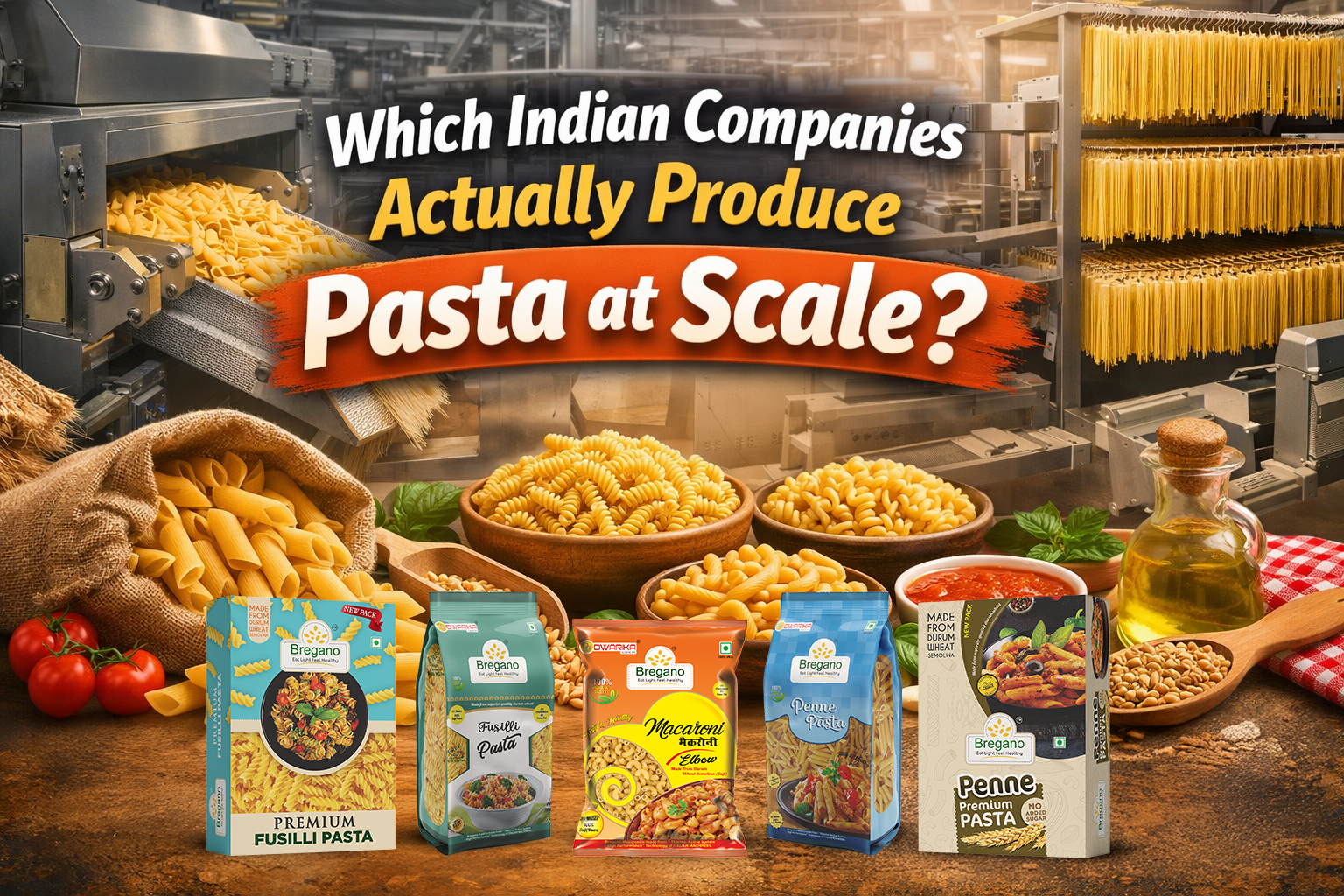
So here’s something that surprises most people: India has quietly become a serious pasta manufacturing hub over the past decade.
Not just small setups supplying local kirana stores. I’m talking about manufacturers producing hundreds to thousands of tons monthly, exporting to multiple regions, and investing crores in Italian machinery.
But if you Google “pasta companies in India,” you mostly get the same recycled “Top 10” lists usually repeating 3–4 FMCG brands and ignoring the actual manufacturing ecosystem behind the category.
I’ve been watching this industry up close for years, and this article is my attempt to lay out who’s actually producing pasta at scale in India the obvious giants, the strong regional players, the premium specialists, and the hidden B2B manufacturers most people never hear about.
This isn’t a ranking. It’s just… the real landscape, as it exists on the ground.
Over the last 5–7 years, pasta demand in India didn’t just grow it spiked.
A few big drivers:
So now India has a full ecosystem of pasta manufacturers operating at different scales mass, regional, premium, health-led, and B2B.
Marico entered pasta fairly recently under Saffola, leaning into “healthy positioning” a smart move given their existing brand trust in the health space.
They’re strong because:
ITC is everywhere in Indian packaged food. Their pasta products ride on the back of ITC’s scale and distribution strength via ITC’s branded packaged foods business.
Their play is clearly:
Maggi pasta isn’t “traditional pasta” in the Italian sense it’s more quick-cook, masala-led variants. But in terms of volume, Nestlé’s scale is enormous, and their Maggi Pazzta range has been around long enough to become a category staple in many homes.
What they did right early:
Chennai-based and huge in South India, Bambino has built long-term trust in staples like vermicelli and expanded strongly into pasta over time.
Explore: Bambino Agro Industries pasta
They’re the definition of “steady manufacturing”:
Weikfield’s legacy is dessert mixes, but their pasta presence across Maharashtra/Gujarat is very real.
Brand site: Weikfield foods
They’re not trying to out-ITC ITC but they’re a significant regional shelf leader.
MTR is iconic in South Indian foods and has expanded into broader pantry products including pasta.
Brand: MTR Foods
Their edge:
I’ll be transparent: this is us. But I’ll still keep it grounded.
We started in 2019, backed by Bregano (Dwarika Food Products) with manufacturing roots from Dwarika Group since 1992.
We’re not competing with Nestlé or ITC on raw volume. Our lane is:
premium quality, consistent texture, and scalable distribution across North India now expanding into export opportunities as well.
Borges is originally Spanish (olive oil legacy), but they’ve built an India presence and local manufacturing/partnership-driven model for pasta.
Brand: Borges India pasta
They leverage:
Disano has scaled quickly in premium-looking, health-forward pasta products.
Brand: Disano pasta
They do two things well:
Not traditional pasta but very relevant to where the market is going.
Brand: millet-based pasta by Soulfull
This represents the “health and alternative grains” wave:
More niche, more certification-led, more premium channel distribution.
Brand: Organic India pasta
They’re not trying to win the mass market they’re winning the “trust + wellness” market.
Del Monte has had pasta in India for a long time, with a steady mid-premium presence.
Brand: Del Monte pasta India
They sit in an interesting zone:
Here’s what most people outside the industry don’t realize:
Some of the largest pasta manufacturing lines in India don’t own consumer brands at all.
They manufacture for:
These facilities (Punjab, Maharashtra, Karnataka, etc.) can produce thousands of tons monthly often more than branded manufacturers. But since they’re B2B and NDA-heavy, they remain invisible.
When I say “at scale”, I typically mean 200–300 tons per month minimum (and many do far more). To operate at that level, you need:
Most credible reports peg the Indian pasta market as large and fast-growing, with double-digit CAGR.
Reference: Indian pasta market size and growth rate
Also true on ground:
From what I’ve seen, scaling comes down to five things:
Trying to be everything to everyone usually kills brands early.
If you’re curious about Bregano, pasta sourcing, exports, or contract manufacturing: