
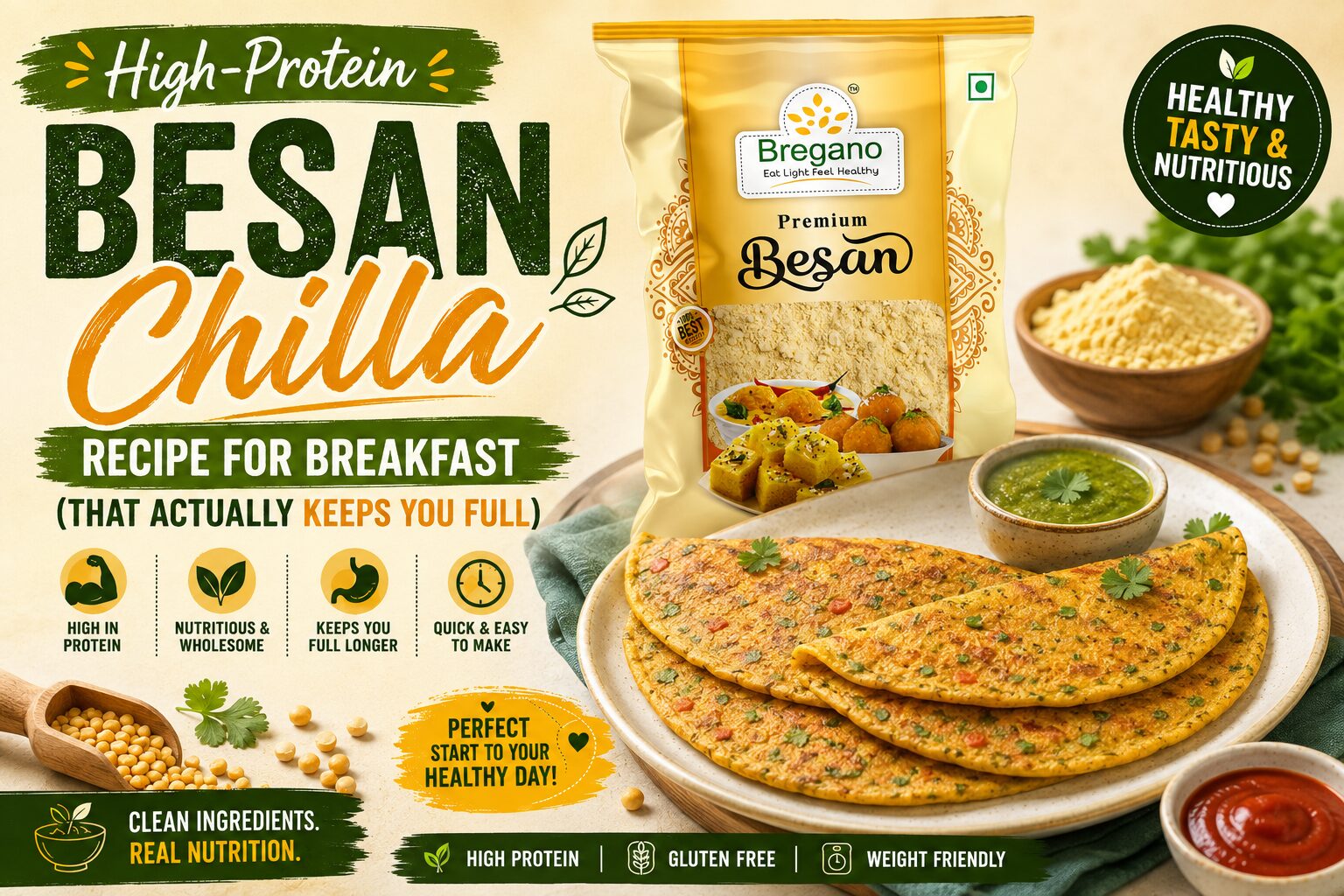
There is a moment every person who has made besan chilla for the first time experiences.
You pour the batter. It spreads into a thin golden circle. The kitchen fills with a warm, nutty smell. Two minutes later you flip it, and there is that satisfying crispness at the edges. You eat one. Then immediately make another.
That is the besan chilla experience when it goes right. And it almost always goes right once you understand two things: what the batter consistency should actually feel like, and what you can add to make it genuinely high-protein rather than just a flavoured pancake.
This blog covers both. The base recipe first, exactly as Bregano makes it. Then the protein variations that turn an already-good breakfast into something that keeps you full until lunch without a mid-morning energy crash. And then the honest nutritional case for why besan, specifically, is one of the better breakfast ingredients available in an Indian kitchen.
Besan chilla is a popular North Indian dish, often enjoyed for breakfast or as a quick snack. It is similar to a pancake or crepe, made with a batter of gram flour, spices, and vegetables. It is naturally gluten-free and can be customised with various ingredients to suit your taste.
The name changes depending on where you are in India. Besan puda in some parts of Rajasthan. Besan cheela in Delhi and UP. Gram flour pancake in recipe apps that are trying to be accessible to everyone. Underneath the name, the dish is the same: a thin, savoury, spiced pancake made from chickpea flour.
Its origins are old. Besan has been used in Indian cooking for centuries, partly because chickpeas are one of the most protein-dense crops that grow well in the subcontinent, and partly because the flour they produce is extraordinarily versatile. Sweet, savoury, fried, steamed, pancake, cracker, curry thickener: besan does all of it. The chilla is just the breakfast application of a flour that has been feeding Indian kitchens across every other meal for a very long time.
Before the recipe, the case for besan as a breakfast ingredient deserves to be made properly.
Gram flour is a great source of protein, making besan chilla a filling and nutritious meal.
But what does that actually mean in numbers?
Besan contains roughly 21 to 22 grams of protein per 100 grams of dry flour. To put that in context: whole wheat atta contains around 10 to 12 grams per 100 grams. Rice flour contains around 6 to 7 grams. Maida contains 7 to 8 grams. Besan contains nearly double the protein of any of these.
Made from high-quality chickpeas, Bregano’s Besan is not just a versatile kitchen staple but also a nutritious choice, rich in protein and gluten-free.
A single besan chilla made with one cup of besan (approximately 100 grams) delivers around 12 to 15 grams of protein from the besan alone, depending on exact brand and batter dilution. Before you have added eggs, paneer, or any other protein-boosting filling.
This is why nutritionists who are looking at Indian breakfast options tend to rate besan chilla above most alternatives. A standard Indian breakfast of two rotis with sabzi provides around 8 to 10 grams of protein. Bread toast with butter and jam provides around 5 to 6 grams. Poha with peanuts provides around 6 to 8 grams. Besan chilla as a base provides more protein than all of these from the primary ingredient alone, before additions.
Additionally, besan has a low glycemic index, stabilising blood sugar levels. This means the protein and complex carbohydrates in besan chilla digest slowly, giving you sustained energy rather than a spike-and-crash pattern. Plus it is naturally gluten-free, making it a fantastic alternative for those with gluten sensitivities.
Before ingredients, the one piece of technique that determines whether your chilla is crisp and spreadable or thick and undercooked:
The batter should be pourable without being overly thin.
More specifically: when you lift a ladle of batter and pour it back into the bowl, it should flow in a steady, smooth stream. Not drip in thick blobs (too thick). Not splash like water (too thin). It should coat the back of a spoon lightly and still be thin enough to spread in the pan with a circular motion.
Getting this right is about adding water gradually and stopping when you have reached that consistency rather than adding all the water at once. Different brands of besan absorb water at slightly different rates. You cannot pre-determine the exact amount. You have to develop the feel.
Bregano Besan offers a fine texture and nutty flavour. Fine-textured besan (as opposed to coarser varieties) makes a smoother batter with fewer lumps, which spreads more evenly in the pan and cooks more uniformly. This is a practical quality distinction that affects the finished chilla.
The rule for consistency: if you spread the batter in the pan and it immediately tears or creates holes, it is too thin. If it sits thick and does not spread at all when you tilt the pan or use the ladle back, it is too thick. The sweet spot is a batter that spreads easily with light circular pressure from a ladle back and fills the pan in a thin, even layer.
This is the foundational recipe exactly as Bregano documents it, with technique notes added.
Prep time: 10 minutes Cook time: 15 minutes Total time: 25 minutes Makes: 4 medium chillas
1 cup Bregano Besan (gram flour) Quarter cup finely chopped onions Quarter cup finely chopped tomatoes Quarter cup grated carrots (optional) 2 green chillies, finely chopped Quarter teaspoon turmeric powder Quarter teaspoon red chilli powder Quarter teaspoon cumin seeds Salt to taste Half cup water, adjust as needed 2 tablespoons finely chopped coriander leaves Oil for cooking
Step 1: Prepare the batter
In a mixing bowl, add gram flour, chopped onions, tomatoes, grated carrots, green chillies, turmeric powder, red chilli powder, cumin seeds, and salt.
Gradually add water to the mixture while stirring to form a smooth batter. Ensure there are no lumps.
The lump issue deserves attention. Besan clumps very easily when liquid hits it. The trick is to add water in three or four small additions rather than all at once, stirring thoroughly between each addition. If lumps do form, pressing them against the side of the bowl with a spoon dissolves them. Do not let them sit, they do not dissolve on their own.
Add chopped coriander leaves and mix well. The consistency of the batter should be pourable without being overly thin.
Step 2: Heat the pan
Put a cast-iron or nonstick pan over medium heat. Sprinkle a few drops of oil evenly after adding them.
Cast-iron versus nonstick: cast iron produces a crispier, more textured surface and holds heat more evenly. Nonstick is more forgiving and requires less oil. For a genuinely high-protein, low-fat chilla, nonstick with minimal oil is the practical choice. For the best flavour and texture, cast iron is worth the small additional effort.
Let the pan heat fully before adding batter. A pan that is not hot enough produces a pale, soft chilla that sticks. A properly hot pan produces a golden, crisp-edged chilla that releases cleanly.
Step 3: Cook the chilla
To create a thin chilla, place a ladleful of batter in the centre of the pan and carefully spread it out in a circular motion. Use the back of the ladle in a gentle spiral outward from the centre.
Coat the edges with a small amount of oil and cook until the bottom is golden brown. This takes roughly two to three minutes on medium heat. You will know it is ready when the edges begin to look dry and lift slightly from the pan.
Flip the chilla and cook the other side until it is cooked through and has golden spots.
Step 4: Serve
Serve hot with chutney or yogurt. You can also pair it with a tangy pickle for added flavour.
The accompaniment matters for the protein picture. Yogurt adds another three to four grams of protein per serving. Peanut chutney adds another two to three grams. Green chutney (coriander-mint) adds negligible protein but adds flavour and helps the chilla feel like a complete meal rather than just a pancake.
The base recipe gives you 12 to 15 grams of protein per two chillas. Here is how each variation pushes that number higher.
This is the most popular high-protein variation and for good reason. Crumbled paneer in the filling adds around 18 to 20 grams of protein per 100 grams of paneer used.
What changes: Make the base batter as above. When the chilla is halfway cooked on the first side (edges dry, centre still slightly wet), spread two tablespoons of crumbled paneer mixed with a pinch of salt, red chilli flakes, and chopped coriander on one half of the chilla. Fold the other half over it. Press gently with a spatula. Cook one more minute each side until the paneer is warmed through and the outside is golden.
Protein per serving (2 stuffed chillas): approximately 20 to 25 grams.
Why it works: the paneer filling does not require additional cooking because the residual heat from the chilla warms it through. No extra steps, no extra pan. Just a fold.
Break one egg directly into the batter for the whole batch, or crack one egg onto the chilla while it is cooking on the first side and spread it gently with a fork before flipping.
What changes: Adding one egg to the full batter batch adds 6 grams of protein to the total. Adding one egg per chilla while cooking adds 6 grams per chilla. The egg version has a slightly richer, more dense texture. Children who might find plain chilla too mild often prefer the egg version.
Protein per serving (2 egg chillas): approximately 22 to 28 grams.
Add two tablespoons of finely chopped fresh spinach or one tablespoon of pureed spinach to the batter. The spinach adds iron, folate, and vitamin K alongside a small protein contribution of around 1 to 2 grams per half cup.
The protein uplift here is modest, but spinach changes the nutritional profile meaningfully on the micronutrient side. For anyone who struggles to eat enough greens, this is an elegant way to include them at breakfast without any noticeable sacrifice in flavour. The green colour of the chilla is visually distinctive and tends to interest children.
Best pairing: yogurt raita with a small amount of grated cucumber.
Replace half the besan with soaked and ground moong dal (yellow split mung beans). Moong dal contains around 24 grams of protein per 100 grams dry. Combining it with besan creates a batter with a slightly grainy texture and a denser, more substantial chilla.
What changes: Soak half a cup of yellow moong dal for two hours. Grind to a smooth paste with minimal water. Combine with half a cup of Bregano Besan and make the batter as usual, adjusting water for consistency.
Protein per serving (2 chillas): approximately 18 to 22 grams.
This is the variation most recommended for bodybuilders and people targeting high protein through whole food sources rather than supplements.
Add two tablespoons of thick curd directly to the batter and reduce water proportionally. Curd adds around three to four grams of protein per two tablespoons and a slight tanginess that enhances the overall flavour. It also makes the batter slightly softer and produces a more tender, less crispy chilla.
This variation is particularly good for people who find plain chilla too dry at the edges. The curd adds moisture inside the batter that keeps the chilla softer for longer.
What changes: Add curd to the bowl before adding water. Mix thoroughly. Reduce water by two to three tablespoons to account for the added liquid from the curd.
A chilla eaten alone is a decent breakfast. A chilla eaten with the right accompaniments is a complete one.
For maximum protein: curd or yogurt on the side. A small bowl of unsweetened yogurt adds four to five grams of protein. Combined with a two-chilla serving, you approach 20 grams of protein from a quick 25-minute breakfast.
For maximum flavour: green chutney made from coriander, mint, green chilli, and a squeeze of lemon. This adds negligible calories and considerable flavour. It is also what makes the chilla feel like something you want to eat rather than something you are eating because it is healthy.
For maximum fiber: a side of sliced cucumber, tomato, and onion with a pich of chaat masala. The raw vegetables add fiber and freshness that the cooked chilla does not provide.
Feel free to add vegetables like bell peppers, spinach, or grated zucchini for variation. Adding these inside the batter rather than on the side means the fiber stays with the main dish.
Besan chilla is a light meal option, perfect for those watching their calorie intake.
A plain besan chilla made with one tablespoon of oil: roughly 120 to 150 kilocalories. Two chillas with minimal oil and a cup of curd: approximately 280 to 320 kilocalories. That is a complete, filling, high-protein breakfast in a moderate calorie range.
The weight loss case for besan chilla is made through three mechanisms.
First, the protein effect. At 12 to 15 grams of protein from the chilla alone, hunger returns much later than after a carbohydrate-only breakfast. Protein has the highest satiety value of any macronutrient. The practical result is less snacking between breakfast and lunch.
Second, the low glycemic index effect. Besan has a low glycemic index, stabilising blood sugar levels. Stable blood sugar means no mid-morning energy crash, which is one of the primary drivers of impulsive snacking in the two hours before lunch.
Third, the calorie-per-gram-of-satisfaction ratio. Two chillas feel substantial. They have texture, flavour, and volume. 280 to 320 kilocalories feels like more than it is, which is the functional definition of a good weight loss food.
For a crispier chilla, cook on low heat for a bit longer. Crisper chillas require slightly more oil, but the extra oil is offset by the greater satisfaction they provide. A crispy, flavourful chilla you genuinely enjoy eating every day is more effective for weight management than a dry, unsatisfying one you force yourself to eat and eventually abandon.
Consistency matters most. Make sure the batter is the right consistency. Adapt the amount of water accordingly. Start with less water than you think you need and add more gradually.
Spice level is personal. Adjust the number of green chillies and red chilli powder to suit your taste preferences. For younger children or people who are sensitive to spice, a pinch of turmeric and cumin seeds without any chilli produces a mild, golden chilla that is still flavourful.
Vegetable variety extends the recipe. Feel free to add vegetables like bell peppers, spinach, or grated zucchini for variation. These additions increase fiber content and add micronutrients without meaningfully changing the cooking time.
Always preheat the pan. A cold pan produces a pale, sticky chilla. A properly heated pan on medium heat produces a golden one that releases cleanly and spreads evenly.
Two minutes per side minimum. Do not rush the flip. Let the bottom side fully cook until the edges look dry and the top surface has lost its wet shine before flipping. Premature flipping produces a torn, undercooked chilla.
Everything below is taken directly from bregano.in.
Made from high-quality chickpeas. Rich in protein and gluten-free. Fine texture and nutty flavour. Brings a smooth consistency and authentic taste. Rich in protein and fiber, an excellent choice for health-conscious eating. Versatile: used for sweet dishes, savoury pancakes, snacks, and main course preparations.
Pack sizes: 400 grams and 500 grams.
Part of Bregano’s Everyday Cooking Combo alongside Maida and Sooji. Each ingredient is hygienically processed, finely milled, and packed to preserve freshness, so every dish starts with the best.
Certifications: FSSAI, GMP, and GHP.
Part of Dwarika Group, food manufacturing since 1992. Bregano launched in 2019. 7-acre fully automated facility in Rudrapur, Uttarakhand. Guided by the vision of Mr. Balram Agrawal.
Where to buy: shop.bregano.in, Amazon, Flipkart, instamart.
Follow @breganoproducts on Instagram for recipes and updates.
How much protein does besan chilla have?
A single besan chilla made from approximately 30 to 35 grams of dry besan contains around 6 to 8 grams of protein from the besan alone. A serving of two chillas provides 12 to 16 grams of protein before any additions. With paneer stuffing, the same serving reaches 20 to 25 grams. With egg, it approaches 22 to 28 grams. Gram flour is a great source of protein, making besan chilla a filling and nutritious meal.
Is besan chilla good for weight loss?
Yes. Besan chilla is a light meal option, perfect for those watching their calorie intake. Two plain chillas with minimal oil come to approximately 240 to 300 kilocalories. The high protein content keeps you full for three to four hours. The low glycemic index of besan stabilises blood sugar and reduces mid-morning cravings. When prepared with vegetables and minimal oil, it is one of the more effective weight-friendly breakfast options in the Indian kitchen.
Can I eat besan chilla every day?
Yes. Besan is naturally gluten-free, rich in protein and fiber, and has a low glycemic index, making it suitable for daily consumption as part of a balanced diet. Varying the vegetable additions and protein fillings keeps it interesting and ensures you get a range of micronutrients rather than the same profile every day.
What is the best consistency for besan chilla batter?
The batter should be pourable without being overly thin. When lifted with a ladle and poured back, it should flow in a smooth, steady stream, not drip in thick blobs and not splash like water. The consistency determines whether the chilla spreads thin and cooks evenly or sits thick and stays raw in the centre.
Can besan chilla be made without oil?
Yes, on a well-seasoned nonstick pan. Spray a very light coat of oil or use a pastry brush to apply a minimal amount before each chilla. The result is slightly less crispy at the edges but still fully cooked. For the crispiest result with the least oil, heat the pan thoroughly before adding any batter.
Is besan chilla good for diabetics?
Yes. Besan has a low glycemic index, stabilising blood sugar levels. Its high protein and fiber content further slow glucose absorption, making it one of the better breakfast choices for people managing blood sugar. Skip or reduce onion and tomato in the batter if reducing total carbohydrates, and avoid sweet accompaniments like chutney with added sugar.
What vegetables can I add to besan chilla?
Feel free to add vegetables like bell peppers, spinach, or grated zucchini for variation. Other good additions include grated carrot, finely chopped capsicum, spring onions, fenugreek leaves, and corn. All should be finely chopped or grated so they cook through during the two to three minutes each side cooks.
Order Bregano Besan at www.shop.bregano.in Available in 400g and 500g packs. FSSAI, GMP, GHP certified. Made from high-quality chickpeas. Fine texture. Rich in protein and gluten-free. Part of Dwarika Group, food manufacturing since 1992. Follow @breganoproducts on Instagram for recipes and updates.