
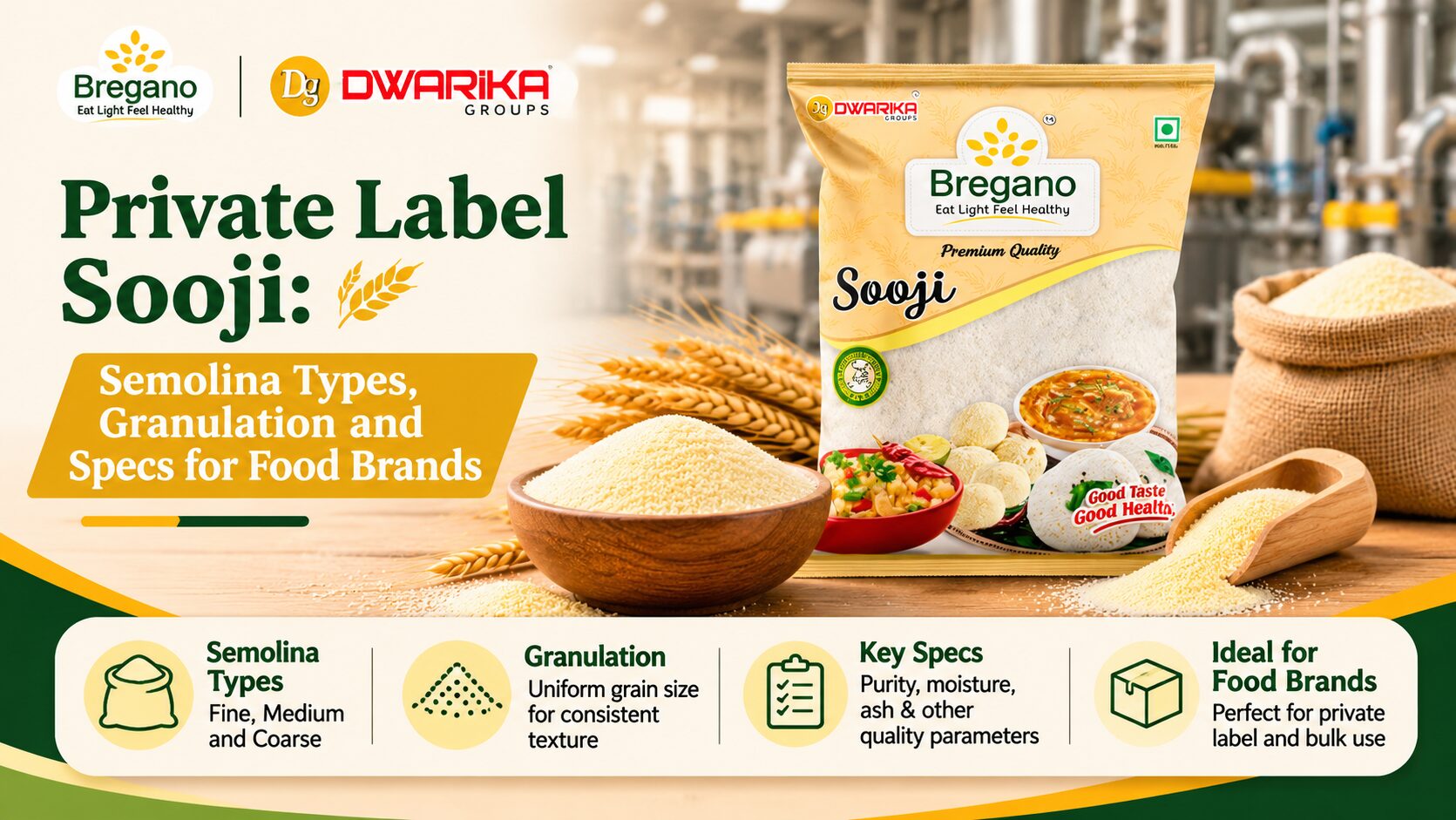
Sooji (also called suji or rava) is a common staple in Indian kitchens. It goes into upma, halwa, idli, dhokla and baked snacks. For a food brand, private label sooji is an everyday staple product. But sooji varies by wheat type and grind, and those differences show up in cooking.
This guide explains what a brand owner should know before launching sooji under private label.
Sooji is semolina: wheat that has been coarsely milled. It is different from maida.
So, is wheat semolina maida? No. Both come from wheat, but they are milled differently and behave differently in cooking. Searches like “durum wheat semolina is maida” show how often buyers mix them up. Your pack can clear that confusion.
Semolina can be milled from two kinds of wheat:
| Type | Source | Common uses |
|---|---|---|
| Common wheat semolina | Common (bread) wheat | Upma, halwa, rava idli, snacks |
| Durum wheat semolina | Durum wheat | Pasta manufacturing |
Pasta made from semolina, sometimes called suji pasta, is typically made from durum wheat semolina. For household sooji, check which type you are sourcing and label it accurately.
Granulation is the particle size of the sooji. It changes how the product cooks.
Decide which grade your target buyer cooks with most. Then agree on the particle size range with your manufacturer in writing.
Your label must follow FSSAI and Legal Metrology rules. Key points:
For a private label pack, show both FSSAI licence numbers: “Manufactured by:” with the manufacturer’s name, address and licence number, and “Marketed by:” with yours. Under the Legal Metrology (Packaged Commodities) Rules, net quantity numerals must also meet a minimum height of 1 mm to 6 mm, depending on the pack’s main display panel.
Bregano offers Sooji/Semolina as part of its staples range, which also includes Premium Besan, Dalia and Poha. On Flipkart, Bregano Suji is available in the Penne + Suji combo. The full range is on Bregano Shop and Amazon. For recipe ideas you can share with your buyers, see our Suji Halwa Recipe. To launch sooji under your own brand, see our contract manufacturing page or contact our private label team.
Is sooji the same as maida?
No. Sooji is coarse semolina; maida is finely refined flour.
What is the difference between sooji and rava?
In many parts of India, sooji, suji and rava are used as names for the same product: wheat semolina.
Is suji pasta made from sooji?
Pasta is typically made from durum wheat semolina, which is a type of semolina.
What is maida flour?
Maida is refined wheat flour, finely milled from common wheat.
Launch sooji under your brand.